


 For all latest news, follow the Daily Sun's Google News channel.


TCB plans to become self-reliant within 4-5 years
BSS, Dhaka
Published: 02 Nov 2026, 02:16 PM

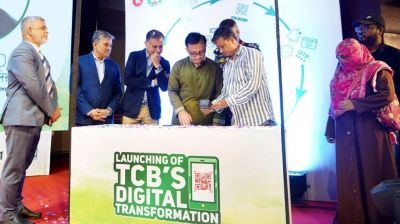
TCB plans to become self-reliant within 4-5 years. Photo: Courtesy
The Trading Corporation of Bangladesh (TCB) aims to reduce its subsidy requirements by around Tk 500 crore to 600 crore in the current fiscal year under a four-to-five-year plan through lower bank interest expenses, reduced operational costs and increased earnings from commercial activities.
TCB Chairman Brigadier General Mohammad Foyshol Azad said the corporation had adopted a four-to-five-year plan to become financially self-reliant by reducing its dependence on government subsidies without raising the prices of existing subsidised products.
"We aim to reduce subsidy expenditure by Tk 500-600 crore this year," he said while talking to BSS, adding that the growing number of beneficiaries could increase the corporation's overall subsidy requirements.
TCB incurred Tk 2,514.22 crore in subsidy expenditure in fiscal year 2025-26 against a budgetary allocation of around Tk 5,500 crore. The main sources of the burden are the gap between procurement and selling prices and interest on bank financing.
"The main issue with TCB is the difference between the prices at which we purchase products and the prices at which we sell them," Azad said.
He explained that TCB sells some commodities at prices around 40-45 percent below their purchase costs, with edible oil accounting for the largest share of the subsidy requirement.
TCB's edible oil selling price has remained at Tk 100 per litre since 2022, while its current procurement cost, including dealer commissions and associated expenses, stands at around Tk 190-195 per litre. The cost can reach nearly Tk 200 when bank interest is included.
To reduce financing expenses, TCB is purchasing sugar and lentils with cash instead of relying on letters of credit (LCs) and loan-against-trust-receipt (LTR) facilities.
The measures reduced bank interest expenses by approximately Tk 14.19 crore during the first two months of the current fiscal year. Cash payments for local purchases of sugar and lentils also reduced LC charges and related expenses by around Tk 42.25 lakh during the period.
Azad said TCB was also seeking to reduce its annual bank interest expenditure, currently estimated at Tk 400-450 crore, by around Tk 300 crore.
"We are reducing our reliance on letters of credit (LCs) and loans from banks and the government. Wherever possible, we are purchasing goods in cash," he said.
The corporation has started opening LCs and obtaining LTR facilities through private banks, which offer interest rates 1.25 percentage points lower than those charged by state-owned banks.
TCB has also introduced an application programming interface (API) to ensure that sales proceeds are deposited directly into its bank account rather than being routed through the accounts of deputy commissioners.
"We are also working to ensure that dealers' payments reach us more quickly through an application programming interface (API). This will improve our cash flow and enable us to purchase goods in cash rather than relying on bank financing," Azad said.
The corporation has introduced soap, detergent and salt as commercial products, selling them below prevailing market prices but above procurement costs. TCB earned Tk 24.37 crore in profit in FY2025-26 from its commercial activities.
Explaining the need for revenue diversification, Azad said, "We can't reduce the subsidy burden simply by cutting expenses. We must also increase our income."
TCB is also reducing distribution and administrative costs by supplying products directly from regional warehouses instead of sending them to district administration warehouses. The measure, which took effect in September, is expected to lower transportation, handling and related expenses.
The corporation is reviewing its survey procedures to eliminate duplication. Azad said TCB spends around Tk 60-70 crore annually on surveys and related activities, while eliminating duplicate surveys could save approximately Tk 40-50 crore.
However, the chairman cautioned that a larger customer base could increase the overall subsidy requirement. TCB currently reaches around 50 lakh customers monthly through its additional products and aims to expand the number to 70-80 lakh in the current fiscal year.
"If we can reach 80 lakh customers this year, we expect to reach one crore in the next fiscal year," he said.
Azad said the government had no plan to increase the prices of existing subsidised products. The corporation expects higher commercial earnings, lower financing costs and improved operational efficiency to reduce its subsidy dependence gradually over the next four to five years.
When asked whether this subsidy reduction plan will affect the beneficiaries, the TCB Chairman said the government has no plan to increase the prices of the existing subsidised products as they will continue to sell at the current prices.
"We are introducing additional products that beneficiaries can purchase if they wish. Buying these new products will be optional. Nobody will be required to purchase them." He added.