


 For all latest news, follow the Daily Sun's Google News channel.


746 killed and 46,351 injured in political violence in 13 years: TIB
Study finds growing influence of money and muscle power, weak internal democracy and lack of financial accountability in political parties
Daily Sun Report, Dhaka
Published: 01 Nov 2026, 01:43 PM
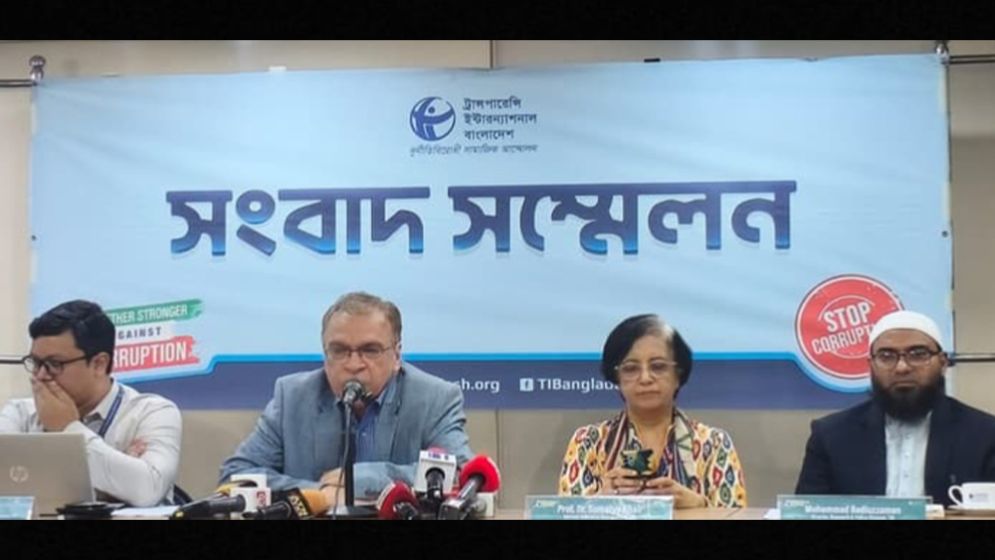
Photo : Daily Sun
At least 746 people were killed and 46,351 injured in 4,280 incidents of political violence across Bangladesh between January 2013 and August 2026, while political parties continue to suffer from serious deficiencies in internal democracy, financial transparency and accountability, according to a study by Transparency International Bangladesh (TIB).
The study found that political violence largely involved activists of the Awami League (AL) and the BNP, although Jamaat-e-Islami, the Jatiya Party and the NCP were also involved in some incidents.
The findings also revealed the growing influence of money and muscle power in political activities, inadequate mechanisms to prevent individuals with criminal backgrounds from joining political parties or securing influential positions, and widespread weaknesses in enforcing party discipline.
TIB presented the findings at a press conference at its office of Dhanmondi in the capital on Sunday.
The research report, titled "Institutional Good Governance in Political Parties in Bangladesh", examined both the state of internal governance in political parties and the pattern of political violence over the years.
According to the study, at least 46 people were killed and 3,059 injured in political violence between January and August this year, indicating that political clashes and confrontations remain a serious concern.
The data showed that violence between political parties accounted for a substantial share of the incidents.
Between January 2013 and August 2026, clashes between political parties left 428 people dead and 27,860 injured.
Factional conflicts within political parties were also a major source of violence during the period. The study recorded 1,926 such incidents, in which 318 people were killed and 18,491 injured.
The figures indicate that both inter-party confrontations and internal rivalries have contributed significantly to political violence in the country.
Money and muscle power dominate politics
The TIB study found that political parties face serious shortcomings in institutional governance, including irregular national conferences, inadequate financial management and weak mechanisms for ensuring accountability.
Of the political parties examined, 16 did not regularly hold national conferences, limiting opportunities for internal democratic processes and leadership accountability.
The parties also lacked regular annual budgeting practices, clear financial policies and effective systems for auditing and disclosing their income and expenditure. Much of their financial activity was conducted through informal and programme-based arrangements, creating a gap between officially reported accounts and actual spending.
The study further found that the constitutions of 18 political parties did not establish minimum standards of integrity or ethical conduct for membership. They also lacked effective provisions to prevent individuals with criminal backgrounds from joining the parties or securing influential positions.
According to TIB, political parties often seek individuals with financial resources and muscle power to meet organisational expenses, establish dominance and control polling centres during elections.
At the same time, individuals involved in illegal income-generating activities may seek political influence to secure protection and social status.
The study noted that between 18% and 32% of candidates contesting the past five national parliamentary elections faced one or more criminal cases.
It also identified significant weaknesses in monitoring election expenditure and enforcing accountability. Candidates nominated by influential parties often violated electoral rules without facing effective disciplinary action.
Candidates in the 13th parliamentary election spent an average of 169.5% more than the prescribed expenditure limit, yet political parties failed to take effective action, the report said.
TIB also observed that allegations of extortion, human trafficking, smuggling, arms and drug trading, and corruption involving party leaders and activists frequently went without visible disciplinary action. In some cases, parties imposed only minor punishments.
Weak internal democracy and women's participation
The research also highlighted limited progress in women's political participation despite legal obligations and commitments made by political parties.
Women's representation in party activities often remained symbolic, reinforcing male-dominated leadership, family-based politics and authoritarian practices, the study found.
Of the 32 political parties covered by the research, 24 had websites, but only 16 were active, reflecting shortcomings in public communication and institutional transparency.
The qualitative research covered 32 of the 42 political parties contacted, including 37 registered and five unregistered parties. The remaining 10 did not provide information despite repeated attempts to contact them.
Information was collected in two phases, from June 2023 to February 2024 and from June 2025 to September 2026.
Political parties must reform
Speaking at the press conference, TIB Executive Director Dr Iftekharuzzaman said political parties were central to democratic institutions and had made significant contributions to Bangladesh's history and achievements.
However, he said, political parties also bore responsibility for the challenges facing democratic progress and good governance.
"Democracy cannot function properly unless political parties, one of its central institutions, ensure good governance within their own organisations," he said, adding that internal reforms of political parties often received less attention than reforms of state institutions.
He also said political parties lacked accountability and good governance, while the abuse of power was spreading within influential parties.
Political violence was increasing because of the way political parties exercised power, he said.
The study called for stronger legal frameworks to ensure internal democracy, financial transparency and accountability in political party operations.
It also highlighted the need for effective monitoring of election expenditure, regular financial audits, transparent disclosure of party finances and stronger disciplinary mechanisms against leaders and activists accused of criminal activities.
The findings underscored the challenges facing Bangladesh's political landscape, where violence, internal factionalism and weak institutional accountability continue to undermine efforts to establish democratic practices within political parties.