


 For all latest news, follow the Daily Sun's Google News channel.


Eight-month ban on jatka fishing begins across Bangladesh
Daily Sun Report, Dhaka
Published: 01 Nov 2026, 11:51 AM
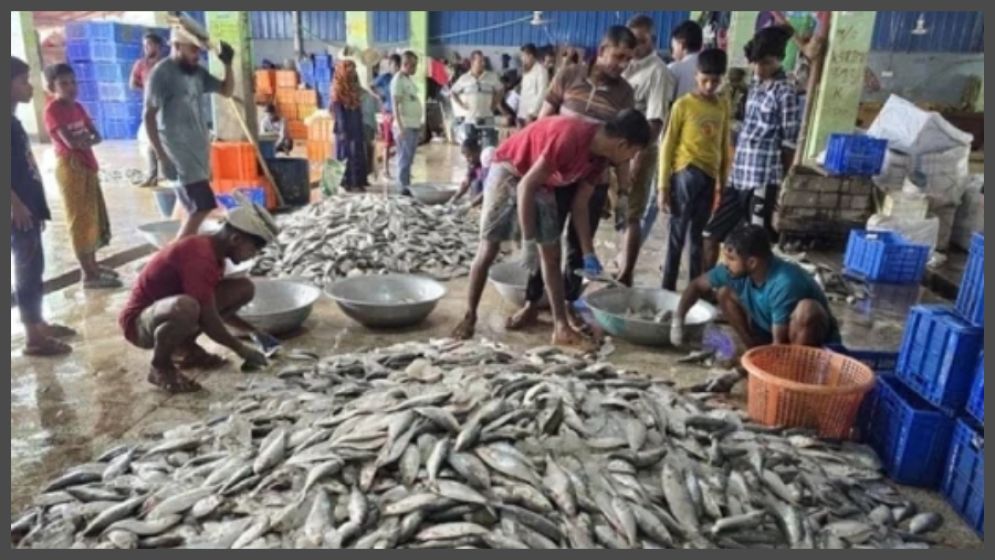
Eight-month ban on Jatka fishing begins. File Photo: BSS
An eight-month nationwide ban on catching, transporting, storing and selling juvenile hilsa, locally known as jatka, came into effect on Sunday (November 1) to protect the young fish, boost hilsa production and ensure the sustainable conservation of aquatic resources.
According to a press release issued by the Ministry of Fisheries and Livestock, the restriction will remain in force until June 30, 2027, covering harvesting, transportation, storage, marketing and both wholesale and retail sales of jatka.
Researchers at the Bangladesh Fisheries Research Institute (BFRI) say the 22-day Mother Hilsa Conservation Campaign, held nationwide from October 8 to 29, has resulted in the birth of billions of hilsa fry in rivers. The young fish are now moving through coastal rivers, estuaries and tributaries.
Scientific assessments show that the fry, currently measuring 3 to 5 centimetres, grow by an average of 3 to 3.5 centimetres a month. If left undisturbed during the protection period, they are expected to reach 25 to 30 centimetres in length and weigh around 400 grams by May or June next year, making them commercially viable.
Under the Protection and Conservation of Fish Act, catching, transporting, storing or trading hilsa measuring less than 25 centimetres (10 inches) during the ban period is a punishable offence.
The authorities have adopted a zero-tolerance approach to the use of banned fishing gear, including current nets, behundi nets, mosquito nets and monofilament synthetic nets.
The ministry said violators could face one to two years' imprisonment, a fine of up to Tk500,000, or both. Depending on the nature and severity of the offence, courts may impose imprisonment and fines simultaneously.
To enforce the restrictions, mobile courts led by executive magistrates are operating round the clock in riverine districts and upazilas in coordination with the Department of Fisheries (DoF) and local administrations.
A joint task force involving the armed forces, law enforcement agencies and the Department of Fisheries has also been formed to ensure strict enforcement on the ground.
According to notifications from the Bangladesh Navy and Coast Guard headquarters, special teams have been deployed to patrol the deep sea, coastal rivers and estuaries round the clock using large vessels and speedboats. The River Police will also maintain continuous surveillance across the country's six river sanctuaries.
Meanwhile, the Rapid Action Battalion (RAB), Police and Border Guard Bangladesh (BGB) will conduct special operations at land checkpoints, wholesale fish markets and cold storage facilities to prevent the illegal transportation and storage of jatka.
The government has also arranged food assistance for registered fishermen to protect their livelihoods and support food security during the ban.
Under a special initiative by the Ministry of Disaster Management and Relief, hundreds of thousands of registered fishing families in 96 upazilas across 20 major hilsa-producing districts will receive 40kg of rice free of charge every month through the Vulnerable Group Feeding (VGF) programme.
Fisheries scientists say the two conservation measures work together: the 22-day mother hilsa protection campaign in October helps ensure the birth of new fish, while the eight-month jatka ban allows them to grow and mature.
They believe this coordinated approach to conservation and enforcement will help Bangladesh maintain its position as the world's leading hilsa producer.