



 For all latest news, follow the Daily Sun's Google News channel.


Rooppur eyes power supply to national grid within five weeks
The Rooppur Nuclear Power Plant is expected to begin supplying around 300 megawatts of electricity to the national grid on a trial basis
Daily Sun Report, Dhaka
Published: 01 Nov 2026, 10:45 AM
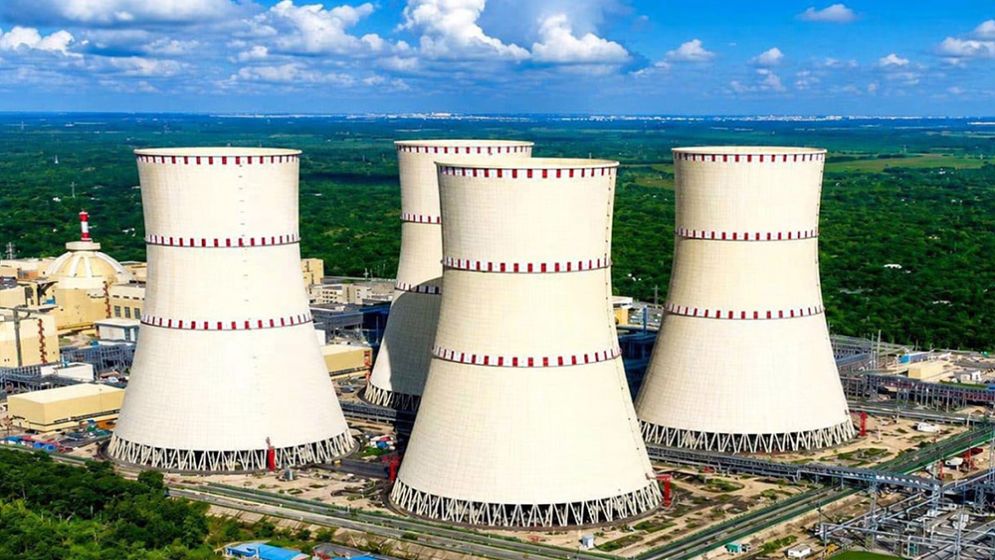
Rooppur Nuclear Power Plant. File Photo
The Rooppur Nuclear Power Plant is expected to begin supplying around 300 megawatts of electricity to the national grid on a trial basis within the next five weeks, following the launch of the power startup process at its first unit.
The plant formally began the startup process on Friday morning after receiving approval from the Bangladesh Atomic Energy Regulatory Authority (BAERA) on Thursday, marking a significant step towards its first electricity generation.
Initially, the plant aims to supply around 300MW to the national grid. However, officials said another seven to eight months would be needed for extensive tests and safety assessments before the facility could move towards commercial operation, which may take around a year.
The ongoing startup process involves gradually increasing pressure and temperature inside the reactor and checking the performance of various equipment, safety systems and power generation facilities.
According to project sources, the current phase is known as the 'C-stage', during which the reactor's power level will be gradually raised from zero to 25-30 per cent.
Once the reactor reaches the required level, the plant will be able to generate around 300MW of electricity and supply it to the national grid on a trial basis.
If everything goes according to plan, trial electricity supply could begin within five weeks, with the target set for the end of this year.
Jahadul Hasan, managing director of Nuclear Power Plant Company Bangladesh Limited (NPCBL), said various tests would be conducted during the C-stage.
He said trial power generation would begin once the reactor's capacity reached 30 per cent.
Plant officials said the testing process could continue for seven to eight months after trial generation begins. During this period, the reactor, cooling system, turbine, generator, control systems and safety equipment will undergo comprehensive performance assessments.
The plant's ability to operate safely and reliably at different power levels will also be examined.
An important step in connecting the plant to the national grid is synchronising its generator with the grid, a technical process that ensures electricity can be supplied in line with the grid's operating parameters.
However, the start of trial electricity supply will not mean the beginning of commercial operation. The plant must successfully complete all testing stages and demonstrate the safety, stability and reliability of power generation before obtaining the necessary regulatory approval for commercial operation.