


 For all latest news, follow the Daily Sun's Google News channel.


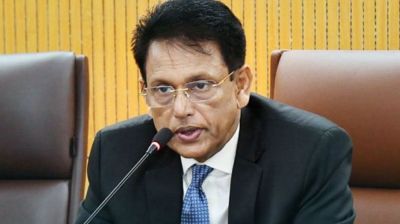
The government will form a new minimum wage board for ready-made garment (RMG) workers today amid renewed protests demanding a monthly minimum wage of Tk30,000, Labour and Employment Minister Ariful Haque Choudhury announced on Saturday after talks with workers’ and factory owners’ representatives and industry associations.
A gazette notification is expected to formalise the decision.
Garment workers staged demonstrations and road blockades in Dhaka, Savar and Gazipur, demanding higher wages, payment of outstanding dues, an end to blacklisting and protection against arbitrary dismissal. The unrest prompted dozens of factories in Ashulia, Mirpur and Gazipur to suspend operations on Saturday.
After a meeting with the Bangladesh Garment Manufacturers and Exporters Association (BGMEA) and the Bangladesh Knitwear Manufacturers and Exporters Association (BKMEA), the minister said both organisations had agreed to form the wage board.
Urging workers to return to work, he said the government had taken steps to address their demands and called on factory owners to clear outstanding dues and pay monthly wages by the seventh of each month.
Protests spread across industrial areas
Protests intensified on Saturday morning in Ashulia's Kathgara area, where workers from several factories stopped work and took to the streets. The demonstrations began at Nayem Knitwear before spreading to nearby factories, according to sources.
At least 23 factories in and around Kathgara reportedly declared holidays amid the unrest. Workers also blocked roads, causing severe traffic congestion, said Ashulia Industrial Police-1 Superintendent of Police Mohammad Mominul Islam Bhuiyan.
The factories are Continental Garments Pvt Ltd, Textown Ltd, Ornate Garments, Everbright Sweater, Haesog Korea, Millennium Textile, Afiya Knitwear Ltd, Zihan Garments, Crosswear Industries Ltd, AR Jean's Producer Ltd, FGS Denims Ltd, Ducati Apparels Ltd, Srabony Apparels Ltd, Kathgora Composite Ltd, ZA Apparels Ltd, Magpie Composite Textile Ltd, Comfit Composite Ltd U-2, Ratul Fabrics Ltd, BLJ Apparels, Woree Apparels, Agami Apparels, Alps Apparels and True Knitwear.
Clashes also broke out in Ashulia after protesters allegedly hurled bricks and stones at nearby factories, triggering confrontations and chases between workers and police. An industrial police officer sustained a head injury and was taken to hospital.
In Gazipur's Kaliakair upazila, garment workers blocked the Dhaka-Tangail highway near Chandra, causing several-kilometre-long tailbacks and disrupting traffic in both directions.
Protests also took place at Mirpur-10 in Dhaka, where garment workers blocked roads demanding a minimum monthly wage of Tk30,000.
Tk30,000 minimum wage at the centre of the dispute
The demand for a Tk30,000 minimum monthly wage has fuelled the latest garment-sector unrest, with workers saying their current Tk12,500 minimum wage, set in 2023, is inadequate amid rising costs of food, housing, transport, healthcare and education.
Workers want a substantial increase to improve their living standards amid persistent inflation. Labour leaders say a new wage board is essential to negotiate a revised pay structure.
Speaking to the Daily Sun, Garments Sramik Front President Ahsan Habib Bulbul said living costs had risen sharply, prompting workers to demonstrate for higher wages.
“The government could announce the new wage for RMG workers when the pay scale for government officials was announced. However, the labour minister said that the new wage for us will be announced on Sunday. We expect that it will be fair for workers,” he said.
He also called for workers' salaries to be paid within the first seven working days of each month to prevent further protests.
Employers agree to wage board formation
The government announced the decision after talks with labour representatives and leaders of the BGMEA and BKMEA, both of which agreed to form a new wage board. Workers' representatives have submitted nominees.
The labour minister also urged factory owners to clear outstanding dues and pay monthly salaries by the seventh of each month, warning that factory closures, vandalism and production disruptions could hurt the garment industry, exports and workers' livelihoods. He alleged outsiders were provoking unrest and urged the media to identify them using video footage.
BKMEA President Mohammad Hatem said the government was committed to raising workers' wages.
“If employers and workers shared the same mindset, there would be no need for fresh protests,” he said, urging workers not to damage factories or embarrass the government.
Bangladesh exported goods worth $48 billion in FY26, with RMG accounting for about 81%.
BGMEA Director Faisal Samad told the Daily Sun that the protests were ill-timed, coinciding with buyers placing orders for the next season.
“As the minister announced to form new wage, there was no need to demonstrate. Several factories were vandalised, prompting many owners to suspend operations. I hope the factories will reopen after the new wage board is formed,” he said.
He added that protests damage the country's image among international buyers and hurt the economy at a time when the RMG sector is facing challenges. “However, we agree with the government's decision as we have a representative on the board,” he added.