


 For all latest news, follow the Daily Sun's Google News channel.


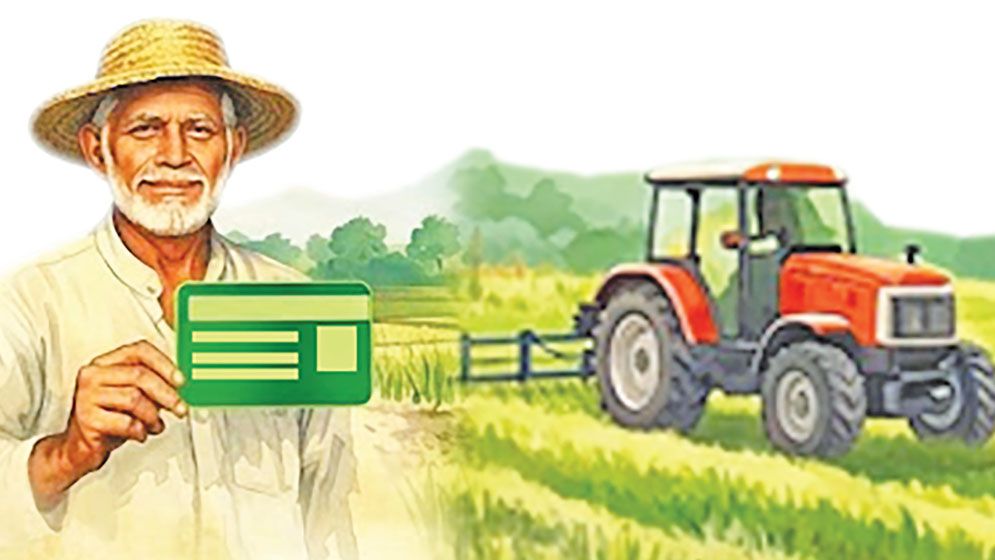
With farmers often left holding surplus produce while consumers pay high prices when supplies fall short, the government is building a nationwide digital database of farmers to align what is grown with what the market demands, Agriculture Minister Mohammed Aminur Rashid has said.
Speaking to the Daily Sun, the minister said the Farmer Card programme would help determine how much of each crop should be grown in different regions, based on consumption, storage capacity and demand from major cities.

He said the lack of accurate data on production and market demand was at the root of the problem.
“How much land should be used to grow potatoes or tomatoes in different regions? We need to coordinate this information with demand in those areas, in Dhaka and other major cities, as well as the requirements of hotels,” he said, adding, “If we can coordinate these things accurately, farmers will not suffer losses, produce will not go to waste, and consumers will not have to pay unnecessarily high prices.”
The government aims to bring around 2.40 crore farmers into the programme over four years, including 43 lakh in the 2026-27 fiscal year, according to the agriculture ministry. Information had been collected from about 20.20 lakh farmers as of 25 October.
The minister said the concept originated with Prime Minister Tarique Rahman. “The main idea behind the Farmers Card is to establish this information system,” he said.
“We have a four-year plan. Bringing millions of farmers into the database and making the information accurate is a considerable task. It will also take time for people to become accustomed to the system.”
The initial nationwide rollout announced for 1 October covered 77 upazilas in 56 districts and involved 1,10,165 farmers, the report said. Of them, 1,00,047 were covered by the planned annual agricultural incentive of Tk2,500 each, subject to verification.
The card is also designed to facilitate government incentives and access to inputs, including fertiliser, seeds and pesticides, as well as feed for livestock, poultry and fisheries.
The minister said the database could eventually hold detailed information on crop acreage and yields, such as how many mango trees are grown in particular areas and how much fruit they produce each year.
He said the data would also guide investment in storage.
“Our main issue is that we do not have truly accurate data on agricultural production and market size,” he said. “Agricultural products are perishable. If I know the actual market demand, I can plan production accordingly. Otherwise, I might increase storage capacity only to discover that there is no demand in the market.”
Potatoes, he said, illustrate the problem, as their appeal to consumers changes during storage. “Consumers pay more for new potatoes because they taste good. After a certain period, potatoes no longer taste the same,” he said.
The minister said the ultimate goal was to connect production with actual demand, so that farmers could make better-informed cultivation decisions and consumers could benefit from more stable supplies.
The ministry’s report said the system’s impact would depend on accurate records, regular data updates and coordination among agricultural agencies, traders and storage operators.