



 For all latest news, follow the Daily Sun's Google News channel.


PlasticPath seeks to turn awareness into action against plastic pollution
UNIDO-supported digital platform brings policy resources, community engagement and institutional reporting under single umbrella
Daily Sun Report, Dhaka
Published: 30 Oct 2026, 07:54 PM
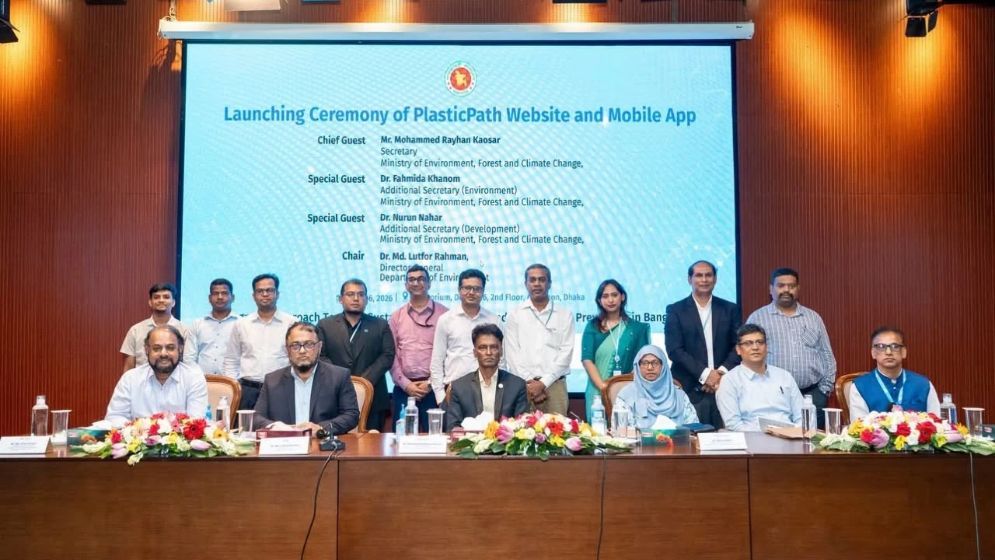
Photo: Daily Sun
Plastic pollution poses a growing threat to the environment, yet plastic has become an integral part of everyday life and business operations. Limited awareness of reducing, reusing and recycling plastic continues to complicate efforts to address the problem.
Against this backdrop, PlasticPath, a digital platform developed by the Department of Environment (DoE) with technical assistance from the United Nations Industrial Development Organization (UNIDO), seeks to connect environmental knowledge with practical action.
Available through its website, www.plasticpath.org, and a dedicated mobile application, the platform brings together policy documents, research, educational materials, training resources and opportunities for community participation.
Developed under the Integrated Approach towards Sustainable Plastic Use and Marine Litter Prevention in Bangladesh, the initiative is financed by the Government of Norway through the Royal Norwegian Embassy.
Officials from the DoE and UNIDO said the website and application were designed to support Bangladesh's efforts to tackle plastic pollution and prevent marine litter.
They described PlasticPath as an important step towards strengthening digital environmental governance, offering government institutions opportunities to improve reporting, monitoring and evidence-based decision-making, while providing citizens with information and avenues for engagement.
The platform caters to different groups. Students and teachers can access educational materials, researchers can explore studies and policy documents, and businesses can consult information on environmental regulations. Community leaders and organisations can also find opportunities to participate in local initiatives.
Its national laws section includes documents such as the Solid Waste Management Rules 2021 and the Medical Waste Management Rules 2008. Users can also explore information related to the 2026 extended producer responsibility (EPR) guidelines. However, businesses should consult the latest authoritative legal texts and government notifications before making compliance decisions.
PlasticPath also offers registration facilities for community leaders and organisations interested in environmental activities. A separate recycler registration interface collects information on plastic types, collection and processing capacity, and operational areas, potentially helping stakeholders identify opportunities across the recycling value chain.
However, registration or inclusion in the directory should not be regarded as proof of regulatory compliance, certification or guaranteed commercial opportunities.
Beyond public engagement, the platform includes institutional reporting tools linked to the Solid Waste Management Rules 2021. According to a technical review paper published in May, Form-1 supports planning and implementation tracking, while Form-2 facilitates annual reporting and monitoring.
These facilities are intended for relevant local government institutions and authorised authorities rather than general public submissions. Their effectiveness will depend on regular reporting, data verification and institutional accountability.
Some limitations, however, remain. The PlasticPath Go information page describes the Google Play Store release as pending, while the public availability of certain tools, including plastic footprint and Plastic Material Intensity calculators, requires confirmation.
A review of the website also found that although several pages were accessible, the homepage and some links timed out during testing. Some pages displayed older events as upcoming, indicating a need for regular maintenance and updated information.
For the platform to achieve its objectives, users will need functioning links, clear registration procedures, updated policy information and reliable support services.
Ultimately, its success should be measured not merely by website visits or published resources but by whether people can access reliable information, join community initiatives, identify recycling opportunities and complete authorised institutional reporting.
Plastic pollution cannot be tackled through a digital platform alone. Stronger enforcement, improved waste collection and recycling systems, institutional accountability and public participation remain essential.
PlasticPath offers a common digital space for bringing information and stakeholders together. Its long-term value will depend on how effectively it translates that connection into sustained environmental action.
Interested users can visit www.plasticpath.org to explore the available resources and check the latest service updates.