


 For all latest news, follow the Daily Sun's Google News channel.


Bank looting replaced default culture after 2010: Wahiduddin
Daily Sun Report, Dhaka
Published: 29 Oct 2026, 12:00 AM
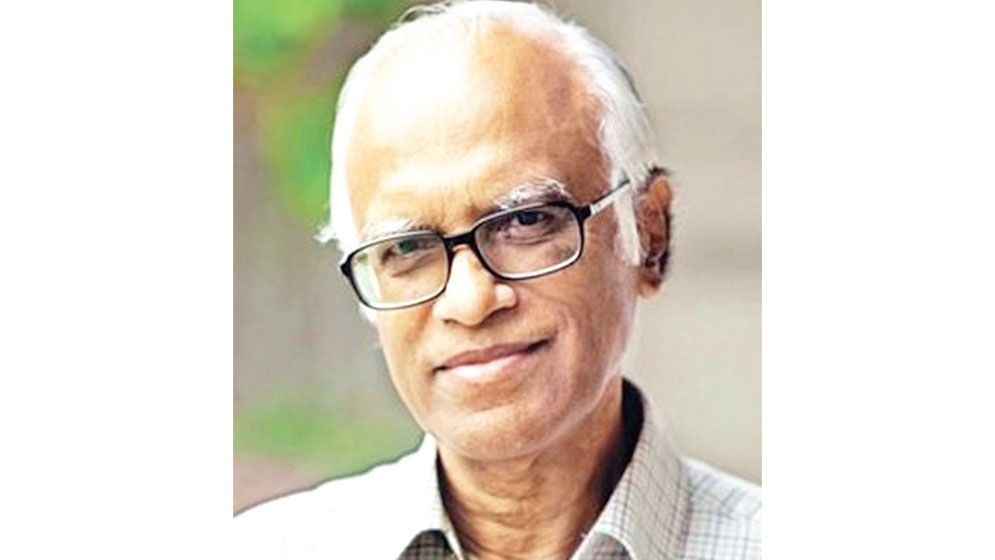
Dr Wahiduddin Mahmud
Former interim government planning adviser Dr Wahiduddin Mahmud said on Wednesday that Bangladesh's banking sector moved from a culture of loan defaults to one of bank looting after 2010.
"After struggling to overcome the culture of loan defaults through reforms and regulations, we saw the emergence of a bank looting culture after 2010. This is far more damaging, as money is taken out of banks without following any rules," he said at the opening session of the 11th Annual Banking Conference 2026, organised by the Bangladesh Institute of Bank Management (BIBM) in Mirpur, Dhaka.
He said private banks had been licensed without an adequate regulatory framework, citing cases in which sponsor-directors borrowed sums equivalent to around 35% of their banks' total deposits.
He called for anti-trust legislation to stop a single group or family controlling multiple banks, and warned against using state-owned banks to distribute favours for political reasons.
Wahiduddin blamed the approval of new banks without proper scrutiny after 2010 for the collapse of some institutions. Some failed banks had taken deposits from government organisations, he said, while teachers' salaries, welfare funds and pensions were also trapped.
Many teachers at MPO-listed non-government institutions still cannot access their pension and welfare funds, he added. He said excessive relaxation of regulations over the past 15 years had contributed to the sector's difficulties. Some easing might now be needed to rescue weak banks, he said, but questioned how the authorities would ensure past mistakes were not repeated.
"Unless we can ensure this, we will fall into the same old trap again," he said.
Mashrur Arefin, chairman of the Association of Bankers, Bangladesh (ABB) and managing director of City Bank, said governance had begun to improve but private sector credit growth remained almost stagnant.
He questioned the reported growth of around 4%, saying net growth could be much lower once accrued interest and forced loans were excluded.
Banks were not seeing demand for large letters of credit for capital machinery or factory expansion, he said. He cited the Purchasing Managers' Index, which fell from 57.8 in July to 48.6 in September; a reading below 50 indicates contraction. He attributed weak business confidence to high inflation, stagnant exports, low imports and political uncertainty.
Non-performing loans now account for around 30% of total loans, against the previously reported 9%, Arefin said, describing recognition of the true scale as a starting point for recovery.
He also criticised Bangladesh Bank for offering expansionary support packages while maintaining a tight monetary stance, with the policy rate at 9.5% and inflation at 8.5%.
Bangladesh Bank Deputy Governor Md Kabir Ahmed, Bangladesh Association of Banks President Abdul Hai Sarker and World Bank Division Director Jean Pesme also spoke. Dr Zaidi Sattar, chairman of the Policy Research Institute of Bangladesh, presented the keynote paper.