


 For all latest news, follow the Daily Sun's Google News channel.


Govt wants to end the culture of enforced disappearance: Home Minister
BSS, Dhaka
Published: 28 Oct 2026, 08:41 PM
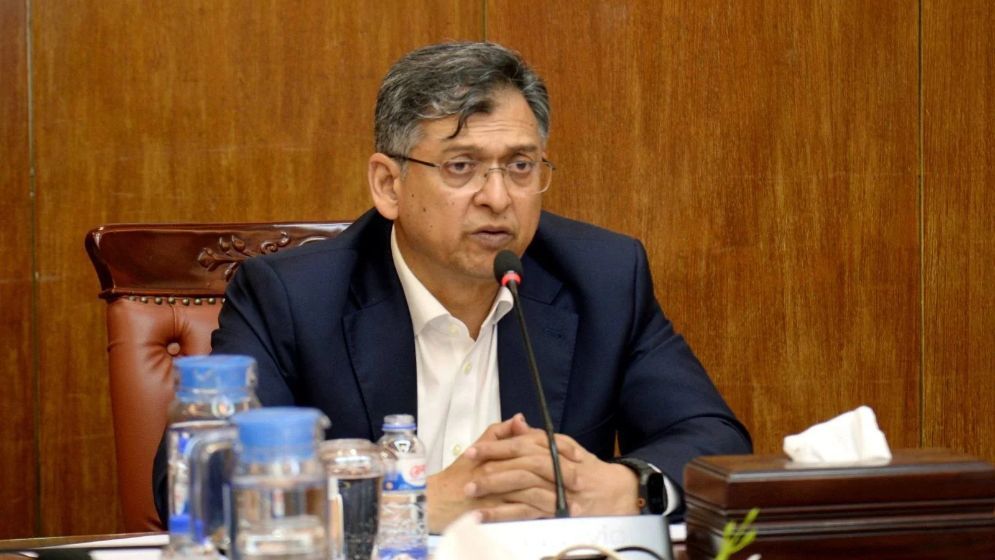
Home Minister Salahuddin Ahmed. File photo: BSS
The government wants to end the mal-culture of enforced disappearance permanently and take effective measures to prevent enforced disappearances, extrajudicial killings, custodial deaths and politically motivated persecution in Bangladesh, Home Minister Salahuddin Ahmed said on Wednesday.
He said the government would take necessary initiatives to
address the demands of families of victims, including justice, rehabilitation,
compensation and state recognition for those subjected to enforced
disappearance.
“The government wants to ensure that such a period never
returns to Bangladesh. The mal-culture and crime of enforced disappearance must
end forever. There must never again be enforced disappearances, extrajudicial
killings or politically motivated persecution in the country. Deaths in police
and prison custody must also stop,” he said.
The minister made the remarks while briefing journalists at
the Parliament Media Centre after the ninth meeting of the Special Committee on
Constitutional Amendment of the 13th Jatiya Sangsad held at the Cabinet Room of
the Jatiya Sangsad.
Salahuddin, who chairs the committee, said the meeting heard
accounts from family members of people who suffered enforced disappearance,
killings and torture during the 17 years of misrule of the Awami League
government, as well as relatives of those who remain missing and
representatives of people who returned after disappearing.
He said the Liberation War Affairs Ministry, Mayer Daak and several organisations helped ensure representative participation by 48 people at the meeting.
The families shared their experiences of suffering,
prolonged uncertainty and their demands for justice and rehabilitation, he
said, adding that committee members felt deeply moved by their accounts. Many
participants became emotional and could not finish their statements, he added.
The minister said the families mainly demanded effective
safeguards against future enforced disappearances, speedy and fair trials in
the cases filed over such incidents, assistance and rehabilitation for the
families of people who remain missing for years, and state recognition of victims
of enforced disappearance.
He said the Prevention and Remedy of Enforced Disappearance
Act provides for compensation to victims.
Under the law, courts may order the confiscation and sale of
assets belonging to those responsible to compensate affected families.
If the accused persons have no assets or their assets cannot
provide adequate compensation, the state can provide compensation, he said.
The law also contains provisions for the care and management
of the property of people who have remained missing for a long time. Such
property can be managed with court permission, he added.
Referring to Article 32 of the Constitution, which
safeguards the right to life, Salahuddin said any action contrary to this right
amounts to a violation of the Constitution.
He said the Prevention and Remedy of Enforced Disappearance
Act sets out detailed provisions on the issue, adding that the government would
consider enacting further laws, if necessary, to prevent such crimes.
Replying to a question about investigations into allegations
of enforced disappearance, the minister said allegations against a law
enforcement agency would not be investigated by the relevant unit of that same
agency. Instead, another law enforcement agency would conduct the
investigation.
He said the law specifies investigation procedures and
accountability mechanisms and distinguishes between departmental disciplinary
violations and criminal offences.
Those accused of criminal offences would face trial under
the existing laws, while departmental disciplinary violations would be dealt
with through the relevant departmental procedures, he added.
Salahuddin said the July Mass Uprising had raised public
expectations for a Bangladesh where human rights would remain protected and
every citizen would receive justice.
He said the committee would recommend incorporating
necessary safeguards into the Constitution and implementing other measures
through relevant laws and regulations, depending on their nature.
Responding to a question about the opposition’s criticism
and protests outside the constitutional amendment process, the minister said
opposition members could have presented their demands and opinions at committee
meetings, allowing the committee to consider their views.
He said the committee had received various proposals on
constitutional amendments from constitutional experts, lawyers, representatives
of the Supreme Court Bar Association, teachers, editors and people from
different professions.
The proposals would be compiled and discussed at subsequent committee meetings, although the committee had not yet reached any final decision.
On the caretaker government system, Salahuddin said the
system should be reintroduced. However, the committee would examine different
proposals concerning its formation process, scope of responsibilities, timeline
for formation and the roles of the relevant search committee or Election
Commission.
He said further proposals could also emerge during
parliamentary debate after the constitutional amendment bill is placed before
Parliament.
Committee members, including Law Minister Md Asaduzzaman,
Zainul Abedin, Information and Broadcasting Minister Andaleeve Rahman, State
Minister for Expatriates’ Welfare Md Nurul Haque and State Minister for Social
Welfare Farzana Sharmin, attended the meeting.
During the meeting, parliament members Sanjida Islam, Humam
Quader Chowdhury, Anisur Rahman and Mst Tahsina Rushdi, who have personal or
family experiences of enforced disappearance, shared accounts of their
experiences, torture and deprivation of legal protection and justice.
They stressed the need for effective measures to prevent the
recurrence of such incidents.
The secretary of the Bangladesh Parliament Secretariat, the
secretary of the Ministry of Law, Justice and Parliamentary Affairs and other
senior officials concerned were also present.