



 For all latest news, follow the Daily Sun's Google News channel.


Three deaths in Greece: Migrants who left home with dreams return lifeless
Motiur Rahman Munna, Greece
Published: 27 Oct 2026, 01:08 AM
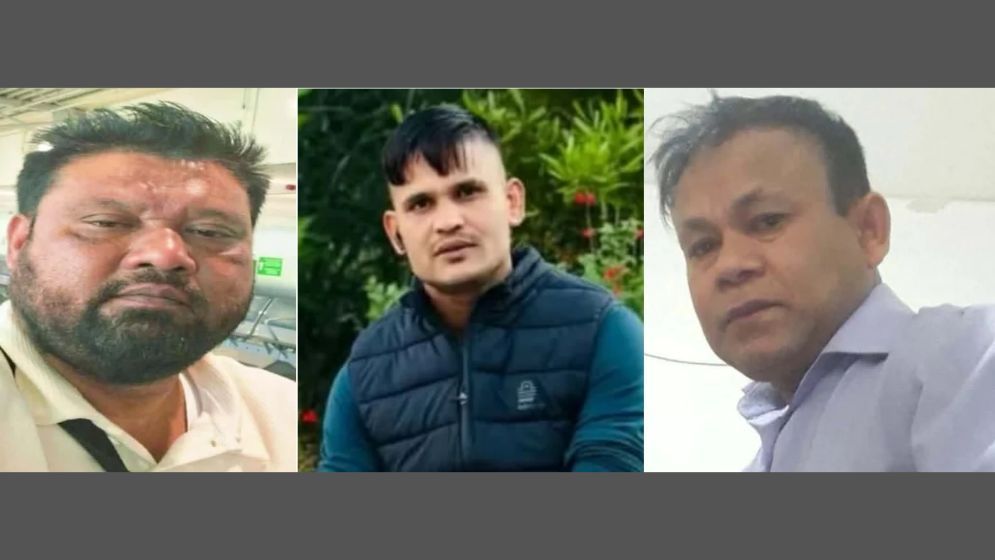
(From left) Mohammad Selim, Sijan Mia and Korban Ali. Photo: Collected
They left Bangladesh in search of a better life. One built his own business, while others travelled to Greece hoping to secure a better future for their families.
They spent years working and living abroad, driven by the
desire to support their loved ones, provide for their children and improve
their families’ financial circumstances back home.
But their struggles came to an abrupt end. Three Bangladeshi
expatriates have died in Greece under three different circumstances.
One died in hospital just two days after returning to Greece
from a holiday in Bangladesh. Another was killed in a road accident four days
after returning to Greece. The body of the third was recovered from inside his
own shop after it had remained closed for several days.
Three lives ended in different ways, leaving behind grieving
families, unanswered questions and a painful reminder of the challenges faced
by Bangladeshis living far from home.
Death just two days
after returning from Bangladesh
Mohammad Selim, 58, was from Pulpara village in Sonaimuri
upazila of Noakhali district. He had been living in Greece for more than two
decades and ran his own business in the Akadimia area of Athens.
After spending several months with his family in Bangladesh,
Selim returned to Greece on 5 September, hoping to resume his work and business
activities.
However, he soon began experiencing health problems and
admitted himself to a hospital in Athens.
According to information provided by his family, medical
examinations revealed that he was suffering from pneumonia.
His condition later deteriorated, and he was placed on life
support. He died in hospital at around 7:30pm local time on 7 September.
Selim’s death highlights the harsh realities of life abroad.
Having said goodbye to his loved ones and returned to Greece to earn a living,
he never got the chance to reunite with them.
Community leader Tajul Islam said many Bangladeshis living
abroad lead isolated lives and often neglect their health because of demanding
work schedules and business responsibilities.
“Many expatriates live alone. Because of their work and
business commitments, they sometimes fail to give proper attention to their
health. When someone has no regular contact with others, it can also be
difficult to realise that they are in trouble,” he said.
He urged expatriates to maintain regular contact with one another and seek medical attention promptly when they fall ill.
Sijan leaves behind
his eight-year-old son
Sijan Mia, 35, hailed from Baitakhali village in the Debpara
union of Nabiganj upazila in Habiganj district. He moved to Greece in 2019 in
search of a better livelihood, hoping to improve his family's financial
situation and secure a brighter future for his eight-year-old son.
Sijan had recently returned to Bangladesh for a holiday.
After spending time with his family, he left the country for Greece on 3 October.
He spoke to his family for the last time the following day, informing them that
he had reached Greece.
His relatives were subsequently unable to contact him.
Eventually, through acquaintances in Greece, the family
learned that Sijan had died in a road accident in Athens on the night of 7 October.
The Bangladesh Embassy in Athens completed the necessary
procedures to repatriate his body. On 25 October, his remains arrived in Dhaka
and were taken to his village home.
His funeral prayer was held at 2:00pm on the grounds of a
mosque in Baitakhali village, following the body's arrival in Dhaka at around
4:00am. He was subsequently buried there.
Sijan had left home with dreams of bringing happiness and
financial security to his family. In the end, his loved ones had to receive his
body instead of welcoming him home alive.
For his eight-year-old son, the loss of his father
represents a profound absence that words can hardly describe.
Lonely death inside
his own business premises
Korban Ali, a resident of Kutubpur union in Begumganj
upazila of Noakhali district, ran a grocery shop in Piraeus, the Greek port
city. He had lived in Greece for more than two decades and built a business of
his own.
Yet the final chapter of his life was marked by isolation.
His shop had remained closed since 9 October. Korban Ali
used to sleep in a room inside the premises. After the shop remained shut for
several days, a foul smell began spreading from inside.
Following reports from local residents, police went to the
premises on 20 October and recovered his body. By then, it was in an advanced
state of decomposition.
Korban Ali is survived by a son and a daughter in
Bangladesh. The death of a man who had spent years running his own business
came to light only after his shop remained closed and the smell began to
attract attention.
His body is currently being kept at the morgue of a hospital
in Athens, according to information provided to the family.
The Bangladesh Embassy has said that the necessary
procedures to repatriate his remains are under way.
Hafez Ahmed, president of the Noakhali Association in
Greece, said expatriates often depend on fellow community members when they
face difficulties away from their families.
“We live far away from our families. In times of trouble,
acquaintances and members of the community are often the first people we can
turn to for support. If someone cannot be contacted for an extended period, the
matter should be taken seriously. Regularly checking on those who live alone is
particularly important,” he said.
A call for greater
solidarity among expatriates
Many Bangladeshis living in Greece have spent years building
their lives through employment, business and efforts to support their families
back home.
Some work in restaurants, others in construction, while many
run small businesses to cover their families’ expenses in Bangladesh.
For many, life abroad means long working hours, financial
responsibilities and prolonged separation from their loved ones.
The deaths of Selim, Sijan and Korban Ali have brought
different aspects of this reality into focus: the importance of looking after
one's health, the devastating consequences of sudden accidents and the vulnerability
of those who live alone.
Their stories also underline the importance of maintaining
contact within the expatriate community. Regularly checking on friends,
neighbours and fellow workers, particularly those who live alone, could help
identify emergencies sooner and ensure that people receive assistance when they
need it most.
For the families left behind, however, the loss is
immeasurable. The men who left Bangladesh with hopes of building better lives
abroad have returned only in memories, leaving their loved ones to cope with
grief and an uncertain future.