


 For all latest news, follow the Daily Sun's Google News channel.


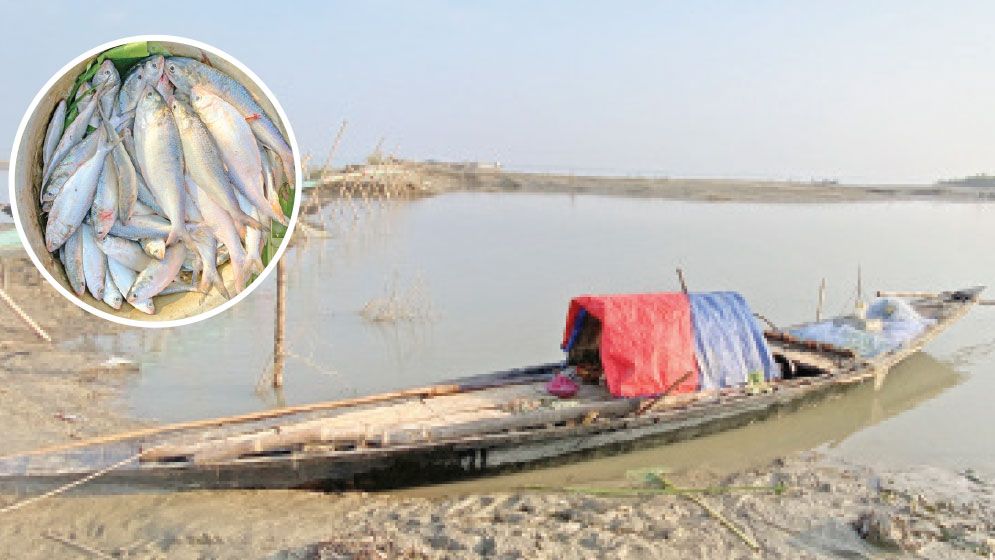
Photo: Shahanul Karim Chapol
Illegal fishing of hilsa is continuing along stretches of the Padma and other rivers during the 22-day ban, with locals alleging night-time netting, sales on riverbanks and supply to Dhaka through social media.
Reports from Shariatpur to Kushtia say fishing carries on after dark.
Local sources said the Department of Fisheries and law enforcement agencies mainly conduct drives during the day, while regular night operations are rarely seen.
They alleged that several groups, led by locally influential people, are involved in some areas.
Shahanul Karim Chapol, a wildlife photographer, described the scene at Kalyanpur and Shilaidaha ghats in Kumarkhali upazila, Kushtia, in a Facebook post and told the Daily Sun that hundreds of boats go out onto the Padma.

He said police patrol the river between 10pm and 3am, but fishing takes place from 3am to 7am and again from 6pm to 10pm. Boats, he claimed, return to the ghats between 7am and 9am.
He said the fish generally weighed 100-150 grams, with some up to 250 grams. Citing fishers, he claimed similar fishing was under way from Rajbari to Kushtia, and in the River Gorai.
He also claimed that hilsa were being stored in a house near the riverbank at Shilaidaha ghat.
In Shariatpur, Kabir Hossain of Palerchar in Jajira upazila alleged that seasonal fishers were catching hilsa extensively from Madbor Majhir Ghat in Madborchar to Kunderchar, particularly at night.
He claimed Tk3,000 was collected from each fisher to allow fishing to continue, and alleged collusion between the fishing groups and some River Police and local police personnel.
The Daily Sun could not independently verify who collected or received the money, or for what purpose.
According to local sources, the area’s lawmaker led a daytime drive against illegal fishing a few days ago. They claimed he was attacked during the operation and several people were injured. Residents alleged that enforcement became less vigorous afterwards.
Accounts from the administration and law enforcement agencies are needed to establish whether the frequency or effectiveness of operations has changed. Local sources said fish were sold along the riverbank, particularly in the evening, and marketed in Facebook groups for delivery to Dhaka and elsewhere, trading on the reputation of Padma hilsa.
Dr Md Anisur Rahman, a hilsa researcher, said the catching of jatka during the ban was deeply distressing and that illegal fishing appeared more visible this year.
“Illegal fishing has occurred in remote areas in previous years, but the situation now appears to have become more pronounced,” he said.
He said hilsa fishing has traditionally been concentrated in the Chandpur, Barishal, Noakhali, Lakshmipur and Bhola belts, but the fish have now reached upstream areas that are harder for law enforcement agencies to monitor.
He described the situation as “a game of hide and seek” between illegal fishers and the authorities.
Anisur Rahman said the ban, from 8 to 29 October, is crucial for successful spawning. The full moon on 26 October falls within the period, making the remaining days particularly important.
“Whatever has already happened cannot be undone, but every possible effort must be made to protect hilsa for the remaining days,” he said.
He said catching juvenile hilsa before they mature and spawn undermines conservation, and that even where eggs are released, their survival and that of young fish can be compromised by continued fishing. \ Preventing illegal fishing, he said, is a shared responsibility of the administration, local communities and the public.
On government assistance for fishers, Anisur Rahman said financial support alone was insufficient to ensure compliance. Fishers also needed motivation, training and sustained engagement, he said.
Read More