


 For all latest news, follow the Daily Sun's Google News channel.


Faqir Mahbub urges swift research-based solutions to combat dengue
BSS, Dhaka
Published: 25 Oct 2026, 11:12 PM

Posts, Telecommunications and Information Technology Minister Faqir Mahbub Anam. File photo: BSS
Posts, Telecommunications and Information Technology Minister Faqir Mahbub Anam today urged scientists and researchers to develop practical, effective and lasting solutions to combat dengue through research and field-level initiatives.
He made the call at a meeting with prominent scientists and researchers at the Ministry of Science and Technology at the Bangladesh Secretariat to explore scientific cooperation on controlling dengue and mosquitoes using Wolbachia-based technology.
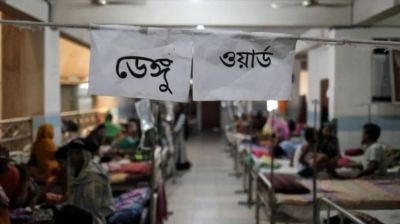
The minister said dengue had become a serious public health concern, with cases rising alarmingly in densely populated areas, particularly in Dhaka.
He stressed the need for immediate, visible action instead of prolonged discussions and seminars.
Referring to the Prime Minister's directives, he said practical pilot projects involving scientists and relevant officials could help achieve a sustainable solution.
He also assured full support for implementing the initiative.
Science and Technology Secretary Md. Anwar Hossain emphasized coordinated research and joint efforts to identify effective, cost-efficient and commercially viable solutions suited to Bangladesh's climate, geography and social needs.
The meeting was informed that a pilot project to research dengue and mosquito control would begin soon with grants from the Temasek Foundation and the Asian Development Bank (ADB).
Local researchers and experts will participate in the initiative.
Singapore's Charge d'affaires in Bangladesh Philip Ong, Professor Dr. Zhiyong Xi of Michigan State University, and David Quek Yong Kee, CEO of SymbioCI SEA, also attended the meeting.
Representatives of city corporations, government agencies, research institutions and universities took part in discussions on introducing the technology, with participants expressing hope that local knowledge and innovations would strengthen the initiative.