


 For all latest news, follow the Daily Sun's Google News channel.


Bangladesh must demand climate donations at COP31: State Minister
Daily Sun Report, Dhaka
Published: 24 Oct 2026, 08:47 PM
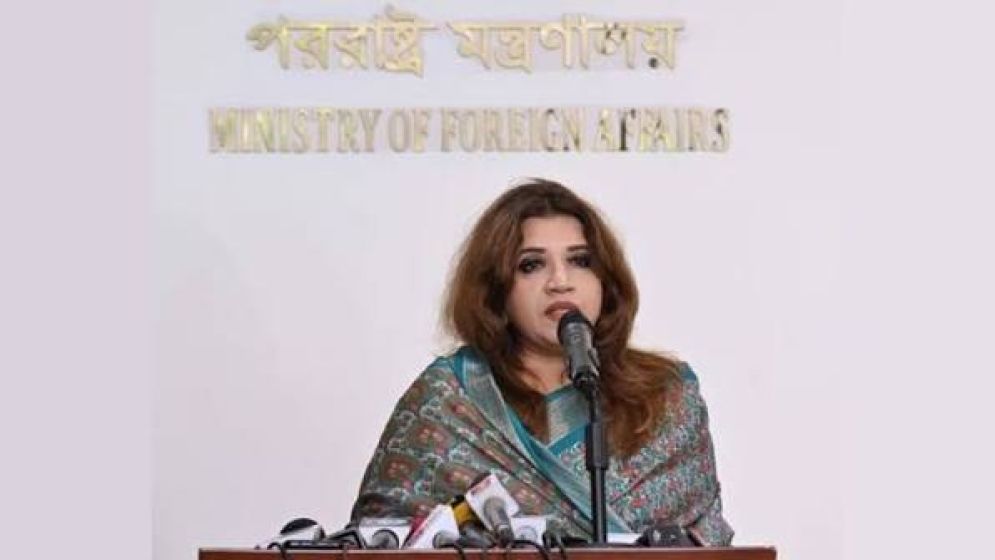
State Minister for Foreign Affairs Shama Obaed Islam has
called on developed countries to fulfil their climate finance commitments,
urging them to provide grants instead of loans to help Bangladesh tackle
climate change without increasing the debt burden of vulnerable communities.
She also stressed the need for a unified national position
at the forthcoming United Nations Climate Change Conference (COP31), saying the
government, private sector, civil society and experts must work together to
bridge the gap between Bangladesh’s expectations and outcomes in international
climate negotiations.
The state minister made the remarks as the chief guest at a national dialogue titled “People-Led Policy: Bangladesh Position at COP31” at the CIRDAP auditorium in Dhaka on Saturday.
Organised by a coalition of 33 national and international
organisations working on climate change, the dialogue presented key demands and
recommendations from a civil society position paper on climate action.
Shama Obaed said that, ten years after the Paris Agreement,
it was essential to assess progress in implementation alongside existing
commitments. She emphasised the need for adequate climate finance, equal
attention to adaptation and mitigation, and greater transparency in
international negotiations.
She said initiatives were under way to strengthen
coordination between the Ministry of Foreign Affairs and the Ministry of
Environment and Climate Change, adding that young people working on climate
issues should also be involved in the process.
The government is also planning to showcase Bangladesh’s
environmentally friendly jute products at COP31 through a dedicated Jute
Pavilion. The initiative is expected to help expand international markets for
jute products and create livelihood opportunities for rural farmers.
Mirza Shawkat Ali, director of climate change and
international convention at the Department of Environment, said initiatives
were being taken to reduce industrial emissions. He stressed the importance of
credible evidence and specific plans to present Bangladesh’s demands
effectively at international negotiations.
According to presentations at the dialogue, Bangladesh’s
updated Nationally Determined Contribution (NDC 3.0) targets a 20.31 per cent
reduction in greenhouse gas emissions by 2035, equivalent to 84.97 million
tonnes of carbon dioxide equivalent.
Implementation of the plan for 2026–2035 is estimated to
require $116.18 billion, including $90.23 billion in international support.
The National Adaptation Plan for 2023–2050 identifies 113
initiatives requiring approximately $230 billion.
Delivering the concluding remarks, Farah Kabir, country
director of ActionAid Bangladesh, called for collective efforts to secure
grant-based climate finance, saying Bangladesh bears a disproportionate burden
of climate change.
The position paper also called for meaningful participation
of women, young people, persons with disabilities and climate-affected
communities in policymaking and national delegations.
Other recommendations included improving waste management,
reducing air pollution and industrial emissions, ensuring a just energy
transition that protects workers, and securing funding for safe housing for
climate-displaced people and measures to address extreme urban heat.
Dr SM Munjurul Hannan Khan, executive director of Nature Conservation Management (NACOM), also highlighted the need for coordinated planning on climate finance, the blue economy, waste management and urban heat stress.