


 For all latest news, follow the Daily Sun's Google News channel.


Tarique Rahman’s new brand of politics is transforming Bangladesh
Special Correspondent
Published: 20 Oct 2026, 12:00 AM
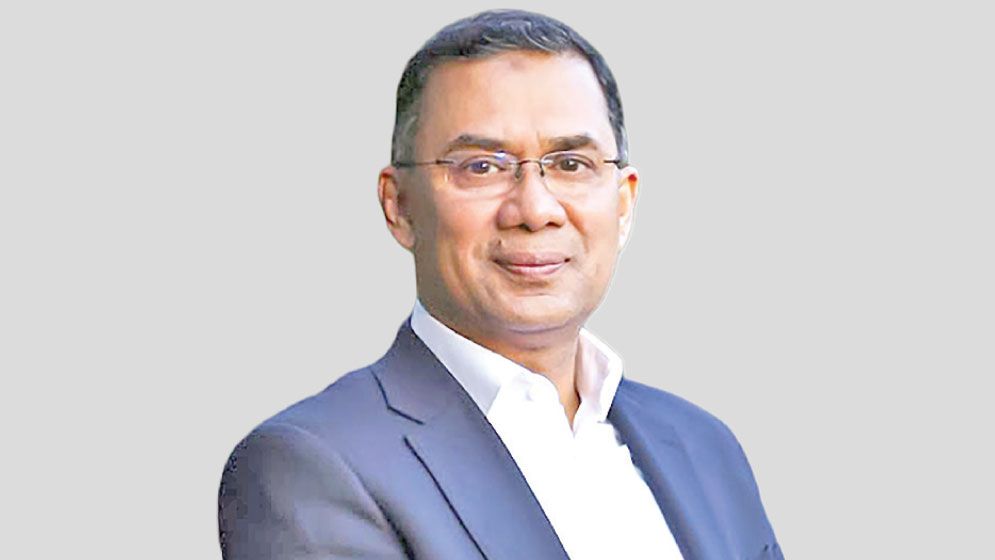
By taking disciplinary action against a state minister and a member of parliament (MP) from his own party in less than a month, Prime Minister Tarique Rahman has set a unique precedent. He has shown that his pledge to introduce a new trend of politics was not mere talk, but a reality. These two incidents serve as important messages not only to the leaders and activists of the BNP, but to everyone. Tarique Rahman demonstrated the practical form of the historic quote by the martyred President Ziaur Rahman – the party is bigger than the individual, and the country is bigger than the party. He has proven once again that he is committed to conducting a clean-up drive even within his own party for the sake of the country and its people. This is a rare example in Bangladeshi politics.
Ishraque Hossain is a promising young leader of the BNP. Son of the late heroic freedom fighter Sadeq Hossain Khoka, Ishraque is as popular in his area as his father was. Ishraque’s role during the long movement against autocracy is undeniable. His courageous stance and struggles on the streets served as an inspiration for the activists. Such a young leader is an asset to any party. However, Tarique Rahman made it clear that no matter how big or popular a leader is, no one is above the law. Tarique Rahman signaled that Bangladesh comes first.
The initial removal of female MP Misti from her parliamentary position, followed by the relief of Ishraque Hossain from his duties as state minister on Monday, mark the beginning of a new chapter in Bangladeshi politics. This will serve as a milestone in altering the nation’s political culture.
Ferdousi Ahmed Misti was implicated in an incident involving an attack, looting, and vandalism at the Radda MCH-FP Centre in Mirpur, Dhaka. On the instructions of party chief and Prime Minister Tarique Rahman, Ferdousi Ahmed resigned from her MP post on 1 October. At the time, many assumed that since a female MP does not hold a core executive cabinet role, it was an easy decision for the prime minister to make. However, instructing Ishraque Hossain to resign was by no means easy. It can certainly be said that this decision was extremely bold. No one other than Tarique Rahman could have taken such a difficult yet necessary decision. In the past, we have seen that no action was taken against cabinet members even for far more serious offences. But Tarique Rahman is not running the government in a conventional manner; he is determined to establish good governance. That is why he is unique and extraordinary, and why he could easily make such tough choices.
The act that Ishraque carried out suffered from procedural flaws. However, the problem he attempted to address has now become a national concern. Drugs are currently a major challenge for us, destroying the younger generation. Without a successful anti-narcotics campaign, it will be impossible to protect our future generations. Therefore, Ishraque Hossain’s anti-drug initiative was undoubtedly a noble effort. Yet, in his youthful exuberance, the manner in which he sought to eradicate drugs was improper.
In Wari’s Gendaria, the newly outgoing State Minister for Liberation War Affairs, Ishraque Hossain, participated in an anti-drug operation while brandishing a firearm. The bodyguards accompanying him were also active in apprehending several individuals. The incident took place on Saturday afternoon near the Dayaganj Gumtighar rail crossing, adjacent to Gendaria Railway Station. In a video published on State Minister Ishraque Hossain’s Facebook page, he is seen getting out of a vehicle and pointing a firearm while instructing others to catch several individuals. People accompanying him advanced to apprehend them. At one point, someone is heard threatening to shoot an individual, and a bodyguard is seen kicking a young man.
According to the Constitution of Bangladesh, ministers and state ministers are part of the executive branch of the government. Their responsibilities and powers are defined by the Constitution, the Rules of Business of the government, and relevant laws and regulations. Article 55 of the Constitution contains provisions regarding the exercise of executive power and the conduct of government business, while the Rules of Business allocate responsibilities among various ministries and divisions. However, simply becoming a Minister or State Minister does not automatically grant someone police-like powers to conduct searches, detentions, or arrests. Such powers require a specific legal basis.
Particularly in conducting anti-narcotics operations, the Narcotics Control Act, 2018 specifies the authorised officers. Section 21 of the law grants authorized officers the power to seize drugs in public places or moving vehicles and, under specific conditions, detain and arrest individuals. Section 23 grants powers of search and arrest without a warrant, under specific conditions, to authorized officers of the Department of Narcotics Control, police officers of the rank of sub-inspector or above, and designated officers of other forces. These provisions do not mention any separate authority for ministers, state ministers, or members of parliament to conduct operations. Consequently, their official status alone does not create legal authority to carry out anti-drug drives.
Furthermore, obtaining a firearm license and receiving permission to display or use that weapon under any circumstance are two different matters. Clause 25 of the "Firearms Licensing, Renewal, and Usage Policy, 2025," published by the Ministry of Home Affairs on July 13, 2025, outlines the conditions for carrying and using arms. Sub-clause 25(a) states: "An individual may carry/use the weapon included in their own license for self-defense. However, the weapon must not be displayed in a manner that creates fear or annoyance to others." Sub-clause 25(b) of the same policy prohibits the public display of firearms without a uniform for security guards of financial or other institutions. For general license holders, under sub-clause 25(a), weapons cannot be displayed in a way that causes fear or distress to others.
In other words, keeping a legal weapon for self-defense and raising that weapon to intimidate others or move to apprehend someone are distinct actions. Simply possessing a firearms license does not confer the authority to conduct police operations.
Because of his young age, Ishraque Hossain committed this act. Many people had begun trying to muddy the political waters over this issue, while others tried to deflect the matter elsewhere. But the Prime Minister gave them no such opportunity.
In the past, similar or even more serious allegations were brought against numerous ministers and MPs in Bangladesh. However, whoever was in power failed to take action against them due to political self-interest. A culture of denial has persisted in Bangladeshi politics for a long time. A false belief prevailed in politics that acknowledging the misdeeds of one's own party members diminishes the government's acceptability to the public. Thus, whenever ruling parties tried to ignore the wrongs committed by their own members, it ultimately caused their own downfall. Even if those in power denied it, ordinary people knew about their misdeeds, resulting in damage to the political party itself. A perception took root among the public that gaining power meant being able to violate the law, engage in corruption, terrorism, and extortion with impunity. As a result, not only did the ruling party suffer, but public trust and faith in politics as a whole were eroded.
In the past, no party leader had the courage to conduct a clean-up drive within their own party, which meant the public's negative attitude toward politics remained unchanged. Since assuming the office of Prime Minister, Tarique Rahman has taken initiatives to change this political culture. Through this trend of transformation, Bangladesh's political landscape will become cleaner. Within a very short time, Tarique Rahman has established the message that breaking the law will inevitably bring punishment. In doing so, he has not only proven his sincerity in establishing the rule of law, but has also moved the country one step further down the path of a new trend of politics. This trend will play a vital role in establishing a sound democracy in Bangladesh. Tarique Rahman stands as a pioneer in introducing this new political direction to Bangladesh.
Read More