


 For all latest news, follow the Daily Sun's Google News channel.


Foreigners reluctant to invest in a country with fragile political system: Danish envoy
Daily Sun Report, Dhaka
Published: 19 Oct 2026, 07:47 PM
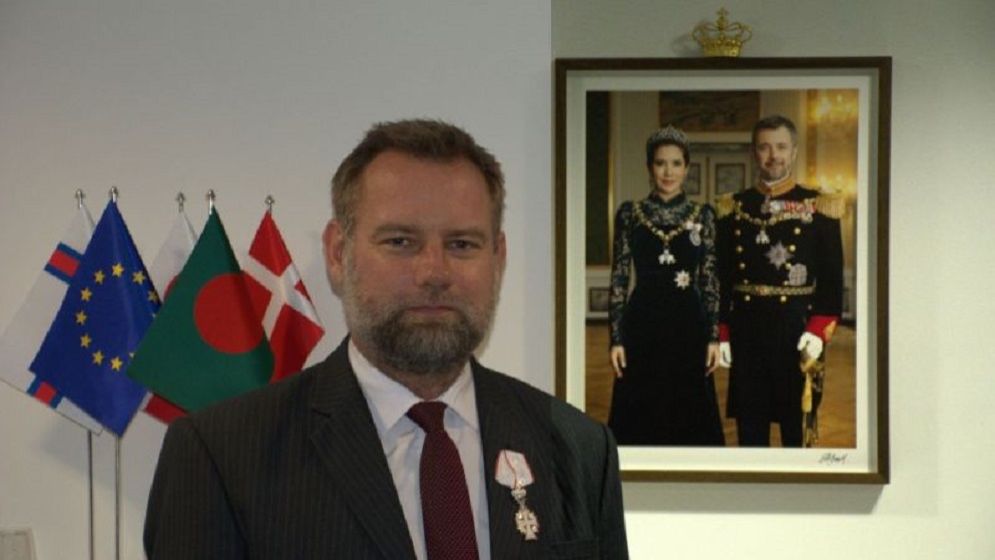
Danish Ambassador Christian Brix Møller on Monday said
Bangladesh needs a stable and inclusive democratic system, and not just a
stable government to attract foreign investment and achieve a trillion-dollar
economy.
He particularly laid emphasis on the implementation of the
July Charter and the opposition parties’ representation in the process.
The Danish envoy made the remarks at the launch of the Bangladesh Garment Manufacturers and Exporters Association's (BGMEA) environmental, social and governance (ESG) dashboard at its Uttara office in the capital on Monday.
He urged the BNP government to seize the current “constitutional moment” to build an inclusive democracy.
Bangladesh needs to reconcile, heal, and build a
well-functioning, stable parliamentary democracy to ensure it can get a
trillion-dollar national economy, he said, following the atrocities committed
by the now-banned Awami League over its 15-year undemocratic rule.
However, Brix Møller also acknowledged that national healing
following Awami League’s totalitarian crimes would naturally take some time.
The foreign delegates also do not wish to be prescriptive,
and want Bangladesh to make its own choices over reconciling the past, and
forging an inclusive democracy, the Danish ambassador added.
He called for keeping focus on implementing the July
Charter, despite the myriad challenges posed by domestic and foreign crises.
"We have an energy crisis and lots of other imminent
challenges, but don't forget the July Charter and the uprising in 2024,"
he said.
Brix Møller expressed hope that Bangladesh would overcome
the present challenges posed by global tensions and internal disorders – in the
same way the country has overcome what he termed as “even greater challenges”
in the past.