


 For all latest news, follow the Daily Sun's Google News channel.


Edu institutions must go beyond academic results to ensure student safety: Bobby Hajjaj
Daily Sun Report, Dhaka
Published: 16 Sep 2026, 06:45 PM
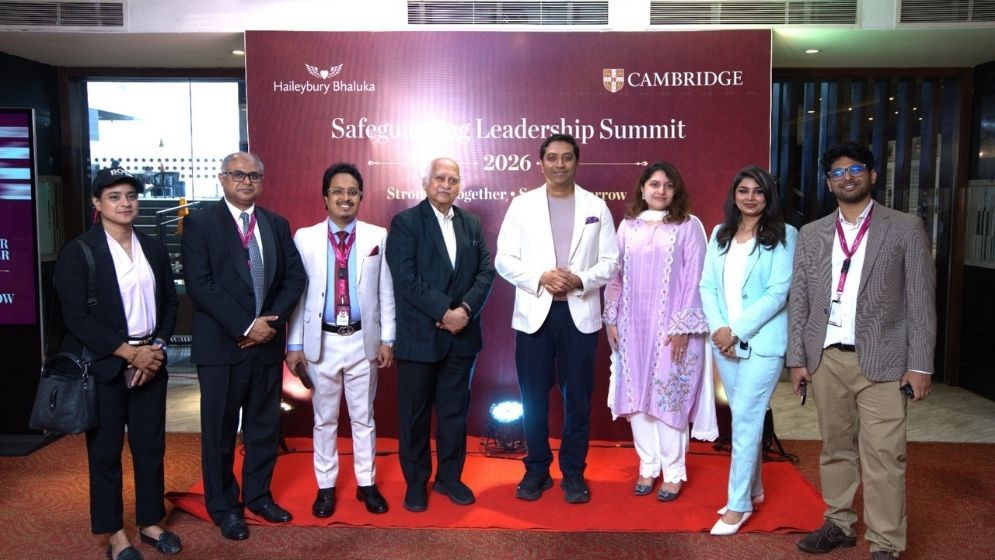
Photo: Courtesy
Educational institutions must go beyond academic performance and take responsibility for ensuring students’ safety, wellbeing and a healthy learning environment, said State Minister for Primary and Mass Education Bobby Hajjaj.
He
made the remarks while delivering the keynote address at the Safeguarding Leadership
Summit 2026 at Le Méridien Dhaka on Wednesday.
Haileybury
Bhaluka and Cambridge University Press & Assessment jointly organised the
summit under the theme “Stronger Together, Safer Tomorrow – Keeping Children
Safe in Bangladesh”, bringing together heads of educational institutions,
education leaders, teachers and safeguarding professionals from across
Bangladesh.
Bobby
Hajjaj said the government had undertaken various initiatives to improve the
quality of education and was committed to working with educational institutions
to improve infrastructure and ensure a safe and healthy environment for
students.
“At
the same time, emphasis is being placed on increasing student engagement with
the community,” he said.
The
state minister stressed the importance of creating environments where students
feel safe, supported and able to raise concerns.
Speaking
at the event, Sarwat Reza, country lead of Cambridge University Press &
Assessment, said the concept of school excellence needed to be broadened beyond
academic performance, with student safety and wellbeing placed at the heart of
educational leadership.
Simon
O’Grady, founding headmaster of Haileybury Bhaluka, highlighted several
safeguarding challenges in Bangladesh’s educational context, including physically
and psychologically harmful disciplinary practices, declining attendance and
completion rates at the secondary level, students’ reluctance to report
concerns and cultural barriers that may discourage young people from
questioning authority.
Speakers
said safeguarding policies alone were not enough and stressed the need for
teachers, staff and school leaders to understand how to respond to concerns,
whom to report them to, how to document cases and what follow-up action was
required.
An
interactive session titled “What Would You Do If...?”, led by O’Grady, invited
education leaders to discuss realistic safeguarding scenarios involving student
self-harm, complaints about the conduct of school staff, bullying and
inclusion.
Participants
exchanged views on immediate responses, reporting responsibilities,
confidentiality, the collection and preservation of relevant information and
evidence, and longer-term support for students.
The
summit called on education leaders to strengthen safeguarding systems in their
respective institutions by establishing clear responsibilities, creating safe
channels for raising concerns, expanding professional training and regularly
reviewing child protection arrangements.
The
organisers said safeguarding should not be the responsibility of a single
individual or be limited to a policy document, but should involve leadership,
accountability, evidence-based practice, professional development and shared
responsibility across the school community.