


 For all latest news, follow the Daily Sun's Google News channel.


CPD sees more red flags than green shoots since elections
Daily Sun Report, Dhaka
Published: 24 Aug 2026, 10:35 PM
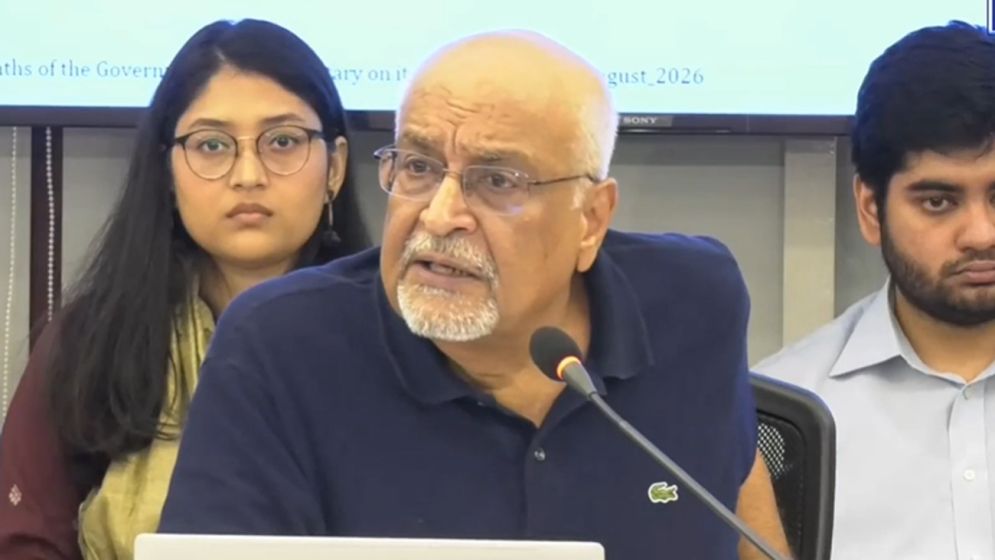
Photo: Collected
Six
months into its tenure, Bangladesh’s new government has managed to tame
inflation, revive export growth and shore up foreign exchange reserves – but
these gains have been overshadowed by a widening trade deficit, a deepening
revenue crisis and slowing GDP growth, according to a scorecard-based
assessment by the Centre for Policy Dialogue (CPD).
Of
31 key economic indicators tracked by the think tank, 12 improved while 19
deteriorated, CPD Distinguished Fellow Dr Debapriya Bhattacharya said while
presenting the report, titled “Six Months of the Government: A Commentary on
its Performance,” at a media dialogue in Dhaka on Monday.
The
government had inherited a fragile economy marked by weak banks, poor revenue
mobilisation, fiscal constraints and subdued investment, he said, adding that a
global slowdown and the fallout from the Middle East conflict on energy prices
had further complicated matters.
Where the government has gained ground
CPD
compared conditions before the government took office in late February with
performance since, and found the clearest improvements in monetary indicators.
Headline
inflation eased from 9.1% in February to 8.3% in July, while food inflation
dropped from 9.3% to 7.2%.
Export
growth turned positive too, rising from a contraction of 3.2% to growth of
3.5%, while gross foreign exchange reserves climbed from $30.1 billion in
February to $32.3 billion by 12 August, on a BPM6 basis.
Even
so, Debapriya cautioned that falling inflation had not necessarily eased
pressure on households, as prices of essential commodities remained elevated
and real wage growth stayed negative.
External sector and revenue under strain
The
external sector suffered the sharpest setbacks, with six of its ten indicators
worsening. Remittance growth slowed markedly, from 21.4% to 11.8%, while
average monthly overseas employment fell from 95,521 to 51,235 workers, partly
due to disruptions in Middle Eastern labour markets.
The
trade deficit widened from $6.7 billion to $10.4 billion, and the current
account swung from a $1.3 billion surplus into a $0.6 billion deficit. The
overall balance-of-payments surplus also narrowed, from $4.6 billion to $3.2
billion.
Public
finances presented an equally troubling picture. Total tax revenue growth
collapsed from 12.3% to 4.9%, while NBR revenue growth slipped from 12.4% to
11.1%, leaving a substantial shortfall. Government borrowing from banks rose to
53.8% of the annual target, up from 48% a year earlier, while net foreign aid
inflow fell from $771.4 million to $734.3 million.
CPD
estimates the FY26 revenue shortfall could approach Tk1 lakh crore – roughly
17% of the annual target. With the government having set a steep FY27 revenue
target of Tk6.95 lakh crore, requiring around 42% growth, Debapriya warned the
shortfall could widen to Tk1.30-1.40 lakh crore, or nearly 20% of the target,
even under optimistic assumptions.
Since
breaching the 3.6% budget deficit ceiling appears unlikely and scope to cut
non-ADP spending is limited, he said the Annual Development Programme could
again absorb the brunt of fiscal adjustment – and urged the government to
protect ADP allocations for education, health and social protection.
Growth slows, factories shut
GDP
growth declined for three consecutive quarters, from 4.96% in Q1 FY26 to 3.03%
in Q2 and just 2.22% in Q3, with industry slipping into negative territory.
“The
fourth quarter is the first full quarter under this government – and its real
testing time,” Debapriya said, warning that the successive declines had already
“set a pattern.”
Industrial
output stagnated, with growth in the general index of industrial production
falling from 3.4% to zero and manufacturing growth dropping from 3.5% to zero.
CPD
noted that 95 factories in Gazipur, Savar-Ashulia and Narayanganj-Narsingdi
shut down permanently between January and August, costing 61,881 jobs.
Net
FDI inflow fell from $662 million to $594 million, private-sector credit growth
slowed from 6% to 4.5%, and persistent gas shortages left only one of the
country’s five urea fertiliser plants operational.
Six reasons, and a way forward
CPD
attributed the faltering recovery to the absence of a coordinated reform
package, a weakened fiscal framework, external shocks, resistance from vested
interests, persistent extortion and violence, and inadequate institutional
capacity.
Debapriya
noted that no formal baseline assessment of the inherited economy had ever been
documented, as the promised second White Paper never materialised.
The
think tank called for a “core budget” for October 2026-June 2027, an integrated
reform package spanning energy, banking and revenue administration, and
accelerated efforts on the stalled 150-well gas exploration programme.
On
the long-pending pay scale, Debapriya said the government should not leave it
hanging.
A
phased approach, with an immediate 20%-25% dearness allowance, could have offered
relief while a fuller structure was worked out, he said.
“Leaving
the issue hanging will not reduce the problem. The longer it is delayed, the
more complicated the situation will become.”
The
assessment was prepared by a CPD research team including Distinguished Fellow
Prof Mustafizur Rahman and Additional Research Director Towfiqul Islam Khan,
among others.