


 For all latest news, follow the Daily Sun's Google News channel.


Govt proposes replacing RAB with Special Response Battalion
Daily Sun Report, Dhaka
Published: 06 Aug 2026, 09:20 PM
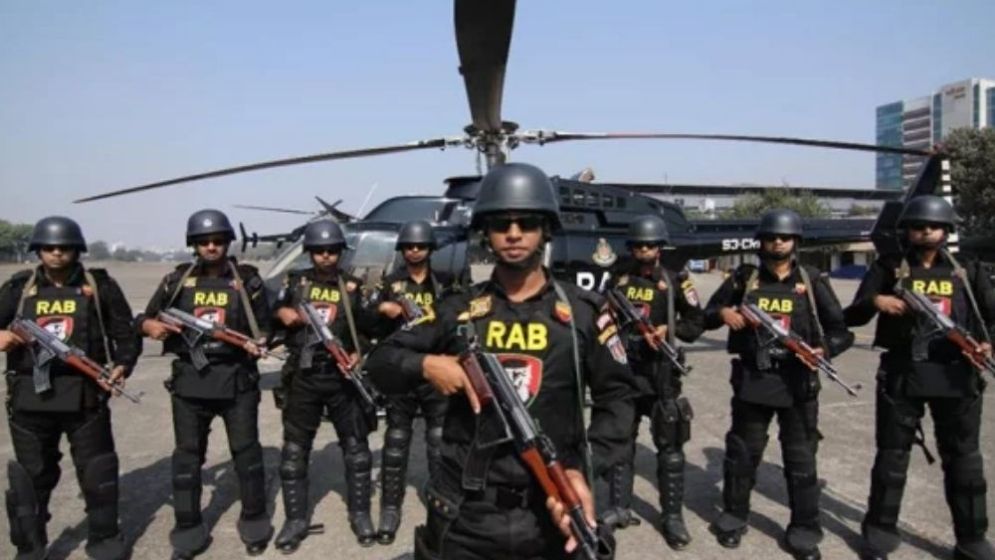
File Photo
The government has moved to abolish the Rapid Action Battalion (RAB) and replace it with a new specialised unit named the Special Response Battalion (SRB) under a proposed law published for public opinion.
The draft Special Response Battalion (SRB)
Act, 2026 has been uploaded to the Ministry of Home Affairs' website for public
consultation.
The proposed law seeks to establish the new
unit under the Bangladesh Police, providing a legal framework for its
structure, operations, investigations, disciplinary procedures and a separate
complaints redress committee to address allegations against its members.
According to officials at the Ministry of Home Affairs, the draft will be circulated among relevant ministries and divisions for their opinions before being placed before the Cabinet. If approved, it will be presented to Parliament for enactment.
Once the new law comes into force, the
existing legal framework governing RAB will be repealed. However, current
regulations will remain in force with necessary adaptations until new rules are
formulated.
Under the proposed law, the SRB will function
as a specialised unit of the Bangladesh Police, headed by a director general
with the rank of additional inspector general of police (Additional IGP). The
force may establish battalions, companies, platoons and sections as required,
with its headquarters in Dhaka and units across the country.
The draft also proposes allowing personnel
from other law enforcement agencies to serve in the SRB on deputation for a
minimum of two years.
The SRB's proposed responsibilities include
maintaining internal security, gathering intelligence, recovering illegal arms
and explosives, combating narcotics, cybercrime, human trafficking, organised
crime and terrorism, as well as assisting other law enforcement agencies.
The unit would also be empowered to file and
investigate cases on the instructions of courts, the government or the
Inspector General of Police (IGP). Its members would be authorised to conduct
searches, seizures and arrests in accordance with the Code of Criminal Procedure.
The proposed law further provides for the
establishment of the SRB's own detention facilities, evidence storage and
interrogation rooms, while investigations would have to be conducted by
officers of at least sub-inspector rank in compliance with the Code of Criminal
Procedure and Police Regulations.
A key feature of the draft law is the
creation of an independent complaints redress committee to investigate
allegations against SRB personnel and strengthen accountability.
The committee would be chaired by an
additional director general of the SRB and include representatives from the
Ministry of Home Affairs, Police Headquarters, the SRB's legal and media wing,
and a government-nominated member with at least 10 years' experience in human
rights, law or judicial administration.
The committee would be authorised to
investigate public complaints, form inquiry teams where necessary and recommend
action if allegations are found to have merit.
The draft law also outlines disciplinary
provisions for SRB personnel, including action against members involved in
misconduct such as drug abuse while on duty, insubordination, negligence,
extortion, misuse of government weapons or equipment, assisting offenders to
escape, gambling or other unlawful activities.
It further states that all assets, personnel,
funds, liabilities, ongoing cases, administrative functions and existing
agreements of RAB would automatically be transferred to the SRB once the new
law takes effect.