


 For all latest news, follow the Daily Sun's Google News channel.


Women Leaders of the Bangladesh Liberation War
Daily Sun Report, Dhaka
Published: 12 Jul 2026, 01:23 PM
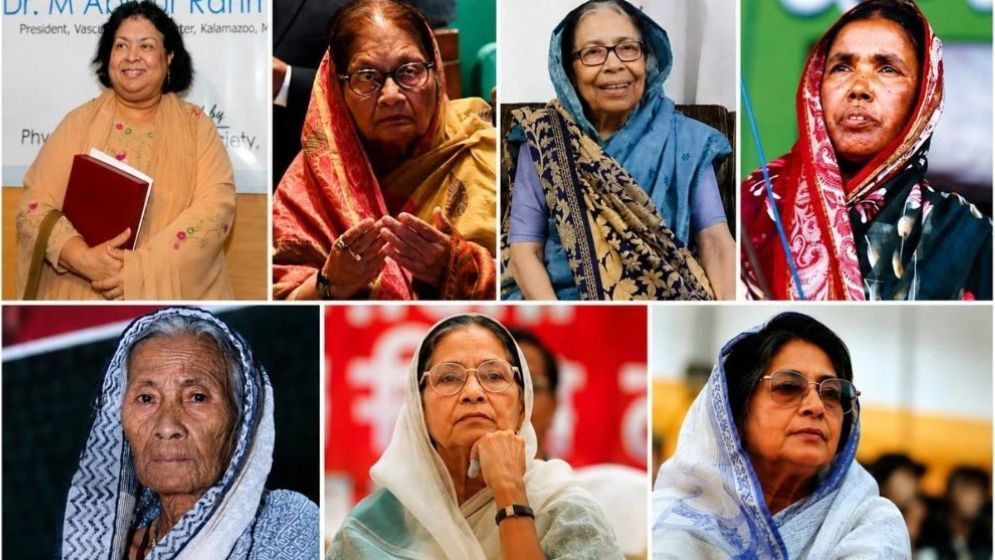
(Top row, from left) Captain Sitara Begum (Bir Protik), Syeda Sajeda Chowdhury, Begum Mushtari Shafi and Taramon Bibi (Bir Protik); (bottom row, from left) Kakon Bibi (Bir Protik), Sufia Kamal and Jahanara Imam. File photo
1. Captain Sitara Begum (Bir Protik)
Captain Sitara Begum (1946–2024) was one of the most distinguished women of the Bangladesh Liberation War. A medical doctor in the Pakistan Army, she joined the Liberation War after March 1971 and served at the Mukti Bahini field hospital under Sector 2, where she was in charge of its medical operations. She supervised doctors, nurses and support staff while treating hundreds of wounded freedom fighters under extremely difficult wartime conditions. Although she did not command combat troops, she exercised formal leadership within the military medical service, making her one of the highest-ranking women in an operational role during the war. Her dedication saved countless lives and strengthened the fighting capacity of the Mukti Bahini. For her outstanding contribution, she was awarded the Bir Protik, Bangladesh's fourth-highest gallantry award. After independence, she continued serving the nation as a physician and remained an advocate for women's empowerment and public health. She is widely regarded as one of the foremost women leaders of the Liberation War.
2. Syeda Sajeda Chowdhury
Syeda Sajeda Chowdhury (1935–2022) was among the most prominent female political leaders of the Bangladesh Liberation War. A senior leader of the Awami League, she joined the Provisional Government's efforts after the Pakistani military crackdown in March 1971. During the war, she organised refugee relief, coordinated volunteers, mobilised women in support of the liberation movement and helped maintain communication between political activists and the Government-in-Exile. She played a significant role in sustaining morale among displaced Bangladeshis and ensuring humanitarian assistance reached refugee camps in India. Although she did not participate in military operations, her political leadership and organisational abilities made her one of the most influential women in the liberation movement. After independence, she remained an important figure in Bangladesh's politics, serving several terms in Parliament and later as Deputy Leader of the House.
3. Begum Mushtari Shafi
Begum Mushtari Shafi (1938–2021) was one of the leading civilian organisers of the Liberation War. Based in Chattogram, she actively supported the independence movement by organising civilian support networks, providing shelter to freedom fighters, mobilising public opinion and assisting families affected by the conflict. Her residence became an important meeting place for activists and members of the resistance during the early stages of the war. Through her writing and organisational work, she encouraged public support for Bangladesh's struggle for independence. Although she did not command military units, her leadership significantly strengthened the civilian resistance movement. Following independence, she remained a respected writer, educationist and cultural activist who consistently advocated for democracy, secularism and recognition of the Liberation War's ideals.
4. Taramon Bibi (Bir Protik)
Taramon Bibi (1957–2018) became one of Bangladesh's most celebrated female freedom fighters through her courage in guerrilla warfare. Serving under Sector 11, she participated in reconnaissance missions, intelligence gathering and, on occasion, direct combat against Pakistani occupation forces. Despite her young age, she displayed exceptional bravery while assisting Mukti Bahini operations in northern Bangladesh. Initially, her contribution remained largely unrecognised, but later investigations confirmed her wartime service, leading to the award of the Bir Protik. Although she did not hold a formal military command, her active participation in combat challenged traditional gender roles and demonstrated that women could contribute directly to armed resistance. Today, she is remembered as an enduring symbol of courage, patriotism and sacrifice.
5. Kakon Bibi (Bir Protik)
Kakon Bibi (1950–2024) was a guerrilla fighter and intelligence operative who played an important role in the Liberation War in the Sylhet region. She gathered intelligence on Pakistani troop movements, supported Mukti Bahini operations and participated in guerrilla activities against occupation forces. During the war she was captured and subjected to brutal torture but survived and continued supporting the liberation movement. In recognition of her exceptional courage, she was awarded the Bir Protik. Although she was not a military commander, her contribution illustrates the critical role women played in intelligence gathering and irregular warfare. Her life remains a testament to resilience and determination under extraordinary circumstances.
6. Sufia Kamal
Begum Sufia Kamal (1911–1999) was one of the foremost cultural leaders of the Bengali nationalist movement. During the Liberation War, she provided moral and intellectual leadership by encouraging resistance against oppression and supporting victims of the conflict. Her stature as a poet, social reformer and advocate for women's rights inspired countless Bangladeshis to remain committed to the struggle for freedom. Although she was not involved in military operations, her influence on public opinion and cultural resistance was immense. After independence, she continued championing democracy, secularism and women's rights, becoming one of Bangladesh's most respected public intellectuals.
7. Jahanara Imam
Jahanara Imam (1929–1994) occupies a unique place in Bangladesh's history. During the Liberation War, she chronicled the experiences of her family and the unfolding conflict in a diary that was later published as Ekattorer Dinguli, one of the most important firsthand accounts of 1971. Although she was not a military or political leader during the war itself, her writings have become an indispensable historical record of the Liberation War. In the post-independence period, she emerged as the country's leading campaigner for justice, spearheading the movement to bring alleged war criminals to trial. Her contribution lies not only in documenting history but also in preserving the ideals of the Liberation War for future generations.