


 For all latest news, follow the Daily Sun's Google News channel.


Hefajat leader Maulana Karim hails budget FY27 as welfare-oriented
Karim particularly termed the decision to increase taxes and prices on alcohol, tobacco, and other harmful products a "groundbreaking step."
UNB, Dhaka
Published: 05 Jul 2026, 06:40 PM
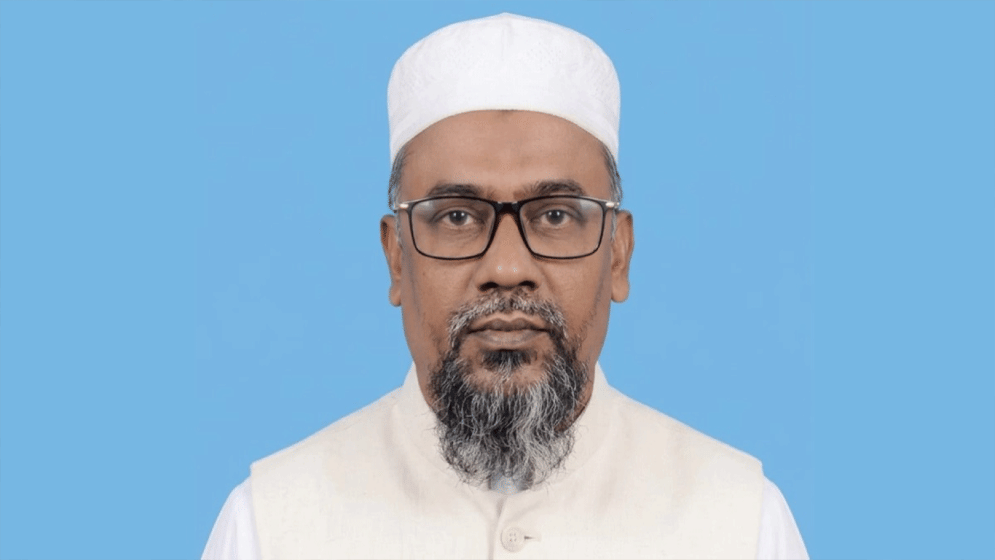
Maulana MA Karim Ibn Moshabbir. Photo: UNB
Maulana MA Karim Ibn Moshabbir, former central member of Hefajat-e-Islam Bangladesh and a key leader of the historic Shapla Chattar movement, has welcomed the proposed national budget for the fiscal year FY2026-2027, describing it as time-befitting, realistic, and welfare-oriented.
In a press statement, Karim said that Tk9.38
trillion budget reflects the country’s current economic realities, public
needs, and national development goals.
"This is not an unrealistic or overambitious
budget. Rather, it is a balanced and responsible fiscal roadmap formulated by
considering the existing economic situation, global challenges, and the
livelihood of ordinary citizens," he said.
The Islamic scholar appreciated the budget’s
prioritized allocations for key sectors, including development, social safety
nets, education, health, agriculture, employment, and infrastructure, which he
noted would accelerate the nation’s progress.
Karim particularly termed the decision to increase
taxes and prices on alcohol, tobacco, and other harmful products a
"groundbreaking step."
"Tobacco and drugs are severely detrimental to
public health, families, and society at large. Increasing their prices will
curb consumption among the youth, safeguard public health, and minimise drug
addiction, crime, and social decay," he added.
He emphasised that building an advanced, prosperous,
and moral state requires the parallel cultivation of social and human values
alongside financial growth.
Expressing optimism over the smooth implementation
of the budget plans, Karim extended his congratulations to the finance minister,
respective policymakers, and the government for delivering a realistic budget
aimed at ensuring economic stability and uplifting the living standards of the
low- and middle-income groups.