


 For all latest news, follow the Daily Sun's Google News channel.


Five divers for rescue drive in eight districts of Rangpur
Kongkon Karmaker, Dinajpur
Published: 11 Jun 2026, 07:37 PM
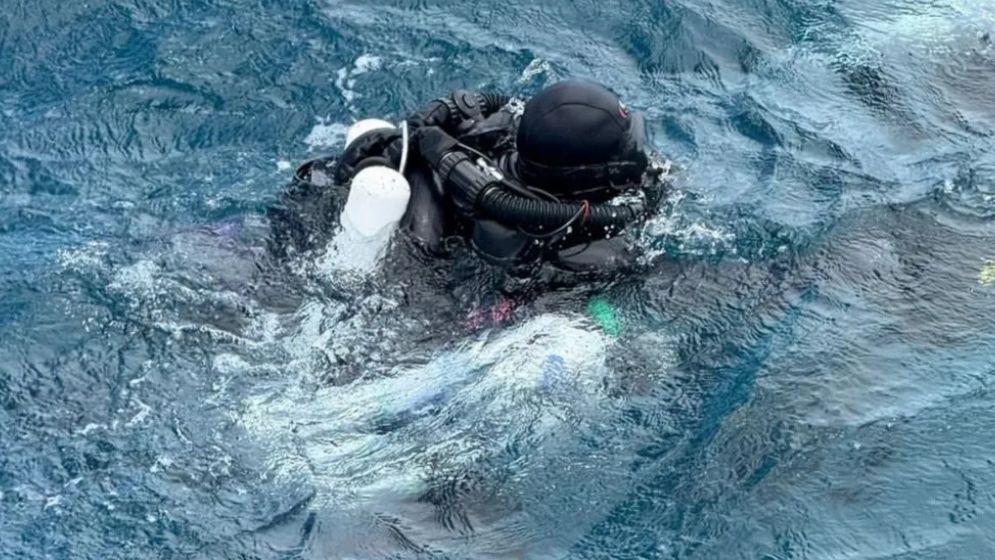
Representational Photo: Reuters
When six-year-old Sabia Jannat and her four-year-old brother Siam fell into the water in Dinajpur's Phulbari upazila on 20 May, there was no rescue diver anywhere close. The nearest trained person was sitting in Rangpur city — over 100 kilometres away, more than two hours by road. By the time anyone could have reached them, it was already over. They were two of at least fifty people, most of them children, who drowned across Rangpur division in a single month.
Bangladesh doesn't lack water. That's actually the problem — it has far too much of it. Rangpur division's eight districts — Rangpur, Gaibandha, Kurigram, Lalmonirhat, Nilphamari, Dinajpur, Panchagarh and Thakurgaon — are cut through with rivers, canals, ponds and floodplains in every direction. The Teesta, the Dharla, the Atrai, dozens more. Water is everywhere here. And so is drowning.
But here's the thing: this isn't about geography, and it isn't bad monsoon luck. This is a state that made a choice and then just never revisited it. The Fire Service and Civil Defence has had a rescue-diver unit in Rangpur since 1990. When it started, 25 divers were split across the whole country. Rangpur got two. Those two men then covered eight districts for the next 29 years. Twenty-nine years. In 2019, three more were finally posted here, making it five. And that's still where we are.
"If a call comes from Panchagarh, it takes at least three and a half hours from Rangpur — that's around 160km. When we get there, locals immediately ask why we took so long. What do you even say to that?" — Abul Kalam Azad, rescue diver, Rangpur Divisional Fire Service.
Just sit with those numbers for a second. Five divers. Eight districts. A region bigger than many European countries. Not a single diver stationed at the district or upazila level — because those posts simply don't exist. When a child drowns in a village pond in Kurigram, the local fire station gets there fast enough. But those officers fight fires. They don't go in the water. So they stand on the bank and wait while someone phones Rangpur.
Azad has described days — sometimes five, six, seven in a row — of just moving between districts without ever going back to base. Finish a job in Panchagarh, get redirected to Gaibandha, then a call from Lalmonirhat. And the job itself, when it's even possible to do it, is almost never a rescue anymore. It's a body recovery. A person underwater for more than three to five minutes without oxygen suffers irreversible brain damage. Two and a half hours is not a response time. It's just the time it takes to confirm someone is dead.
Between 3 May and 7 June this year, the deaths just kept coming. A three-year-old in Ghoraghat. Two brothers in the Teesta. Two siblings in Phulbari. A fifteen-year-old and her five-year-old brother in Gangachara. A university student in the Ghaghat river. Six children in Pirgacha in four days. Two madrasa students in Panchagarh. Fire service records show 23 bodies pulled from 22 separate operations in the five months to 6 June. Local counts of incidents that never get officially logged push the real monthly figure past fifty.
And yet this barely registers in national policy conversation. Drowning doesn't get the attention of a building collapse or a ferry disaster. It's one child at a time, in villages that don't make the evening news, in districts politicians only visit before elections. Every death gets reported locally, mourned locally, and then quietly forgotten.
"By the time a diver arrives, there's nothing to do but recover the body. You can't justify keeping so few divers in posts this critical." — Sabbir Ahmed, former Rover Scout, Rangpur.
Fire service officials — none willing to go on record — openly admit the situation is indefensible. They've flagged the staffing gap upward. The response has been a vague something-is-in-the-works assurance with no timeline and no actual new posts. Meanwhile, the agency has received new water tankers, foam vehicles and motorcycles. Equipment keeps arriving. Trained human beings do not.
They ask from people on the ground isn't extravagant. Siddikur Rahman, a scout leader and trainer in the region, wants a minimum of five to six divers in every district — one proper unit per district. That's somewhere between 40 and 48 divers total, replacing the current five. In the context of public spending, this is a rounding error. What's missing isn't money. It's the political decision to spend it.
Yes, there are also valid conversations about swimming education, keeping children away from open water, parental supervision. All of that matters in a country where millions of kids grow up metres from rivers and ponds. But a community awareness campaign does not pull a drowning child out of the Teesta. A diver who is actually nearby might.
Bangladesh has a genuinely impressive disaster resilience record — cyclone shelters, flood embankments, early warning systems. That work is real and it deserves its international recognition. But at the same time, a specific, preventable, geographically concentrated form of mass death has been allowed to continue year after year, while the agency meant to address it has stayed frozen at a headcount decided in 1990.
The families of Sabia Jannat, of the brothers lost in the Teesta, of the madrasa students in Panchagarh — they're not filing policy briefs. They're asking one simple question: in a country that can build highways and power plants, why can't the government put a trained rescuer somewhere a child can actually be reached in time? It's not complicated. The answer, honestly, is just that nobody with authority has bothered to do it.
That decision has a body count. And it goes up every week.