


 For all latest news, follow the Daily Sun's Google News channel.


Govt approves five LNG cargoes as demand rises
Daily Sun Report, Dhaka
Published: 03 Jun 2026, 11:41 PM
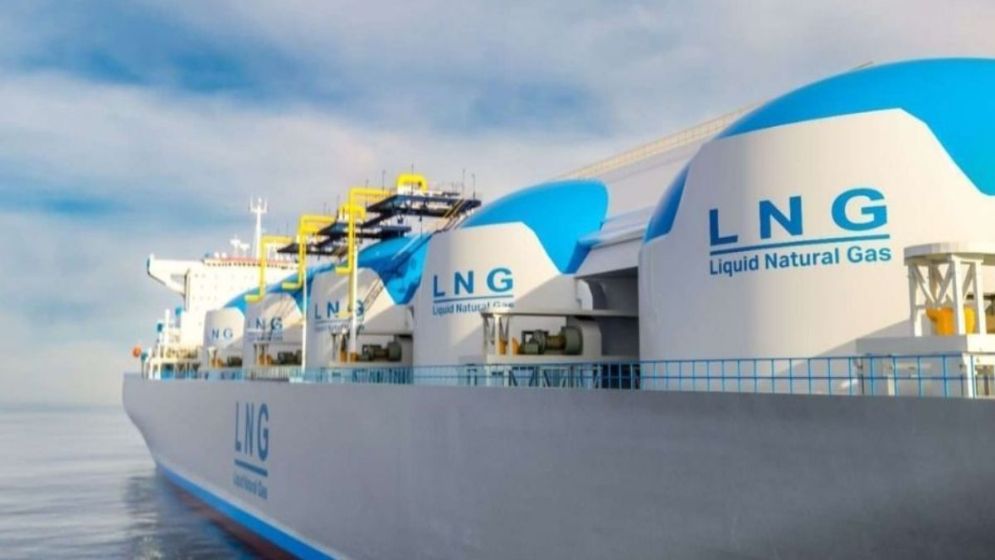
Representational Image
The government has approved the import of five liquefied natural gas (LNG) cargoes from Switzerland, the United Kingdom and Singapore to help meet rising energy demand amid declining domestic gas production.
The approval came at the 24th meeting of the Cabinet Committee on Government Purchase held at the Secretariat on Wednesday, chaired by Finance Minister Amir Khosru Mahmud Chowdhury.
According to officials, the committee approved separate proposals from the Energy and Mineral Resources Division to import the LNG cargoes through both direct procurement and international quotation methods.
Under one proposal, the government approved the purchase of two LNG cargoes from Switzerland-based SOCAR Trading SA under a short-term government-to-government (G2G) arrangement for 2026.
The LNG will be supplied at a price linked to the Japan-Korea Marker (JKM) benchmark, with a premium of US$0.125 per MMBtu, following negotiations between the two sides, officials said.
In a separate proposal, the Cabinet Committee approved the purchase of three LNG cargoes through the international Request for Quotation (RFQ) process under Rule 105(3)(a) of the Public Procurement Rules 2025.
Under the approved schedule, the 26th LNG cargo will arrive on 26-27 June, the 27th cargo on 30 June-1 July, and the 28th cargo on 6-7 July.
Singapore-based BP Singapore Pte Ltd will supply one cargo, while UK-based TotalEnergies Gas and Power Ltd will supply the remaining two under the RFQ process.
The government will spend approximately Tk2,372.21 crore, including Advance Income Tax (AIT), to import the three cargoes.
Bangladesh currently meets nearly 30% of its gas demand through imported LNG as domestic production continues to decline.
According to Energy Ministry data, the country requires around 2,650 million cubic feet of gas per day (mmcfd).
Industry insiders said the government has been increasing LNG imports to ensure uninterrupted gas supply for industries, power plants and households despite elevated prices in the global market.
Global LNG prices remain significantly higher than pre-war levels of around US$10-12 per MMBtu, adding pressure on Bangladesh’s energy import bill.