


 For all latest news, follow the Daily Sun's Google News channel.


Press freedom relatively stable during March-April in Bangladesh: Report
Daily Sun Report
Published: 16 May 2026, 11:39 PM
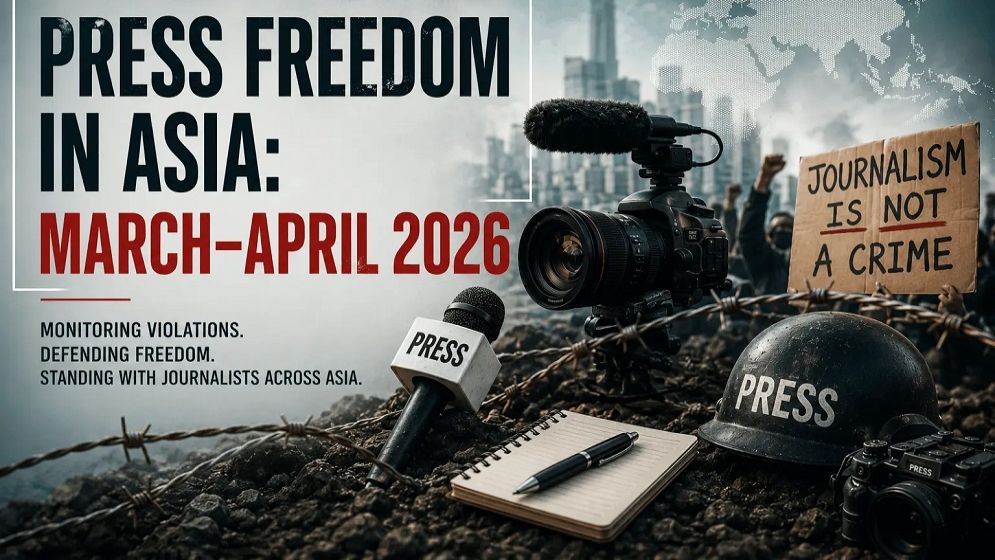
The press and media scene in Bangladesh was relatively
stable during March-April with no visible pressure on journalists from the
BNP-led government, even as most other Asian countries demonstrated an alarming
trend.
Sri Lanka was only the other country in South Asia to show
improvements like Bangladesh in the two months, while Malaysia and Thailand
were the among the other outliers in the continent, according to a reported
from BNN Asia.
In many countries, repression intensified, reporters were
arrested, banned, threatened, and censored. Governments that publicly champion
press freedom routinely violated it in practice. The tools of suppression
ranged from license revocations and court cases to outright physical attacks.
The regional picture is uneven. Sri Lanka and Bangladesh
showed signs of improvement compared to earlier periods. Myanmar moved sharply
in the opposite direction. Pakistan, India, China, Vietnam, Afghanistan, and
the Philippines remain red zones countries where press freedom faces severe,
systematic threats. In Central Asia and the Middle East, Iraq, Saudi Arabia,
and the UAE fell short of expected standards. Iran’s situation is volatile, destabilized
by ongoing conflict. South Korea, Japan, Qatar, Thailand, and Nepal sit in a
more moderate category, though each carries its own risks.
What follows is a country-by-country account of what
journalists faced during those two months.
Bangladesh
During March and April 2026, Bangladesh presented a
relatively calm picture regarding press freedom. No incidents of attacks,
threats, killings, or orchestrated harassment against journalists were
reported. Indicators of political, social, and economic security showed
noticeable improvement. State surveillance, police harassment, fear of
punishment, and arbitrary control significantly receded.
The current BNP-led government under Prime Minister Tarique
Rahman, in power since February 2026, has made several public commitments to
support journalists and the development of the media sector. The government has
emphasized press freedom, the safety and welfare of journalists, and the
enhancement of their professional dignity.
In a meeting with newspaper owners, Prime Minister Tarique
Rahman clearly stated that his administration believes in a free and
independent media. He assured that the government does not consider journalists
or media outlets as enemies and pledged to fully guarantee press freedom. He
also committed to holding regular meetings with editors.
Information Minister Zahir Uddin Swapan has referred to the
“Journalists’ Rights Protection Ordinance 2025,” which remains a draft and has
not yet been passed into law as of May 2026. The Minister also promised to
establish a “National Journalist Retirement Welfare Board” to ensure financial
security, welfare, and benefits for journalists in their old age.
However, the period was not entirely without incidents. On
24 April 2026, several journalists covering news in Dhaka’s Shahbagh area were
harassed by activists of Jatiyatabadi Chhatra Dal (JCD). In protest, the Dhaka
University Journalists Association announced a boycott of all JCD programs.
During March and April, at least two journalists were arrested and cases were
filed against two others.
The television channel "One," which was shut down during the
previous Sheikh Hasina government, resumed broadcasting in April.
Despite the absence of visible government pressure, many
mainstream media outlets continue to practice self-censorship, avoiding or
blacking out stories that could embarrass those in power. As a result, the
general public is increasingly turning to social media for news and
information.
Pakistan
The space for free journalism in Pakistan remained tight
throughout March and April 2026. Political turmoil, pressure from security
forces, restrictive cyber laws, and censorship all added to the strain.
On March 8, journalists covering the International Women’s Day march in Islamabad including Ismat Jabeen, Sehrish Qureshi, and Farhat Fatima were detained along with other attendees.
A particularly blunt moment came in March, when Law Minister
Azam Nazeer declared that any journalist criticizing Pakistan’s foreign policy
amid Middle East tensions would face legal action for crossing a ‘red line.’
Human rights groups and media watchdogs reported that attacks, intimidation,
and threats against journalists especially those covering security issues or
government criticism increased across these two months.
India
Journalists in India faced a familiar pattern during March
and April 2026: legal cases, interrogations, physical attacks, and
administrative pressure. Those covering politics and security topics bore the greatest
risk. The tools being used to shrink independent journalism include UAPA,
defamation laws, the new Digital Personal Data Protection (DPDP) Act, IT Rules
2026, concentrated media ownership, and online harassment.
In March, across various states, at least 19
journalists face charges of sedition, defamation, or IT law violations for critical
reporting. More than 37 journalists were
attacked while covering elections, rallies, and incidents of violence across
India during these months.
International organizations have raised particular concern about the rising online harassment of female journalists in India, especially Muslim women reporters, who face heightened and targeted threats. It has also become increasingly common for India’s Prime Minister to bypass press conferences entirely, granting interviews only to sympathetic outlets.
Sri Lanka
Sri Lanka’s media environment is slowly improving, but it is
far from free. Outdated laws, political influence, and impunity for those who
attack journalists remain deeply entrenched. During March and April 2026,
journalists especially those covering politics and corruption continued to face
pressure, threats, and harassment.
In March, several investigative journalists received online
and phone threats following reports on corruption and political irregularities.
Local journalism organizations voiced concern. In April, journalists covering a
political event in Colombo were attacked; the injured required hospital
treatment.
The most prominent case during this period involved
Sandaruwan Senadheera, the exiled editor of Lanka-e-News. Returning to Sri
Lanka after 16 years abroad for medical reasons, he was arrested at Bandaranaike
International Airport. The charges stemmed from a contempt of court case tied
to his reporting on the 2009 attack on journalist Upali Tennakoon. He was
subsequently released on bail.
Thailand
Thailand’s media environment is relatively better than most
of its Southeast Asian neighbors, but meaningful barriers remain. Sensitivity
around the monarchy, legal repression, and political interference all limit
what independent journalism can accomplish.
In April 2026, Natural Resources and Environment Minister
Suchart Chomklin filed criminal defamation charges against two journalists.
Among those sued was Hathairat Phaholtap, editor-in-chief of Isaan Record, for
reporting on bribery allegations against the minister. Human Rights Watch
condemned the case as a serious threat to press freedom.
Syria
The post-Assad period has brought historic improvements to
press freedom in Syria but on the ground, independent journalism remains
dangerous and constrained. Political fragmentation, areas under militia
control, and sectarian violence have created serious risks for reporters.
Self-censorship is widespread.
In March, several people were arrested over critical social
media posts, particularly in the Hama region, though most were released
quickly. Journalists who entered sensitive areas such as Alawite regions
without authorization were detained and forced to delete their footage.
Concerns raised at the start of the year over the abductions
of German journalist Eva Maria Michelmann and Turkish journalist Ahmet Polad in
Raqqa continued through March and April. In April, journalists covering
conflicts in Latakia and Sweida reported attacks, gunfire, and harassment.
Philippines
March and April 2026 were deeply troubling months for
journalists in the Philippines one of Asia’s most dangerous countries for media
workers. Killings, arrests, and harassment all occurred during this period.
On March 20, Julito ‘Jaz’ Diamante Calo (49), a radio
broadcaster for DNN News FM, was shot and killed by unknown assailants outside
his home. On April 19, RJ Nichole Ledesma (30), editor of Paghimutad-Negros and
a community journalist, died during an army anti-insurgency operation. The military
listed Ledesma among 19 rebels killed. Journalist organizations have disputed
this account, noting that Ledesma had been reporting on a renewable energy
project and was likely targeted because of that work. International press
freedom bodies have observed that the Philippines is among the countries where
the killing of journalists most consistently goes unpunished.
In March, nine journalists and media workers received threats after publishing reports on corruption, anti-drug operations, and local political violence.
Malaysia
Malaysia’s media environment sits above many of its ASEAN
neighbors, but legal harassment, financial pressure, and self-censorship
continue to limit independent reporting. The Malaysian Media Council (MMC), the
Centre for Independent Journalism (CIJ), and other advocates have long pushed
for legal reforms and support for the press. Despite those calls, the
environment has been deteriorating with lawsuits, intimidation, and coercion on
the rise.
In March, four journalists were questioned by police after reporting on corruption and government irregularities. Allegations emerged that state secrecy and communications laws were being misused against them. Local journalism organizations reported growing numbers of defamation suits and administrative pressure targeting independent online news portals.
Nepal
Nepal has struggled to maintain the modest press freedom
gains it had achieved in recent years. Political instability, legal harassment,
physical attacks, and financial hardship in the media sector are all taking a
toll.
In March, journalists covering political protests were
beaten, threatened, and had their phones and cameras seized by both police and
political cadres. Freedom Forum and Media Action Nepal documented at least six
significant incidents during this period. Local authorities and security forces
were accused of deliberately obstructing reporting.
In April, journalists covering forced evictions in a Kathmandu squatter settlement were blocked from conducting interviews and compelled to delete their footage. Adding to the broader crisis, many newsrooms have unpaid salaries stretching back two to sixteen months. Journalists are leaving the profession.