


 For all latest news, follow the Daily Sun's Google News channel.


Nation celebrates Pahela Baishakh amid festivity
Daily Sun Report, Dhaka
Published: 14 Apr 2026, 10:13 PM

Photo: Kamrul Islam Ratan
The nation celebrated Pahela Baishakh, the first day of the Bangla New Year, on Tuesday amid festivity and a vibrant atmosphere across the country.
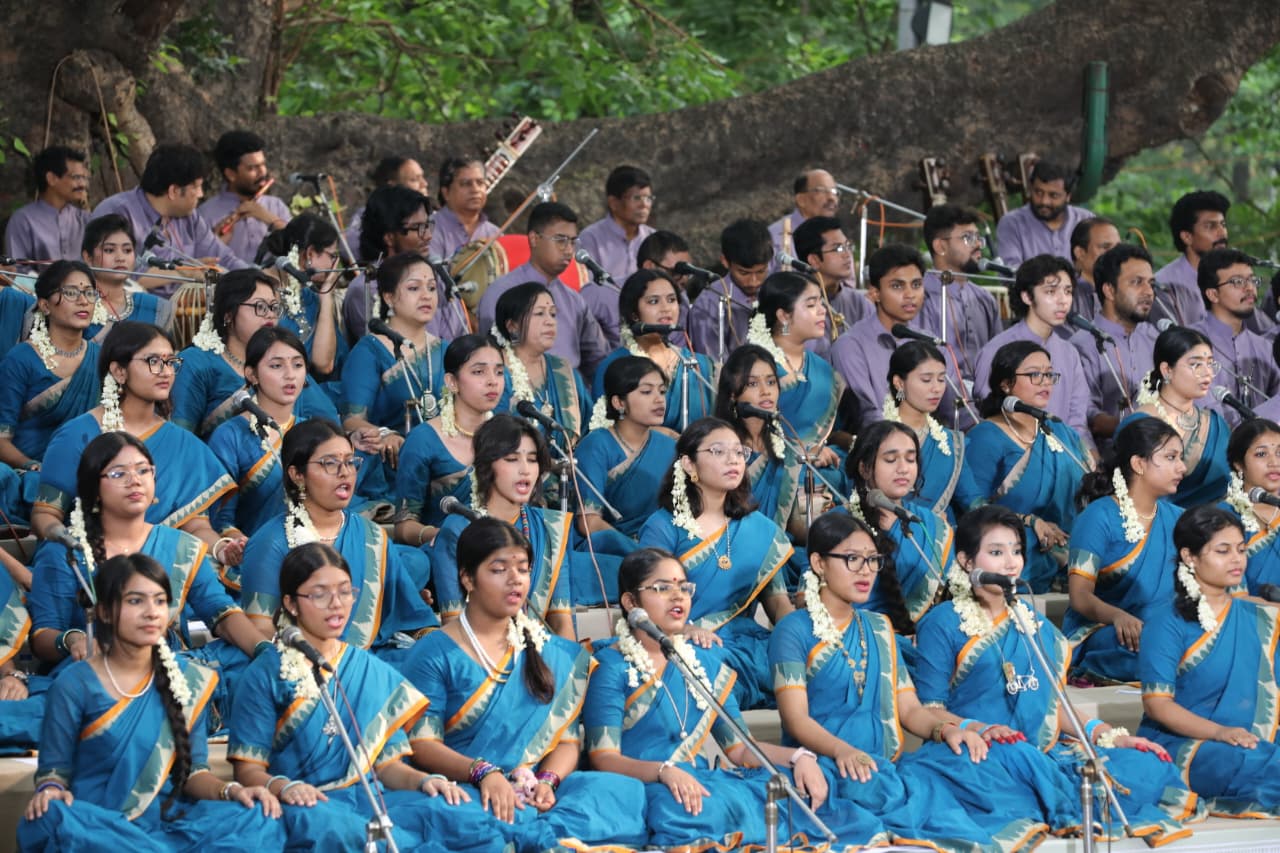
Like in previous years, the Chhayanaut welcomed the day at
Ramna Batamul, staging the iconic dawn programme with the theme “Bhoyshunno,
Uchcho Jetha Shir”.
At the programme, over a hundred artistes performed the song
“Jago Alok Lagone” in a unified chorus, ushering in Bangla New Year 1433.
From early morning, visitors began streaming to witness the programme. The crowd swelled as time progressed, turning the venue into a sea of festivity. The programme concluded around 8:25am with the collective rendition of the national anthem.
The Faculty of Fine Art of the University of Dhaka organised
a New Year procession, which started from the Faculty premises and returned to the
same spot after parading through Shahbagh, Doel Chattar, and the Begum Rokeya
Hall area.
The procession featured five large motifs—a rooster, a
violin, a dove of peace, an elephant, and a horse. The celebration, an
intangible cultural heritage recognised by UNESCO, drew crowds from early
morning, with people from all walks of life taking part.
In addition, performances by around 40 artistes playing musical instruments and a nearly 150-foot-long scroll painting added a vibrant dimension to the programme.
Representatives from 10 different ethnic communities across
the country also participated, highlighting the event as a symbol of
multicultural unity.
Udichi also marked the occasion with a day-long programme of
music, poetry, and dance, under the theme “Let social fascism be destroyed in
the fierce spirit of Baishakh”, with its main event scheduled at 4pm at
Topkhana Road.
Jahangirnagar University also celebrated the day in a festive atmosphere, embracing the theme “Harmony of the New Year, Revival of Democracy”.
-69de66ad4cb8d.jpeg)
The Baishakhi procession set off at 10:30am from the pottery
stage near the Old Arts Building, where the main attractions featured giant
crafted figures of a bull, a horse, and birds.
Students carried kula, trays, and placards that reflected
protest themes and various motifs of democratic spirit.
Jagannath University celebrated the day with a vibrant
Baishakhi procession with the theme “Invocation of the New Year: Unity, Peace,
and Progress”. The university is celebrating the Bangla New Year with a two-day
programme.
The procession was organised by the Faculty of Fine Arts,
which showcased a range of artistic motifs, symbolising peace and harmony,
including large doves, birds, spinning wheels, sunflowers, and dragonflies.
In addition, government offices, autonomous and educational
institutions, and others also celebrated the day with various colourful events.
Special arrangements were made to serve traditional food in prisons, hospitals,
and Shishu Poribar, alongside cultural programmes for children.
All museums and archaeological sites remained open to the
public, with free entry for children, students, and persons with disabilities.
At the local level, Baishakhi Shobhajatra and cultural events were held in
every district and upazila.
Business communities, especially in rural areas, also
observed their traditional Halkhata and opened their new account books, while sweetmeats
were distributed among customers to mark the day.
Meanwhile, President Mohammed Shahabuddin and Prime Minister
Tarique Rahman greeted the nation in separate messages, extending New Year
wishes to all citizens.
The president called for unity, harmony, and renewed
commitment, describing Pahela Baishakh as a “universal festival of the Bengali
soul”.
The prime minister said Pahela Baishakh is a unique symbol
of the nation’s history, culture, and identity, noting that the festival has
returned for centuries with a message of renewal, inspiring people to overcome
past hardship and move forward with determination.