


 For all latest news, follow the Daily Sun's Google News channel.


Zero border killings in first month: Hopes rise for govt to sustain progress
Daily Sun Report, Dhaka
Published: 18 Mar 2026, 06:06 PM
File Photo: Collected
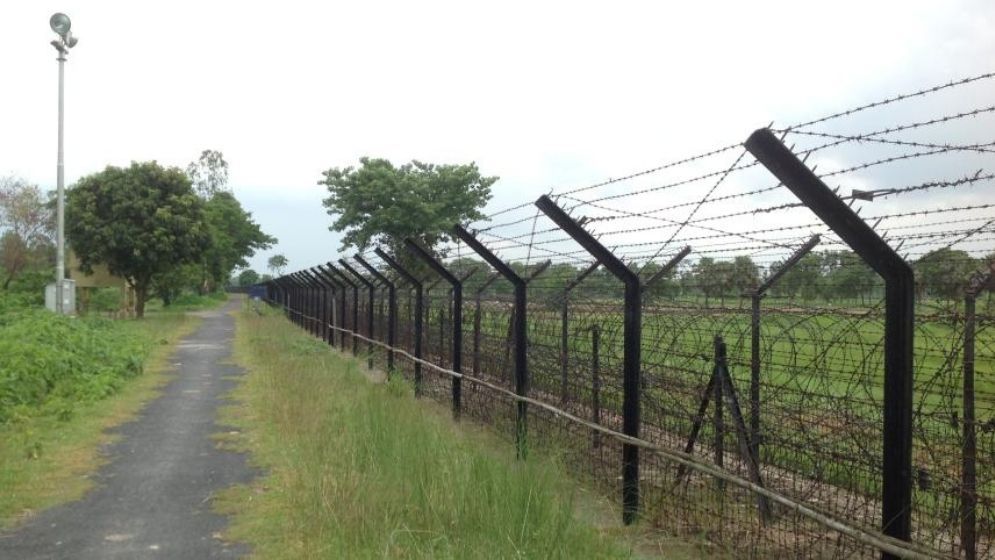
The Bangladesh-India frontier has long symbolised a troubling reality, where gunfire, deaths and humanitarian concerns often overshadowed international norms and neighbourly relations. For years, killings of unarmed Bangladeshi civilians along the border appeared to follow a grim pattern.
Against this backdrop, the drop to zero border
deaths in the first month of the new government marks a significant shift -- reflecting
not only a statistical improvement but also diplomatic engagement, political
will and a clear prioritisation of citizens’ safety.
The new government, which assumed office on 17
February, has completed its first month. During this period, no Bangladeshi was
reportedly killed by India’s Border Security Force (BSF), a departure from a
long history of fatalities.
Border killings have not been isolated incidents but
part of a prolonged crisis rooted in weak management, limited diplomatic
effectiveness and gaps in border governance. According to Ain o Salish Kendra,
the number of Bangladeshis killed along the border over the past decade remains
alarming.
At least 34 people were killed in 2025 -- the
highest in five years. The figures stood at around 28 in 2024, 20 in 2023, 17
in 2022 and 16 in 2021, highlighting a persistent pattern.
Beyond statistics, each death represents a family, a
life and an unfinished story. The 2011 killing of Felani Khatun, whose body was
left hanging on a barbed-wire fence for hours in Kurigram, remains a deeply
symbolic and painful episode in public memory.
As recently as January this year, three Bangladeshis
were shot dead along the border, indicating that the situation remained
volatile until just before the new government took office.
In this context, the absence of border killings in
the first month is widely seen as a major achievement. Soon after assuming
office, the government reportedly conveyed a strong message to New Delhi that
the use of lethal force without provocation would not be acceptable.
This stance, coupled with domestic political stability
and public support, appears to have strengthened Bangladesh’s position
internationally. Observers note a visible restraint in the conduct of India’s
Border Security Force, while Border Guard Bangladesh has adopted a more alert
and proactive role. The combined shift has contributed to an improved situation
along the frontier.
The government’s guiding principle of prioritising
national interest is also seen as a contributing factor. When the state places
the highest value on citizens’ lives, it influences both domestic policy and
international engagement. The current development is viewed as a reflection of
that approach.
Efforts to stabilise the border have involved
coordinated actions by different state agencies, including the home and foreign
ministries, law enforcement and intelligence bodies. Surveillance has been
strengthened, and steps have been taken to curb illegal crossings and
smuggling, reducing tensions and the risk of violence.
Over the past month, BGB has seized smuggled goods
worth nearly Tk2 billion, recovered foreign firearms and large quantities of
ammunition, and detained more than 200 individuals in anti-smuggling and
anti-narcotics drives.
Although the current situation is highly
encouraging, there is no room for complacency at this stage. The border remains
a complex and sensitive area where conditions can deteriorate at any time. BGB
has urged residents to avoid illegal crossings and risky activities, stressing
the need for greater public awareness.
The halt in border killings also carries positive
implications internationally, reinforcing Bangladesh’s commitment to human
rights and potentially strengthening its diplomatic standing.
A peaceful and secure border is essential not only
for safety but also for trade, cultural exchange and connectivity between the two
countries. If the current trend continues, the frontier could evolve from a
zone of conflict into one of cooperation and mutual respect.
While the BNP government’s achievement is notable,
sustaining it will be the real challenge. Continued vigilance, policy
consistency and political commitment will be crucial to ensure that this
progress is not short-lived.
The expectation remains that the current momentum will continue, transforming the border into a symbol of peace, security and humanity.