


 For all latest news, follow the Daily Sun's Google News channel.


Loan defaults, high interest rates biggest barriers to investment: CPD
Daily Sun Report, Dhaka
Published: 01 Mar 2026, 11:07 AM
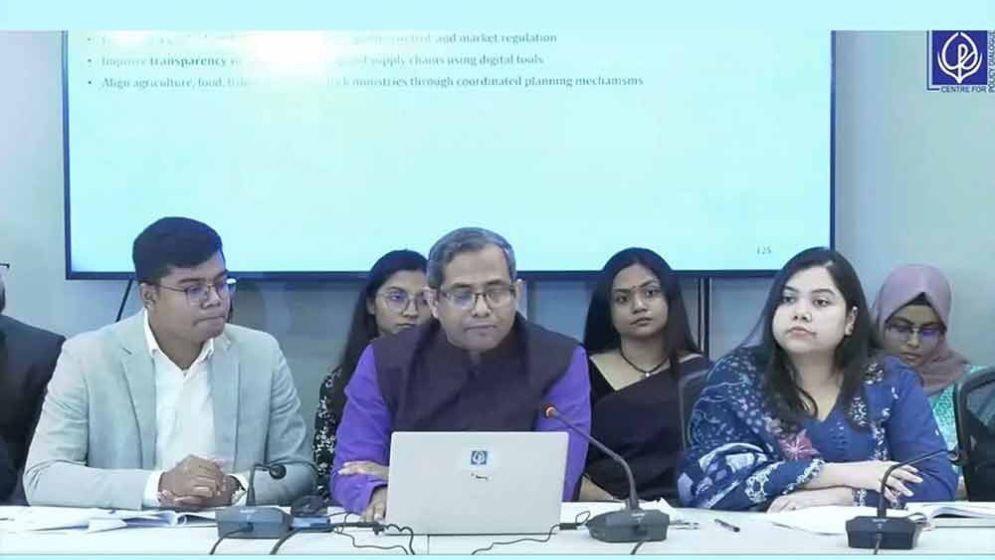
Photo: Collected
Loan defaults and high interest rates have emerged as the most significant obstacles to investment and business growth in Bangladesh, the Centre for Policy Dialogue (CPD) has observed.
Mounting non-performing loans (NPLs), failure to control lending rates and a lack of transparency are collectively placing the country’s business environment at risk, it also observed.
The observations were presented at a media briefing titled “Policy and Administrative Decisions in the Economic and Social Sectors of the New Government: 180 Days and Beyond”, held at the CPD office in Dhanmondi on Saturday.
According to the CPD report, non-performing loans have long plagued the banking sector. Defaults are rising in both state-owned and private banks, weakening their capital base. As a result, banks are increasingly reluctant to extend new credit and are raising interest rates to mitigate risks, directly affecting investment in productive sectors.
CPD noted that lending rates in industry and commerce have reached double digits in many cases, discouraging long-term investment. Entrepreneurs reported that high interest rates and additional charges are inflating project costs to such an extent that many investment plans are being abandoned. New and small entrepreneurs, in particular, are finding bank credit largely inaccessible.
The report attributed rising defaults to political influence, weak oversight and limitations in the legal framework. It alleged that large borrowers are often able to secure fresh loans without repaying instalments, undermining banking discipline and eroding public confidence. Without stringent legal action against defaulters, interest rates cannot be reduced, CPD warned.
Although a major source of employment, the SME sector is struggling to obtain loans on favourable terms. Many entrepreneurs are turning to non-bank financial institutions or informal sources at higher rates, increasing business risks. CPD recommended the creation of a dedicated low-interest fund with simplified conditions for SMEs.
The report also cited broader financial sector weaknesses, including liquidity shortages that have compelled banks to offer higher deposit rates. With deposit costs rising, lending rates remain elevated, discouraging investment and threatening economic growth.
CPD argued that without comprehensive banking sector reforms, other economic initiatives—such as tax reform, improving the business climate or attracting foreign investment—will not be sustainable. It called for strict legal measures against defaulters, an end to preferential treatment for large borrowers, professional management of bank boards and stronger central bank supervision. Transparent policies for loan rescheduling and write-offs were also recommended.
CPD Research Director Dr Khondaker Golam Moazzem described the outgoing government’s interim trade agreement with the United States as discriminatory and urged its cancellation. He said the agreement could harm Bangladesh’s long-term economic interests and should be reviewed by the new administration.
Under the deal, Bangladesh would be required to comply with US border policies, refrain from imposing retaliatory tariffs or VAT on American goods and keep its services sector open to US firms. Restrictions would also apply to digital trade, including prohibitions on digital services taxes on US technology companies and customs duties on electronic transmissions. Dr Moazzem questioned how an unelected government could commit the country to such long-term obligations.
CPD also expressed concern that the Economic Partnership Agreement with Japan could delay the country’s energy transition. In the power sector, it warned that excess generation capacity and capacity payments are placing additional strain on the economy.