


 For all latest news, follow the Daily Sun's Google News channel.


Discussion held on content creators’ role in checking tech-based sexual abuse
Daily Sun Report, Dhaka
Published: 25 Feb 2026, 09:07 PM
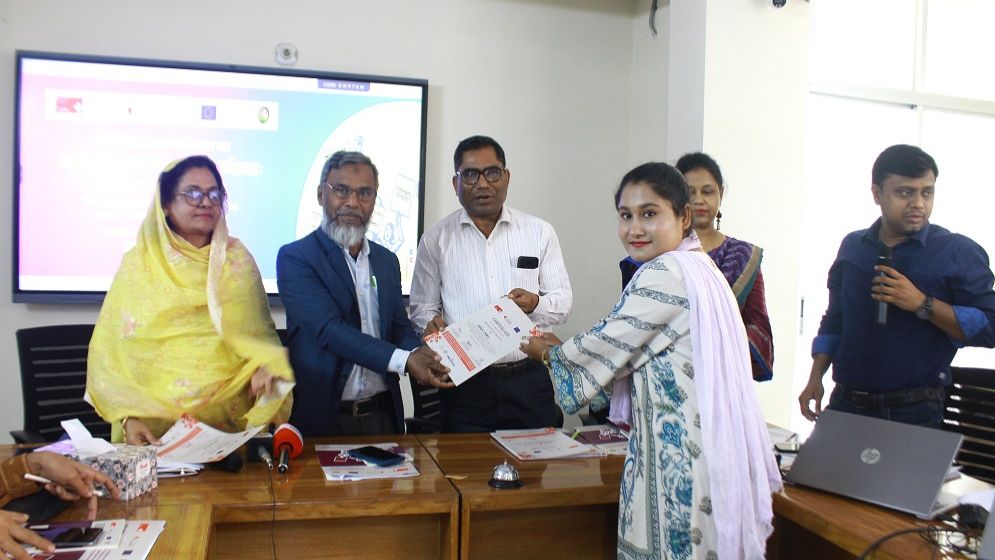
Photo: Courtesy
Bangladesh NGOs Network for Radio
and Communication (BNNRC), in collaboration with SETU, organised an orientation
session in Kushtia on Wednesday with the aim to encourage content creators to
campaign against tech-facilitated gender-based violence (TFGBV).
A total of 31 content creators
from various social media platforms participated in the session.
The objective of the orientation
meeting was to inform district-level content creators about
technology-facilitated gender-based violence and digital development advocacy,
encourage them to produce content addressing TFGBV prevention and mitigation
alongside their regular content, and inspire them to uphold ethical standards
and codes of conduct in their work as responsible digital creators.
The event was organised under
BNNRC’s project titled “Strengthening Resilience Against Technology-Facilitated
Gender-Based Violence (TFGBV) and Promoting Digital Development,” implemented
under the Nagorikata: Civic Engagement Fund (CEF) program. The GFA Consulting
Group is providing technical assistance and is funded by Switzerland, Global
Affairs Canada, and the European Union.
The session began with a welcome
address by Nazmun Nahar, Coordinator of SETU. She highlighted the crucial role
of content creators in shaping public discourse and emphasised their
responsibility in addressing serious social issues such as TFGBV.
Hiren Pandit, program coordinator
of BNNRC, delivered a detailed presentation on the concept, forms, negative
impacts, and responsibilities related to Technology-Facilitated Gender-Based
Violence and digital development. He shared relevant statistics and discussed
the severity of the issue, including the local context of TFGBV in Kushtia,
which was further elaborated by Sanjay Kumar Biswas, Senior IT Manager, SETU.
The session also included
discussions on ethical standards and appropriate conduct for digital content
creators. During the open discussion segment, participants actively shared
their perspectives on how they could contribute to TFGBV prevention and
mitigation through their content. They expressed their commitment to raising
awareness about the types, prevention strategies, mitigation measures, and
necessary actions to combat TFGBV.
Participants also discussed the
collective responsibilities of various stakeholders in preventing and
addressing TFGBV. They pledged to create responsible content and to proactively
work at various levels to support digital safety initiatives. Furthermore, they
expressed their determination to disseminate the knowledge gained during the
session to a wider audience, including family members, friends, and colleagues.
Speakers and participants emphasised
the importance of increasing public awareness regarding digital development and
TFGBV. The session also highlighted the government’s effective initiative, the
“Police Cyber Support for Women” helpline (01320000888) and email
([email protected]), as an important resource for victims
seeking assistance.
At the meeting, the distinguished guests emphasised
the importance of nurturing responsible and popular content creators. They
observed that many creators tend to focus more on attractive thumbnails and
sensational topics rather than producing quality content. They stressed the
need to address this issue. All participants were encouraged to create content
that is more decent, responsible, and capable of generating a positive impact
on society.
Professor Dr Paresh Chandra Barman of the ICT Department at Islamic University stated that people today are becoming emotionally desensitised. He explained that at the same time, individuals post joyful comments on happy news and express sympathy on tragic events on Facebook, often switching instantly between contrasting emotions. Since platforms such as Facebook, WhatsApp, Messenger, and other media are interconnected, content creators must remain mindful of their influence.
Technology can also be used to spread hatred and incite violence within society. Therefore, everyone must remain cautious. Content creators, in particular, must be alert, responsible, and skilled. They cannot afford to be inexperienced in using technology. They must uphold ethical standards in content production, gather sufficient and reliable data, ensure information is universally relevant, and publish it responsibly.
Abdul Latif Sheikh, deputy director of the District Social Services Department, Kushtia, stated that content creators are an important segment of society. However, they need to enhance their technological knowledge. He encouraged them to highlight positive aspects of society. He also mentioned issues faced by beneficiaries, such as elderly and widow allowance recipients who receive payments through bKash. Fraudsters often steal PIN codes and withdraw funds unlawfully. Raising awareness about such issues through content creation would significantly increase public awareness.
He further added that content creators play a highly significant role in contemporary society. Acknowledging their social acceptance and influence in message creation and dissemination, he urged all present to ensure that their content does not harm anyone or spread hatred. He also emphasised that if others create harmful content, guiding them peacefully toward the right direction is also an important responsibility.
At the conclusion of the awareness meeting organised for content creators in Kushtia district, all participants received certificates and pledged to contribute significantly through their content to promote digital development and prevent Technology-Facilitated Gender-Based Violence (TFGBV) in the future.