


 For all latest news, follow the Daily Sun's Google News channel.


Festive flavours fill Old Dhaka streets on Shab-e-Barat
Asadul Islam, Dhaka
Published: 03 Feb 2026, 07:44 PM
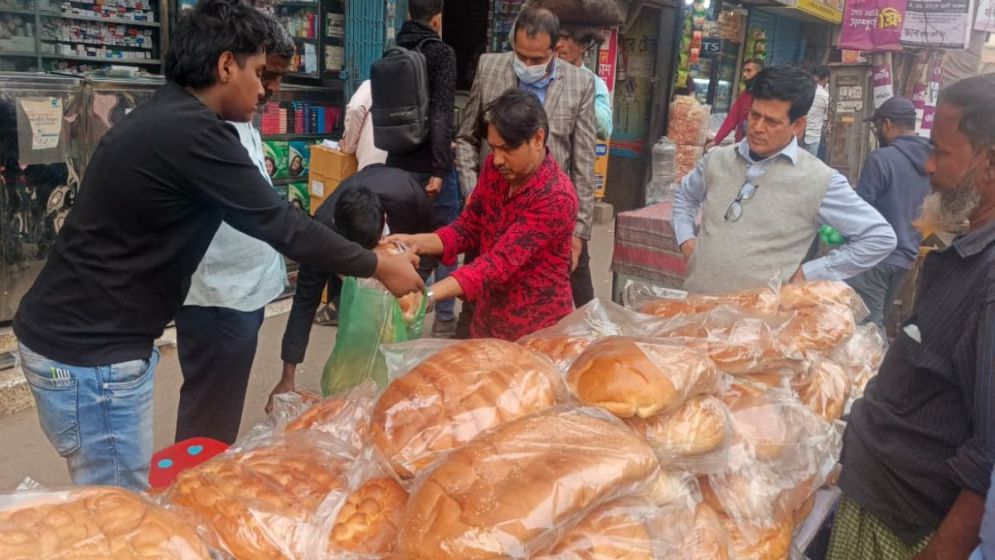
Photo: Daily Sun
The Old Dhaka, known for its rich culinary traditions, came alive on Tuesday with a festive atmosphere as streets were lined with a variety of halwa and bread (ruti) in honour of the holy Shab-e-Barat, the night of fortune.
From Rai Shaheb Bazar to Lakshmibazar, and Narinda to Gendaria, vendors displayed breads of different shapes – flower, fish, duck, butterfly, and even crocodile – alongside a variety of halwas made with lentils, semolina, carrots, vermicelli, and other traditional ingredients.
According to shopkeepers, competition has increased this year due to the larger number of stalls, which has affected individual sales. However, the festive spirit still remains, even as locals noted that some of the old traditions are fading.
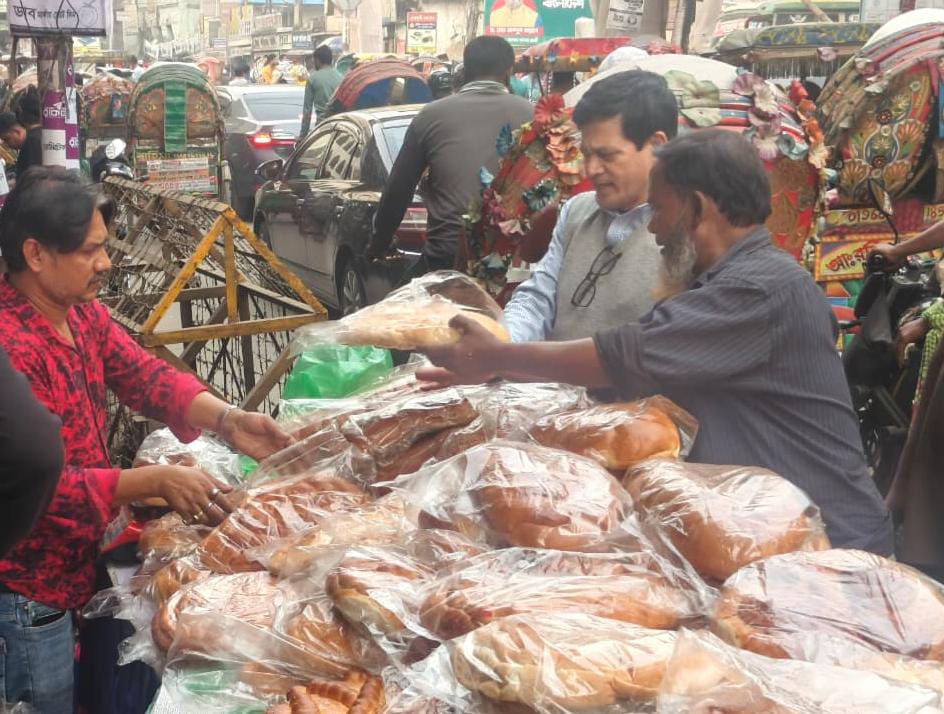
Selim Islam, a temporary shopkeeper, said, “Earlier, the festive atmosphere was different. People would deliver ruti and halwa to each other’s homes, which is not seen much nowadays. However, sales are still average this year due to the large number of stalls.”
Ahmad Sharif, owner of Kusum Confectionery at Rai Shaheb Bazar, set up a temporary stall outside his permanent shop to sell special items on the day. “Every year we organise such sales for Shab-e-Barat, but this year business is not very good,” he said.
For many city residents, buying ruti and halwa has become a personal tradition.
Farzana Akter, who came to buy ruti for her family, said that people make it at home in villages, but it is not possible in the city due to busy schedules.
"Shab-e-Barat is not only a festival for enjoying various delicious items; it mainly focuses on praying to Allah for His mercy,” she said.
However, people expressed hope that the tradition would survive alongside religious practices.
Munna Mia, a resident of Lakshmibazar, said the practice of distributing halwa and ruti has faded. “I hope this tradition does not disappear.”
Historians note that by the late 19th century, the distribution of halwa and sweets on Shab-e-Barat became popular in Dhaka through the influence of the city’s nawabs.
The tradition, which originated in the Mughal era, has over time evolved into a social celebration that extends beyond its religious context.