


 For all latest news, follow the Daily Sun's Google News channel.


Bangladesh rejects Myanmar’s argument at ICJ referring to Rohingya as ‘Bengalis’
It said Myanmar’s continued use of the term “Bengalis” amounts to a denial of the Rohingya’s right to self-identify
Daily Sun Report, Dhaka
Published: 23 Jan 2026, 08:04 PM
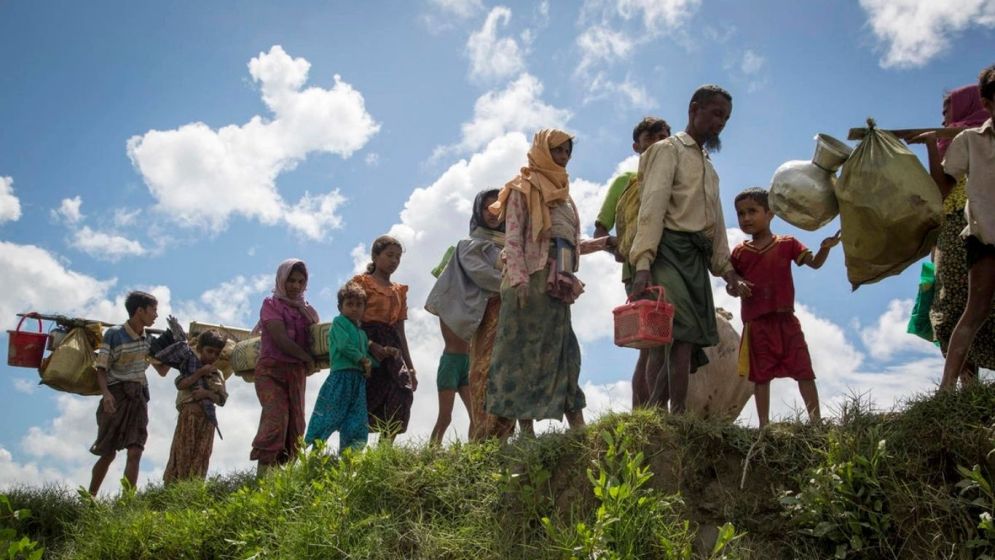
File Photo
Bangladesh has strongly objected to recent submissions made by Myanmar before the International Court of Justice (ICJ) in the case filed by The Gambia over the Rohingya genocide, rejecting Myanmar’s reference to the Rohingya people as “Bengalis.”
In a statement issued on Friday, Bangladesh said the
terminology was being used to promote a narrative of illegal migration and
internal security threats in an attempt to justify Myanmar’s so-called
“clearance operations” as counter-terrorism measures, while diverting attention
from the atrocity crimes committed against the Rohingya during 2016–17.
Bangladesh reiterated that the Rohingya are a
distinct ethnic group with deep historical, cultural, and social roots in
Arakan, present-day Rakhine State, dating back centuries before the region
became part of the Barman Kingdom in 1785.
Their presence, Bangladesh said, is well documented
in historical records, colonial-era demographic accounts, and independent
scholarship, predating modern national borders.
The statement noted that the term “Rohingya” emerged
from an early exonym linked to the historic Arakan capital Mro-Haung (also
known as Rohang), and was later adopted by the community itself as it faced
increasing marginalisation in Myanmar.
Attempts to portray the Rohingya—who were a
well-settled community in Arakan decades before Myanmar’s independence—as
foreigners or recent migrants are inconsistent with historical facts,
Bangladesh said.
According to the statement, the Rohingya were once
an integral part of Myanmar’s political and social life, enjoying voting rights
and participation in public affairs until the promulgation of the 1982
Citizenship Law, which excluded them from citizenship on ethno-religious
grounds.
The community was fully disenfranchised ahead of the
2015 general elections, culminating in their forced displacement from Rakhine
State and rendering them stateless.
Bangladesh stressed that the Rohingya possess a
distinct ethnic identity, language, and cultural heritage, separate from Bangla
despite similarities with the Chittagonian dialect.
It said Myanmar’s continued use of the term
“Bengalis” amounts to a denial of the Rohingya’s right to self-identify and has
been central to a systematic campaign to strip them of citizenship and basic
human rights.
The statement recalled that Myanmar itself had
acknowledged the Rohingya as “lawful residents of Burma” in the 1978 bilateral
repatriation agreement with Bangladesh, and later assured their reintegration
as equal members of society in subsequent agreements.
Bangladesh said current efforts to revive the
“Bengali” narrative undermine international justice, accountability efforts,
and durable solutions to the Rohingya crisis.
Bangladesh also accused Myanmar of deliberately
stalling the repatriation of Rohingya refugees for more than eight years, in
violation of bilateral agreements signed in 2017–18, and said such inaction
could be interpreted as evidence of intent to destroy the Rohingya community.
The statement further recalled that on 18 July 2023,
Bangladesh formally protested Myanmar’s claim that half a million Bangladeshis
had taken refuge in Rakhine during Bangladesh’s Liberation War in 1971.
Bangladesh said Myanmar failed to provide any
evidence to support the claim, adding that such a large influx—nearly 30% of
Rakhine’s population at the time—would have caused major social and economic
disruption and drawn international attention, none of which was recorded.
Bangladesh noted that subsequent censuses in Rakhine
State provide no demographic evidence to support Myanmar’s assertion.
Calling on Myanmar and other authorities with
influence over Rakhine State, the Government of Bangladesh urged genuine
recognition of the Rohingya as an integral part of Myanmar’s society and state,
and demanded concrete steps to create a conducive environment for their safe,
dignified, and rights-based return and reintegration.