


 For all latest news, follow the Daily Sun's Google News channel.


Sweden donates $2.9m for Rohingya energy programme
Daily Sun Report, Dhaka
Published: 12 Jan 2026, 06:44 PM
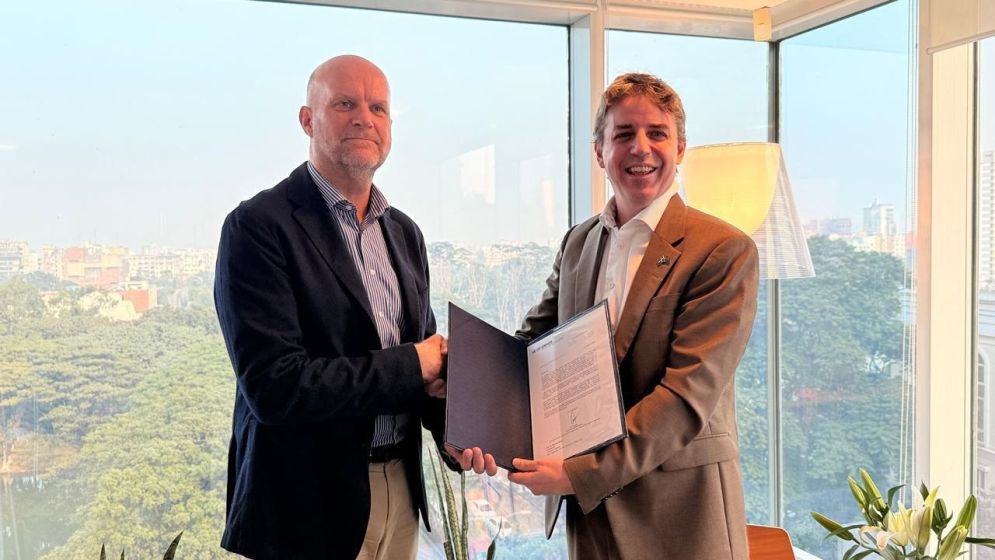
Photo: Courtesy
The United Nations High Commissioner for Refugees (UNHCR) has welcomed a contribution of $2.9 million from the Government of Sweden to support lifesaving activities and promote green energy solutions for Rohingya refugees living in camps in Cox’s Bazar.
The funding will support the Safe Access to Fuel and
Energy Plus, Phase 2 (SAFE+2) programme, which aims to expand access to clean
cooking fuel—primarily liquefied petroleum gas (LPG)—restore degraded forest
areas, and promote green skills development among refugees and host
communities, said a press release.
The programme is jointly implemented by UNHCR, the
Food and Agriculture Organization (FAO), the International Organization for
Migration (IOM), and the World Food Programme (WFP), in close coordination with
the Government of Bangladesh.
UNHCR Representative in Bangladesh Ivo Freijsen said
the contribution comes at a critical time, as humanitarian needs remain high
while overall funding continues to decline.
He noted that nearly eight years into the Rohingya
crisis, around 1.17 million Rohingya refugees still depend on humanitarian
assistance.
Freijsen highlighted that access to LPG has
significantly improved daily life for refugee families, particularly enhancing
the safety of women and girls by eliminating the need to collect firewood.
Sweden’s Ambassador to Bangladesh, Nicolas Weeks,
said shrinking global humanitarian funding makes it essential to prioritise
lifesaving assistance.
He said the support will allow refugees to continue
using cleaner cooking fuel, helping to protect their health and preserve
surrounding forests.
He reaffirmed Sweden’s solidarity with Rohingya
refugees and their Bangladeshi hosts until conditions allow for a voluntary,
safe, dignified, and sustainable return to Myanmar.
Since LPG distribution began in the camps in 2018,
programmes such as SAFE+2 have helped reduce reliance on firewood and promoted
cleaner energy use.
According to UN agencies, these efforts have
protected more than 14,500 hectares of forest, reduced environmental
degradation, and improved safety and health conditions, particularly for women
and children.
With the latest contribution, Sweden’s total support
to the SAFE+2 initiative and its predecessor now stands at $23.5 million.
UNHCR and its partner agencies expressed gratitude
to Sweden, stressing that continued international support remains vital for
Bangladesh’s Rohingya response until a durable solution is achieved.