


 For all latest news, follow the Daily Sun's Google News channel.


BRAC marks World Diabetes Day with nationwide health camps
Daily Sun Report, Dhaka
Published: 14 Nov 2025, 09:51 PM
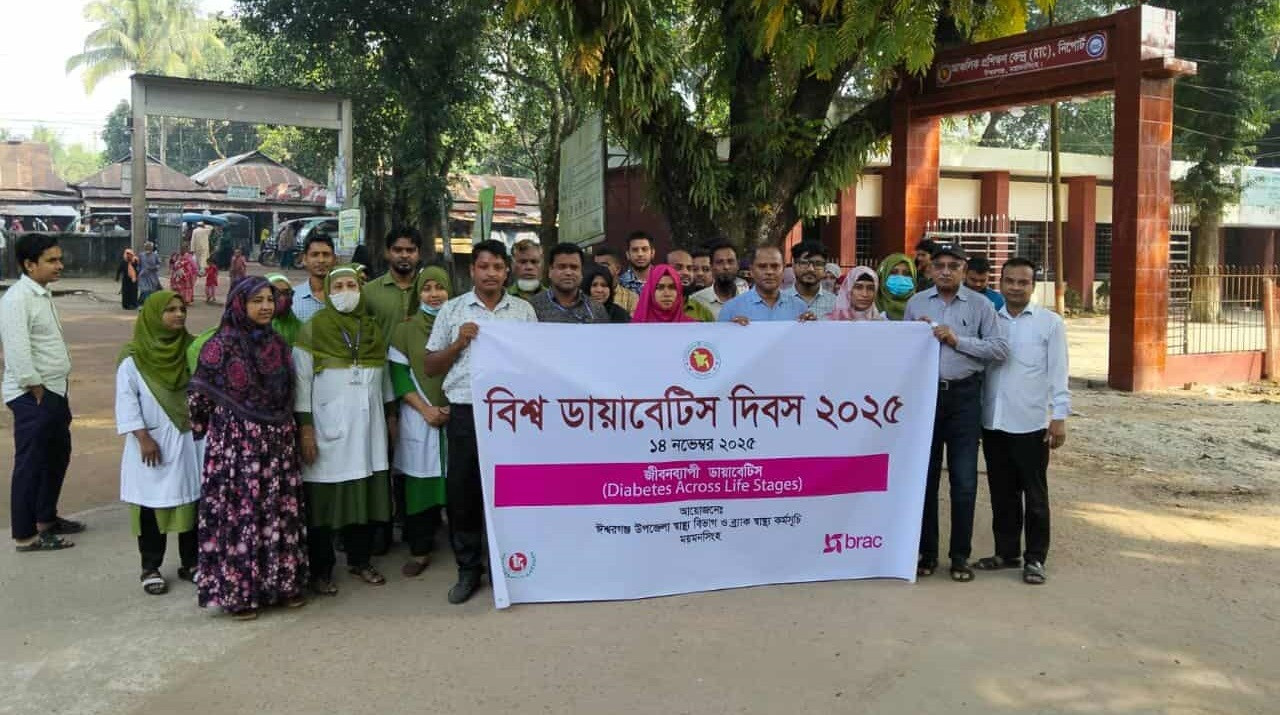
Photo: Courtesy
BRAC’s Health Programme has observed World Diabetes Day with a wide-ranging campaign featuring 450 specialised health camps, rallies, and discussion sessions across 275 upazilas across the country on Friday.
The programme aims to bring diagnostic and treatment services for diabetes and other non-communicable diseases (NCDs) directly to communities, reads a press release.
As part of the initiative, upazila health complexes operated special NCD corners offering free diabetes tests and awareness activities. BRAC officials said the effort is part of a long-term strategy to improve early detection and treatment of chronic illnesses.
Over the past decade, BRAC has screened nearly 5.8 million people for NCDs, with a particular focus on diabetes. The organisation now plans to expand its screening and treatment linkage services to ensure universal access to early diagnosis and continuous care.
Health experts warn that diabetes prevalence is rising rapidly in Bangladesh, and early testing alongside regular treatment remains the most effective preventive measure. However, millions still lack access to basic diagnostic services. BRAC’s community-based model—providing on-the-spot testing, lifestyle guidance, and referrals to government hospitals—seeks to fill that gap, particularly for low-income families in urban, rural, and peri-urban areas.
To bolster government efforts in NCD prevention and treatment, BRAC has been working in coordination with local health departments and other relevant agencies. This includes a joint initiative with the Directorate General of Health Services (DGHS) and Medtronic Labs in Rangpur Division and Narayanganj, where civil surgeons and senior DGHS officials recently visited an expanded NCD project. The initiative links patient data to NCD corners in government hospitals to ensure follow-up care after initial diagnosis.
“For a long time, millions of people in Bangladesh had no access to basic screening for diabetes and other NCDs. Today, we are seeing the results of early detection in communities that once had nowhere to turn,” said Dr Md Akramul Islam, Senior Director of the BRAC Health Programme. “Our next priority is to ensure that screening leads to lifelong care through linked digital systems and trained community health workers.”
Professor Dr Syed Zakir Hossain, Line Director of the Non-Communicable Disease Control (NCDC) unit at DGHS, said the partnership between the government and BRAC demonstrates “how the synergy of public-sector leadership, community outreach, and digital innovation can transform diabetes and NCD care in Bangladesh”. He added that the effort aligns with this year’s World Diabetes Day theme, Diabetes Across Life Stages, aimed at ensuring equitable and high-quality care for all.
Experts at a recent BRAC event noted that long-term NCDs account for more than 70 per cent of deaths in Bangladesh, while nearly 68 per cent of healthcare spending is borne out-of-pocket—pushing many families into poverty and leaving others without necessary treatment.