


 For all latest news, follow the Daily Sun's Google News channel.


Iran proposes reopening Hormuz within seven days
Agencies, New York/ Washington/ Dubai
Published: 26 Sep 2026, 12:00 AM
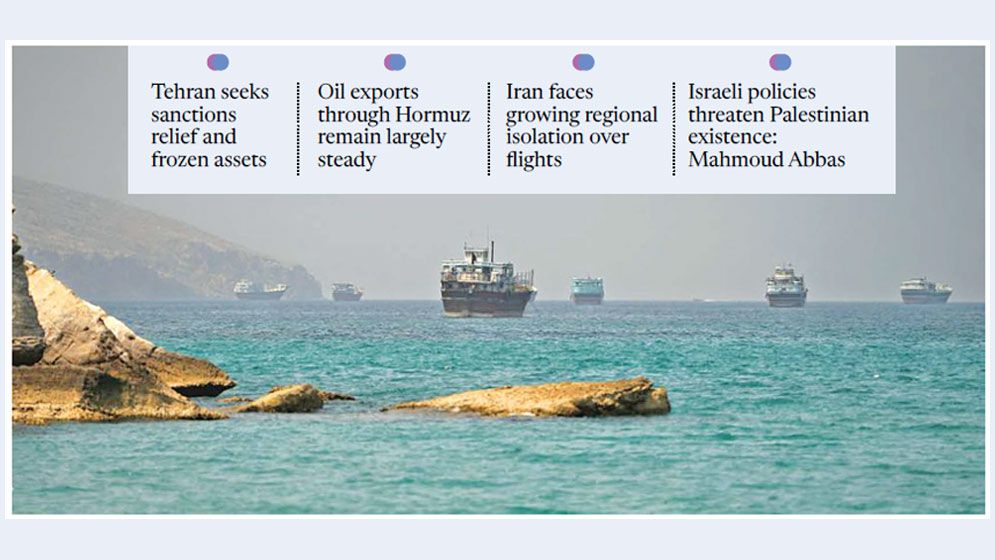
Iran has submitted a proposal to the United States to end their war and reopen the Strait of Hormuz within seven days, its foreign minister told media outlets in New York.
“If certain conditions are met, the strait will be open within seven days and talks will start,” Abbas Araghchi, who is in the US for the UN General Assembly, told media outlets including the New York Times and The Guardian.
Japanese news agency Kyodo was the first to report the proposal, citing a senior Iranian official on Tuesday.
Iranian media, however, denied the Kyodo report, while authorities in Tehran have not clarified their position.
Araghchi also met for talks on Tuesday with US President Donald Trump’s envoy Steve Witkoff.
Iran has previously set out seven conditions for ending the war and reopening the strait.
According to Araghchi, as quoted by the New York Times, the latest plan calls for a cessation of all hostilities in the Middle East for seven days, including in Lebanon.
It also calls for the release of frozen Iranian assets estimated to be worth at least $12 billion, as well as the lifting of sanctions on Iranian oil and an end to the US naval blockade of Iran.
On the seventh day of the truce, Iran would reopen Hormuz. Araghchi said he was waiting for a US response to the plan and maintained that China supported the proposal. Hossein Mohebi, a spokesman for the IRGC told AFP in an exclusive interview on Tuesday that ending hostilities in Yemen was also among Tehran’s demands. Hormuz oil flows reach 33.7m barrels
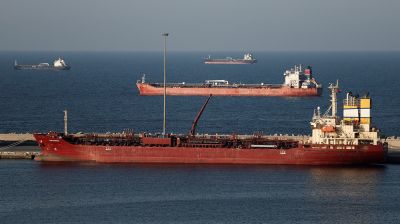
Crude oil flows out of the Strait of Hormuz reached 33.7 million barrels so far in the week starting September 20, preliminary ship-tracking data from Kpler showed on Friday, putting exports roughly on track with the previous week’s levels.
The traffic comprised 19 tankers, of which 17 are very large crude carriers (VLCCs) that can carry 2 million barrels of oil, the data showed. Most of the tankers are laden with crude from Saudi Arabia, followed by Iraq.
For the full previous week, 49.2 million barrels of crude were shipped out via Hormuz, according to Kpler.
On Wednesday, some 60 commercial vesselsof all types transited the Strait of Hormuz carrying the highest daily volume of crude oil since early July, a US official told Reuters, speaking on condition of anonymity.
Meanwhile, Oil prices retreated Friday on reports of potential overtures to ending the US-Iran war, which helped support stock prices after a volatile week as investors tracked geopolitical tensions.
Wall Street indices opened higher following slight gains in Europe and a mixed performance in Asia, against a backdrop of rising government bond yields and persistent inflation fears.
After falling sharply on hopes of a breakthrough to end the Middle East war during the UN General Assembly in New York this week, oil prices jumped when there was no sign of tangible progress. Mahmoud Abbas condemns Israeli policies at UN.
Palestinian president Mahmoud Abbas said at the UN on Thursday that Israeli policies no longer just jeopardised a two-state solution but were now threatening the “very life and existence” of his people.
He also slammed the United States for denying him a visa to attend the United Nations’ top-level annual meeting as “punitive.” He instead pre-recorded a video message that was played to the gathering in New York.
“The danger is no longer limited to undermining the two-state solution and preventing the realization of the Palestinian state. It has now come to threaten the very life and existence of the Palestinian people on their homeland,” Abbas said.