


 For all latest news, follow the Daily Sun's Google News channel.


South Korea recalls Ukraine ambassador amid escalating diplomatic row
Saudi Gazette, Seoul
Published: 13 Oct 2026, 03:41 AM
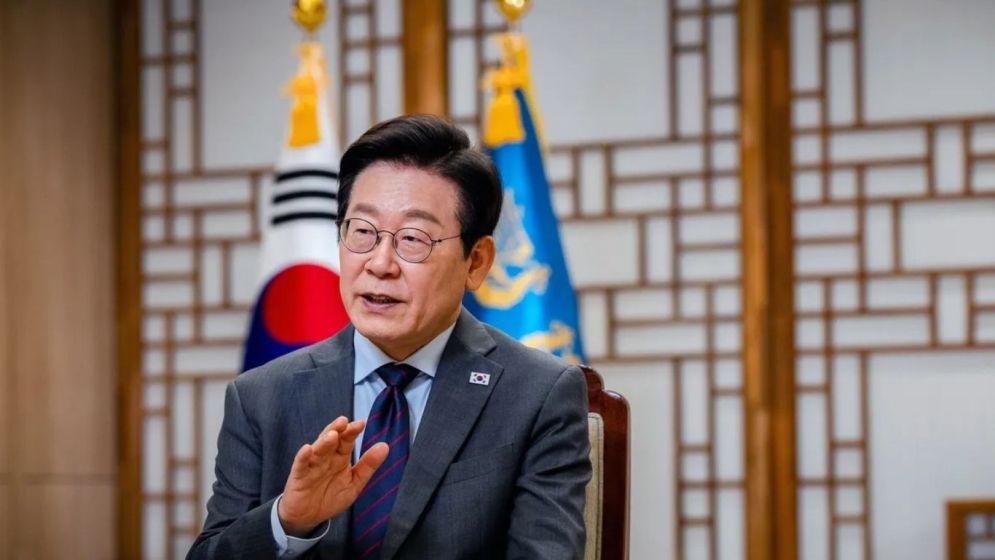
South Korean President Lee Jae Myung. Photo: Collected
South Korea has decided to recall its ambassador to Ukraine amid a diplomatic dispute over Kyiv’s disclosure that it had transferred two captured North Korean soldiers to Seoul.
The decision, announced on Thursday, came days after South Korean President Lee Jae Myung threatened unspecified punitive measures if Ukraine failed to apologise over the disclosure.
“The government has decided to recall its ambassador to Ukraine,” South Korea’s Ministry of Foreign Affairs said in a statement.
The ministry said Seoul hoped the outstanding issues between the two countries would be resolved amicably and that consultations with Kyiv would continue.
Ukrainian President Volodymyr Zelensky announced last month that his government had transferred two captured North Korean soldiers to South Korea. Seoul says Ukraine breached an understanding to keep the transfer confidential, while Zelensky’s office maintains that the two countries had no non-disclosure agreement.
The soldiers, who were captured while serving alongside Russian forces in the war against Ukraine, had earlier told local media that they wanted to be sent to South Korea.
South Korean Vice Foreign Minister Park Yoon-joo lodged a formal complaint with his Ukrainian counterpart, Andrii Vieshkin, in September over the matter.
Earlier this week, South Korean Foreign Minister Cho Hyun said he had received an apology from his Ukrainian counterpart, but local media reported that Seoul considered it insufficient.
Responding to the recall announcement on Thursday, Ukrainian Foreign Ministry spokesperson Heorhii Tykhyi said diplomacy should prevail over emotions.
“Despite Seoul’s decision to recall its ambassador, Ukraine remains open to restoring a constructive dialogue — even if it takes time,” he said.
Zelensky disclosed the transfer during an address to the United Nations General Assembly in September, saying the two North Koreans had not been easy to capture alive.
The disclosure drew strong criticism from Lee, who described it as “greatly disappointing” and called the transfer a highly sensitive national security issue.
Lee also faced criticism at home, with opposition figures accusing his administration of trying to conceal the transfer to avoid antagonising Pyongyang.
His office said the information had been kept confidential partly to protect the soldiers’ families. It also said Kyiv had wanted the transfer kept secret to avoid criticism that it had lost an opportunity to exchange the soldiers for Ukrainian prisoners of war.
According to Lee’s office, Ukraine had indicated that the soldiers would be mentioned in Zelensky’s UN address, but not that they had been transferred to South Korea.
The dispute intensified after Zelensky’s office denied that a non-disclosure agreement existed between the two countries. Seoul subsequently demanded an apology, accusing Ukraine of making a false statement and seriously damaging bilateral trust.
South Korea has expressed support for Ukraine since Russia launched its full-scale invasion in 2022, but it has maintained a longstanding policy against supplying lethal weapons to countries engaged in active conflicts.
After North Korean troops were deployed to support Russia in 2024, Kyiv increased pressure on Seoul to provide advanced air defence missiles to protect Ukrainian energy infrastructure from Russian drone and missile attacks.
In July, South Korea announced a $100 million assistance package for Ukraine. Lee’s office said the expanded assistance built on previous support, which included non-lethal equipment such as helmets, body armour and medical supplies.
Russia’s Foreign Ministry has warned that Moscow would have “no choice but to retaliate” if South Korea supplied weapons to Ukraine, although it did not specify what action it might take.
South Korea has traditionally sought to maintain cordial relations with neighbouring countries, including those whose interests may conflict with those of its ally, the United States.