


 For all latest news, follow the Daily Sun's Google News channel.


A Livable Dhaka of Future Comes to Life Through Potchitra Art
Emran Hossain Milon
Published: 29 Nov 2026, 10:58 AM
Amid capital Dhaka’s relentless pace, where millions navigate crowded streets and the demands of daily life, the city’s walls tell stories that often escape the public eye. Far beyond their physical boundaries, these walls have evolved into open-air canvases, capturing the spirit of the city through art, memory, cultural identity and the aspirations of its people.
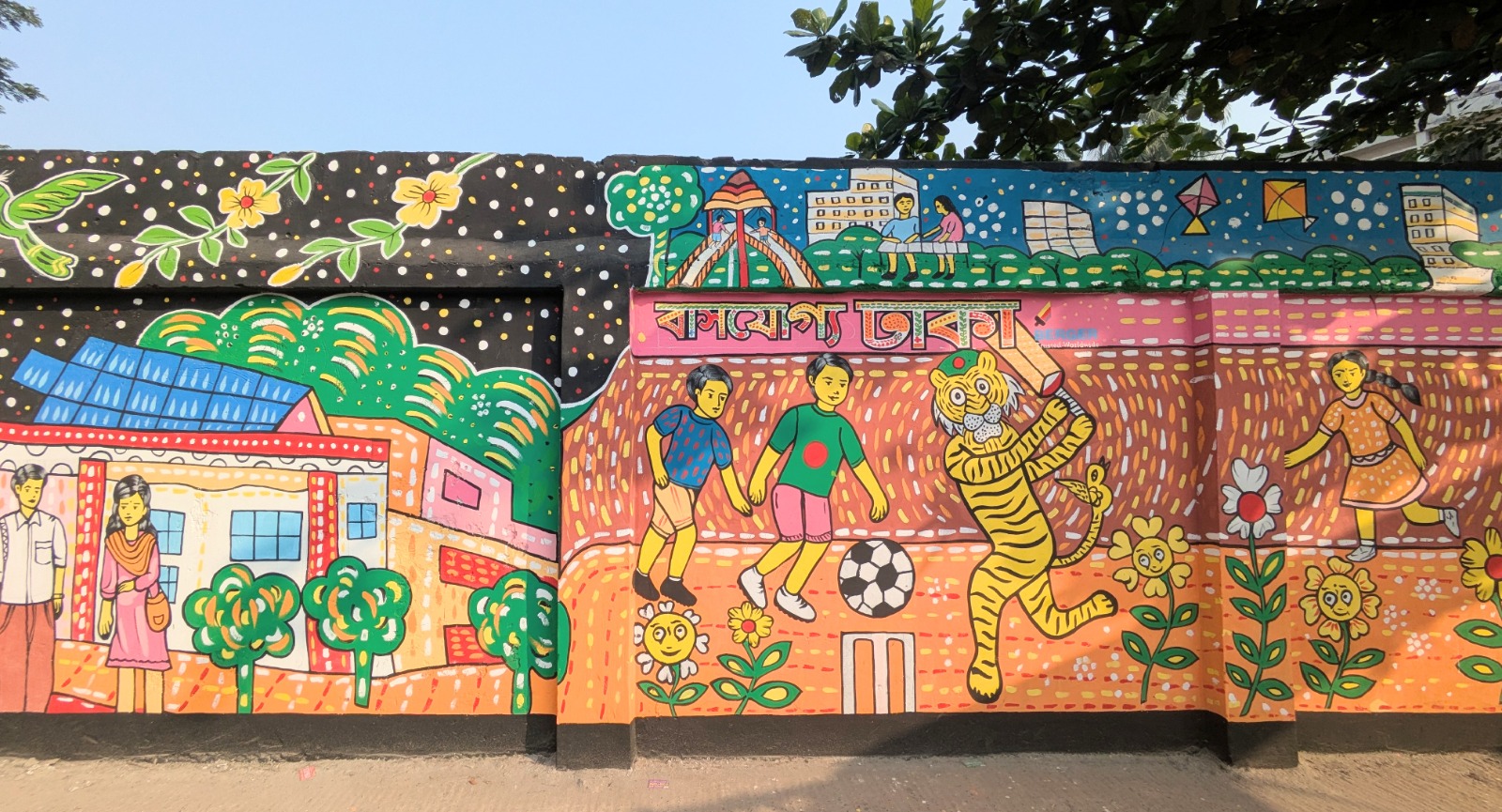
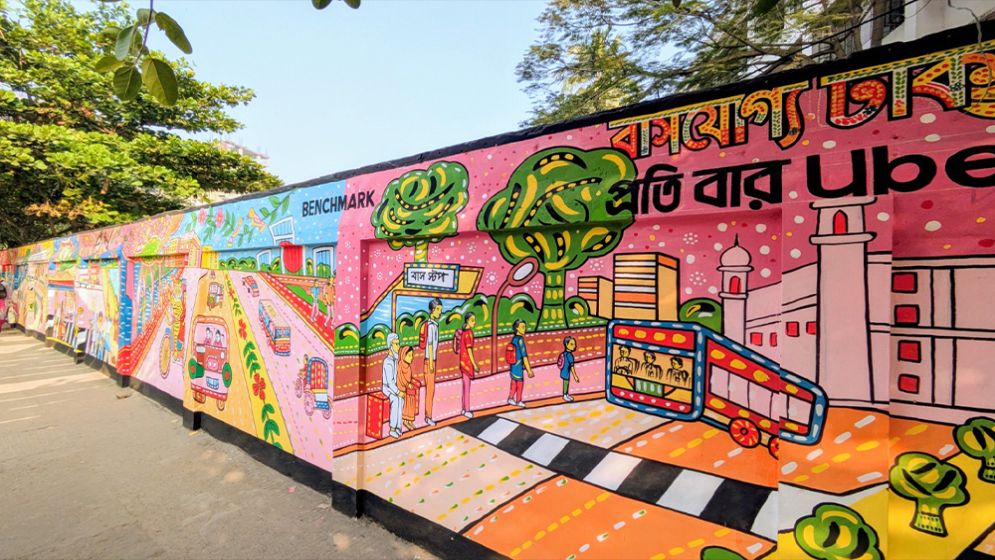
At Senpara Parbata Government Primary School in Mirpur 10, a boundary wall now tells the story of a different Dhaka. Through traditional Potchitra, it depicts a city with greener streets, cleaner neighbourhoods, safer roads and spaces where communities can thrive.
Marking its 10th anniversary in Bangladesh under the overarching theme ‘Protibar Uber’, Uber organised a three-day mural painting initiative from November 20 to 22. Centred on the theme ‘Bashjoggo Dhaka’, the initiative brought together artists and citizens to collectively imagine a better future for the capital while reviving traditional art forms.
Giving traditional art a new canvas
Led by celebrated Potchitra artist Tiger Nazir, the initiative brought together young artists alongside practitioners of traditional rickshaw, cinema and banner art.
Once an integral part of Bangladesh’s visual culture, Potchitra and other traditional art forms are gradually fading from everyday urban life. The mural provided a common canvas for these artistic traditions, giving them renewed relevance in a contemporary urban setting.
The initiative also introduced younger generations to these art forms, creating an opportunity to appreciate the cultural heritage that has shaped Bangladesh’s visual identity for decades.
Painting the aspirations of a city
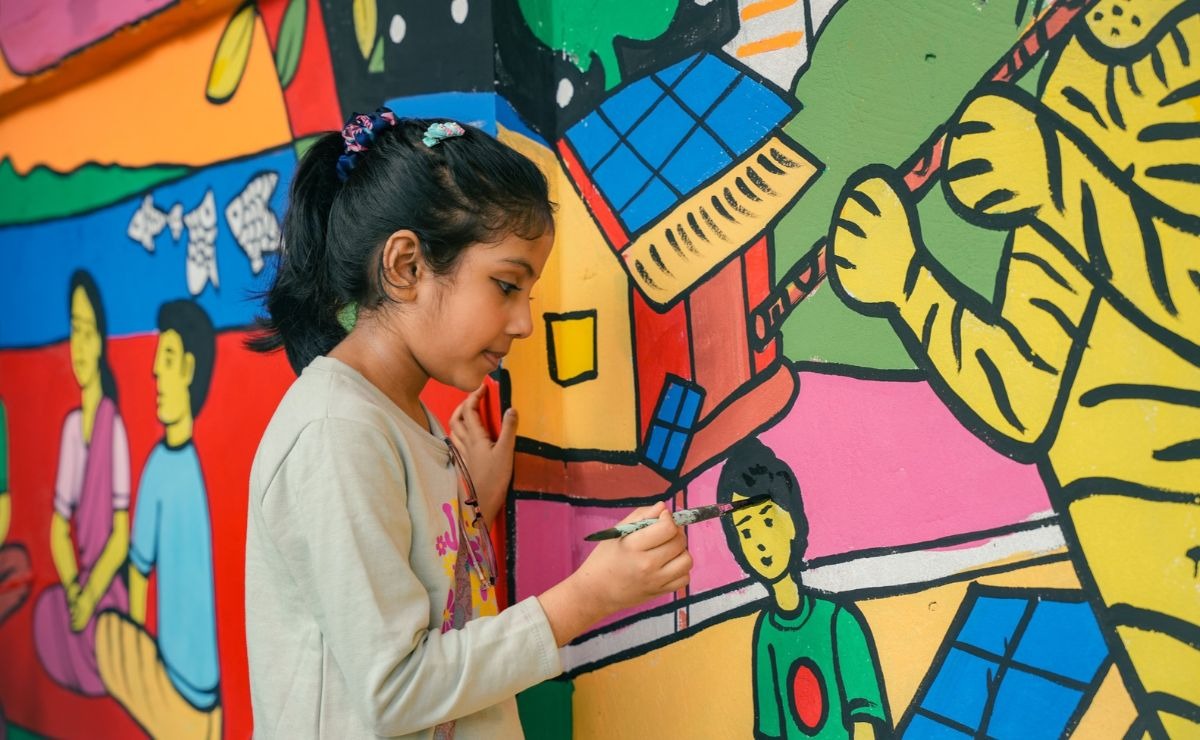
What makes the mural particularly meaningful is its participatory approach. Citizens and schoolchildren joined the artists, contributing to a shared vision of the city they would like to inhabit.
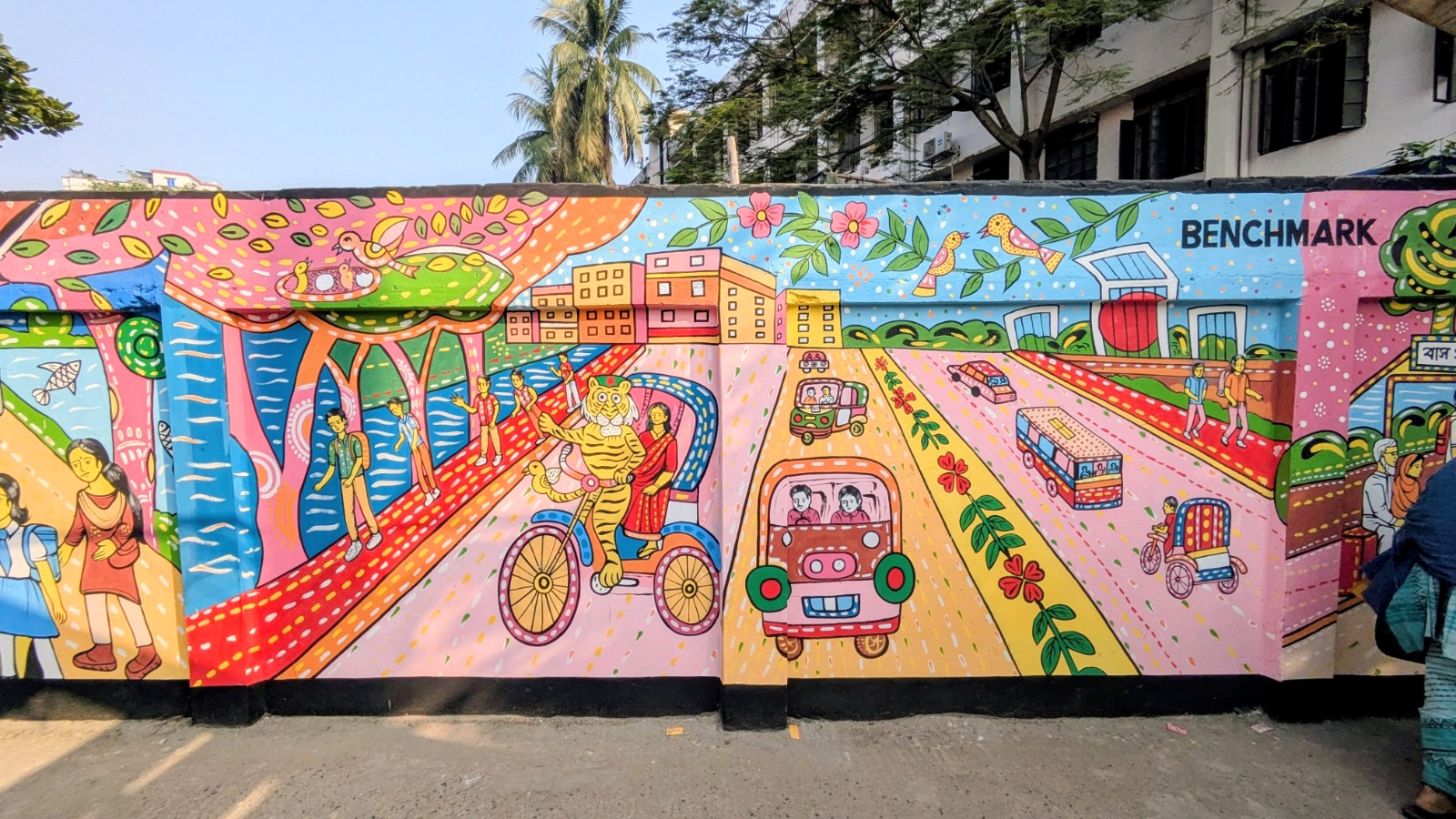
Reflecting the theme ‘Bashjoggo Dhaka’, the artwork features tree-lined streets, playgrounds, protected water bodies, green spaces and safer roads. It also portrays neighbourhoods where people share a sense of community and look out for one another.
By involving citizens in the creative process, the initiative brought the conversation about urban liveability beyond conventional policy discussions and into a shared public space.
Looking beyond everyday journeys
Having been part of Bangladesh’s urban mobility landscape since 2016, Uber marked its decade-long journey through three initiatives encompassing art, film and dialogue under the theme ‘Protibar Uber’.
The mural reflects a broader understanding of mobility, one that considers not only how people reach their destinations but also the quality of the environment through which they travel.
Safer streets, accessible neighbourhoods and welcoming public spaces are essential to making everyday journeys more comfortable and cities more liveable.
For Uber, the initiative offered an opportunity to celebrate its anniversary through cultural preservation and community participation.
Amid the everyday bustle of Mirpur, the mural now stands as a reminder that building a better city begins with a collective imagination of what it could become.