


 For all latest news, follow the Daily Sun's Google News channel.


The Road That Remembered: Allen Ginsberg, Jessore Road, and the Ghosts of 1971
Special Correspondent
Published: 15 Sep 2026, 10:08 AM
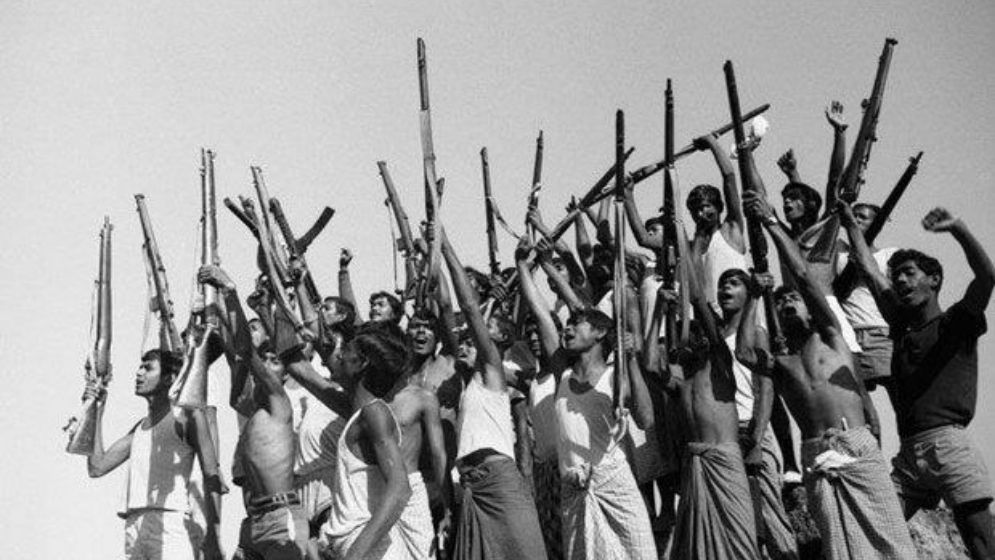
Roads in Bengal carry a heavy ledger of history, none more so than the Jessore Road in the autumn of 1971. Long before it became just another busy transport corridor connecting places across the border, it was an artery of survival. That year, an immense human tide moved toward West Bengal from East Pakistan—families carrying small children, old men leaning on the shoulders of teenagers, mothers clutching whatever cookware or bundles they had not been forced to drop in the mud. Behind them were burned villages and the devastation of a brutal military crackdown; ahead of them lay makeshift refugee camps, dysentery, monsoon rains, and the faint, desperate hope of seeing another morning.
In September of that year, Allen Ginsberg
traveled to the refugee camps along Jessore Road. He wasn't a diplomat, a
general, or a wire-service war correspondent; he was an American Beat poet with
a long spiritual and literary connection to India. What he witnessed didn't
stay trapped inside him. It spilled out into “September on Jessore Road,” a
sprawling, furious, unvarnished piece of witness literature that refused to let
distant audiences look away.
History loves statistics, and the 1971
refugee crisis was built out of numbers that numb the brain: roughly ten
million people forced to flee across the border, villages and homes burned or
destroyed, and the violent birth pangs of a sovereign Bangladesh. Numbers give
you scale, and scale lets you keep your distance. Ginsberg's entire method was
to smash that distance. His most famous lines from the poem don't reach for
high-modernist metaphor:
“Millions of babies watching the skies /
Bellies swollen, with big round eyes”
There is no softening filter there. There is
just hunger, rain, mud, and children. He skipped right past the high-altitude
geopolitics to look at what war actually leaves behind once the tanks have
rolled through and the politicians have retreated to diplomatic rooms. For the
people living through the camps along Jessore Road, those images weren't
abstractions; they were the reality of daily life.
Ginsberg's anger wasn't abstract. He had
spent his adult life challenging what he saw as respectable silence, and
Washington's policy of continuing to support Pakistan despite mounting reports
of atrocities enraged him. While the Nixon administration was playing Cold War
chess and maintaining its relationship with Islamabad, Ginsberg was in West
Bengal confronting the human consequences of the crisis. When the poem appeared
in The New York Times on 14 November 1971, it became part of a growing
international cultural response to the catastrophe unfolding in East Pakistan.
The poem's journey did not end on the printed
page. That November, it took on a second life in a New York recording studio
called the Record Plant. Bob Dylan—who had performed at George Harrison and
Ravi Shankar's historic Concert for Bangladesh at Madison Square Garden a few
months earlier—recorded the piece with Ginsberg and musicians including David
Amram and Happy Traum. What they laid down wasn't a slick pop protest song; it
was a long, hypnotic, rattling chant of a poem, half-spoken over improvised
musical accompaniment. It was clumsy, intensely earnest, and very 1971—a
strange cross-pollination of Greenwich Village folk revival and Beat
street-prophecy that carried the anguish of Bengal into American musical
culture.
The recording belonged to a larger
international cultural response to the Bangladesh crisis. On 1 August 1971,
George Harrison and Ravi Shankar had organized the Concert for Bangladesh at
Madison Square Garden, bringing together major musicians including Bob Dylan to
raise awareness and humanitarian support for the millions of refugees fleeing
East Pakistan. Ginsberg's poem emerged a month later from direct contact with
those refugees, adding another voice to an increasingly visible international
campaign.
Of course, it is worth keeping a sense of
proportion about outsiders in South Asian history. Western counterculture has a
persistent habit of showing up at a catastrophe in the Global South and
accidentally casting a visiting Western artist as the moral protagonist.
Ginsberg wasn't the savior of Bangladesh. The war was fought and endured by
Bengalis—not least the young men of the Mukti Bahini, but also students,
farmers, workers, teachers and countless civilians who resisted the Pakistani
military crackdown and atrocities assisted by local collaborators while
millions of refugees sought safety across the border. Tens of thousands of
combatants and civilians would never return.
Ginsberg's contribution was much smaller, and
paradoxically more enduring: he showed up, he kept his eyes open, he wrote down
what he saw, and he used his platform to bring the suffering of the refugees
before an international audience.
More than five decades later, Jessore Road
remains a busy, chaotic transport corridor. The emergency refugee camps of 1971
have long since disappeared or been transformed, while many of the surrounding
areas have become part of an expanding urban landscape. The children Ginsberg
saw are either elderly now or gone. Nation has built official memorials to 1971—tall
granite monuments in Savar, solemn speeches, annual commemorations of
independence. Those are necessary. Yet every so often it is worth returning to
that long, ragged, heartbroken 152-line poem written by a Jewish-American Beat
poet from New Jersey who traveled along a muddy road in West Bengal, looked
directly at the suffering around him, and helped ensure that the faces of those
refugees entered the cultural memory of an international audience.