


 For all latest news, follow the Daily Sun's Google News channel.


IDPD 2025
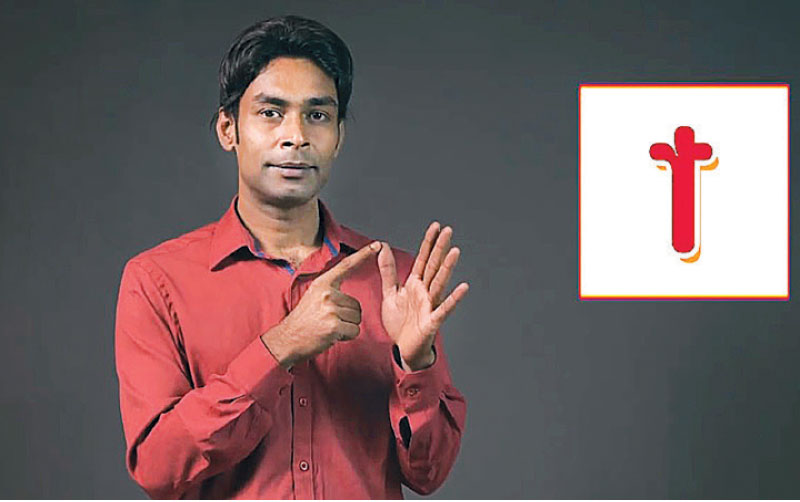
Recognition of Bangla Sign Language to Make Rights More Accessible
Ayon Debnath
Published: 03 Dec 2025, 12:00 AM

Bangladesh has made important strides in recognising the linguistic and cultural identity of its deaf community by officially recognising Bangla Sign Language (BSL) as a national language. This recognition is a legal acknowledgment and a significant step towards achieving inclusivity for one of the country’s largest groups of people with disabilities. On the occasion of the International Day of Persons with Disabilities (IDPD) 2025, it is relevant to discuss why this recognition was highly necessary and how this language can be integrated fully in public life and government services.
Bangla Sign Language has a rich history dating back to the late 19th century. It originated independently within the deaf community at the Calcutta Deaf and Dumb School in 1893 and gradually spread to the regions that now form Bangladesh. This indigenous language evolved through community use and cultural sharing, distinct in grammar and syntax from spoken Bangla and other neighbouring sign languages. Despite this unique heritage, its full acceptance and practical use remain a work in progress. In 2009, the government of Bangladesh declared BSL an official language, and since 2013, 7February has been celebrated as Bangla Sign Language Day, affirming its cultural and social importance.
According to a disability identification survey by the Department of Social Services, Bangladesh is home to approximately 147,577 people with hearing impairments and 200,882 with speech impairments, although the actual population is assumed to be much larger. Deaf and speech-impaired individuals form one of the highest prevalence groups among persons with disabilities in the country. Despite being a substantial community, their linguistic needs are frequently overlooked, leading to social isolation and barriers to education, employment and public services.
The legal framework under the Rights and Protection of People with Disabilities Act 2013, Section 16 (1) Schedule-4, mandates the introduction and development of a standard sign language and encourages the recognition of Bangla Sign Language as the first language where possible. It calls for ensuring its use in public institutions such as hospitals, courts, police stations, and educational institutions. The National Action Plan (NAP) further elaborates on the necessary steps to implement this vision.
While there has been progress, such as the establishment of the Sign Language Institute, issuance of training notices, inclusion of sign language in teacher education, and some use of sign language captions in electronic media, the government’s efforts require acceleration and expansion. The NAP reports that many deaf and visually impaired individuals do not yet accept Bangla Sign Language as their primary mode of communication, often relying on informal family or community signs. Public service institutions still generally lack staff who can effectively communicate in BSL.
The challenges faced by deaf and speech-impaired people in Bangladesh go beyond the lack of recognition or training. Most families in the country have little or no familiarity with sign language, which means children with disabilities grow up in isolation from their immediate environment. This exclusion starts at home and extends to schools, healthcare facilities, banks and government offices, where communication gaps persist.
The case for advancing the official recognition and practical use of Bangla Sign Language is compelling. Bangladesh should follow the example of over 40 countries that have legally recognised their national sign languages, such as New Zealand, Canada and the United Kingdom. Official recognition must be paired with actionable policies that embed BSL in education, governance, media, and public services. This includes funding for interpreter services, widespread teacher training, public awareness campaigns, and research aimed at standardising sign language usage across the country.
Moreover, it is now highly necessary to integrate Bangla Sign Language into the educational system. The presence of at least one sign language trained teacher in every educational institution, as recommended by the NAP, must be ensured so that deaf children can access education along with their hearing peers. Additionally, training healthcare workers, law enforcement officers, social service providers, and justice department staff in BSL will make essential services more accessible and equitable to children with hearing disabilities.
From a cultural perspective, acknowledging and celebrating Bangla Sign Language is a recognition of the Deaf community’s identity and rights. It enables deaf people to express themselves fully and participate in society without barriers. Media accessibility, such as captioning and sign language interpretation, should become standard to promote inclusion and representation.
On the occasion of IDPD 2025, Bangladesh stands at a crucial juncture to reinforce and actualise the rights of its deaf and speech-impaired population. Recognising Bangla Sign Language as an official language is a foundational step toward ensuring equity, accessibility, and dignity. It is both a legal and moral imperative that requires concerted government actions, societal support, and sustained investment. Doing so will not only empower thousands but also enrich Bangladesh’s cultural diversity and social fabric.
The journey towards full recognition and integration of BSL must continue with urgency, compassion, and collaboration among all stakeholders (government, civil society, educators and the Deaf community itself). Only then can the promise of true inclusivity be realised for one of the most marginalised yet vibrant communities in Bangladesh.
__________________________________________________
The writer is a development practitioner, currently working with Sightsavers as a Campaign Adviser in capacity of a global staff