


 For all latest news, follow the Daily Sun's Google News channel.


Echoes of empire
Galle Cricket Club and cricket’s colonial roots
Daily Sun Report, Galle
Published: 18 Jun 2025, 12:17 AM
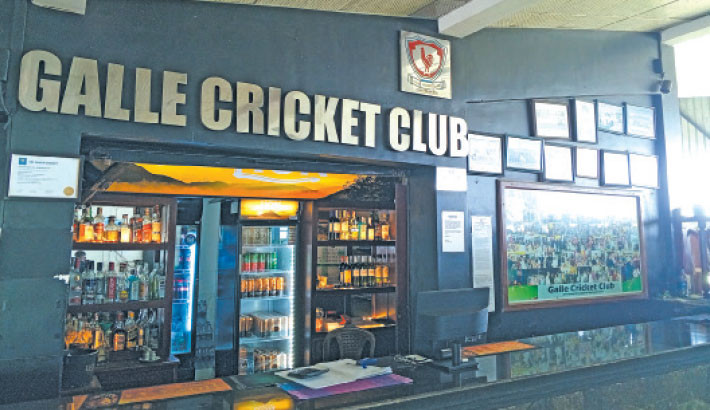
daily sun photo
For any cricket journalist, covering a match at the Galle International Stadium is an experience unlike any other. It’s not just about the cricket—the setting itself is unforgettable.
Unlike many Test grounds around the world, Galle offers a remarkably open and intimate atmosphere. Spectators can stroll freely, get close to the players, and watch the game from almost anywhere. You can even climb the ramparts of the historic Galle Fort and enjoy the match from above, flanked by the endless blue of the Indian Ocean on both sides.
For those wanting to be closer to the action, the grass bank area right beside the boundary provides an informal, relaxed vantage point, perfect for standing spectators.
Yet amid this openness lies a pocket of exclusivity—the Galle Cricket Club.
Nestled just beside the grass bank, it’s the only place around the stadium where a “members only” rule still applies.
Reserved for the local elite, it’s a space where cricket is enjoyed with a drink in hand and quiet conversations unfold against the backdrop of the Bangladesh vs Sri Lanka Test.
Unlike other parts of the stadium, casual entry here is restricted.
But the Daily Sun managed rare access, stepping inside to soak in the ambiance. Decorated with vintage furniture and walls lined with photographs of past players and club presidents, the place radiates colonial-era charm.
One can’t help but ask—how far back does this club go?
Founded in 1876, Galle Cricket Club is one of the oldest and most storied cricket institutions in Sri Lanka. Born during the British colonial era as a recreational outlet for officials, it evolved into a formal club by the late 19th century.
Located in the heart of this southern coastal city, it played a key role in popularizing cricket throughout the region—especially through strong ties with historic schools like Richmond College and Mahinda College.
Cricket in the area was first recorded in the 1880s, with the first official school match taking place in 1888. The Esplanade, which would become Galle International Stadium, was converted into a proper cricket ground in 1927.
Over the decades, Galle CC has served as a cradle for talent, contributing significantly to Sri Lanka’s cricketing journey.
Though it hasn’t clinched many domestic titles, the club has produced some of the island’s finest international cricketers, including Lasith Malinga, Marvan Atapattu, and Romesh Kaluwitharana.
Its home ground, with its iconic backdrop of fort walls and sea, is one of the most picturesque cricket venues in the world.
Devastated by the 2004 tsunami, the stadium was rebuilt with care, preserving its spirit and soul. Today, Galle Cricket Club continues to be a cultural and sporting heartbeat of the region—balancing exclusivity and heritage with its enduring commitment to nurturing the next generation of cricketers. The colonial echoes remain, woven into the very fabric of its legacy.