


 For all latest news, follow the Daily Sun's Google News channel.


Bangladesh, Japan sign employment deal, worker recruitment from April 2027
Daily Sun Report, Dhaka
Published: 20 Oct 2026, 12:00 AM
Bangladeshi workers will have access to new employment opportunities in Japan from 1 April 2027 under a bilateral agreement that promises stronger legal protection, equal treatment and safeguards against workplace discrimination, particularly for women.
The two countries have finalised a Memorandum of Cooperation on Employment Skills Development (ESDP-MOC), following nearly a year of negotiations between Bangladesh’s Ministry of Expatriates’ Welfare and Overseas Employment and the Japanese government, the ministry said in a statement on Monday.
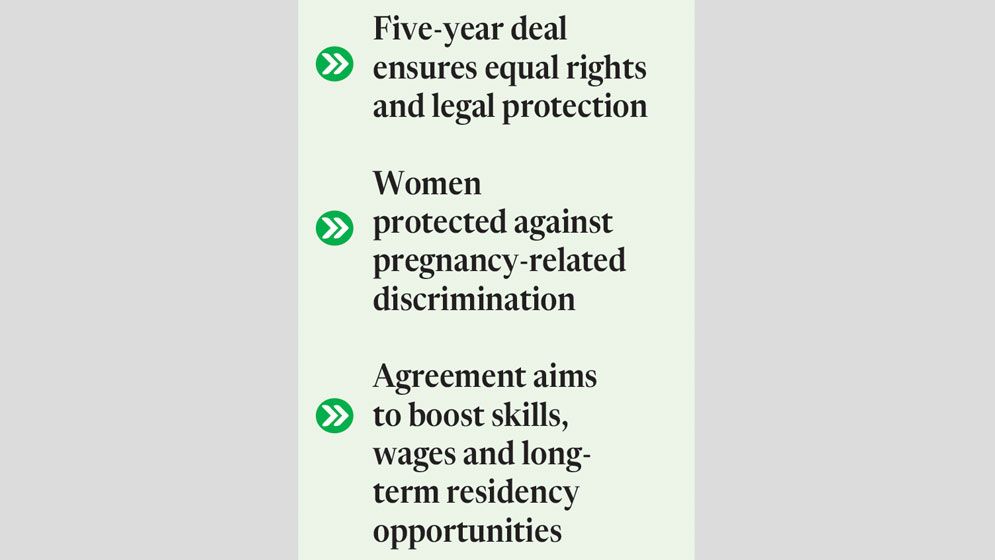
The agreement, signed on Saturday, will initially remain in force for five years and will automatically be extended for another five years, bringing its potential duration to a decade.
Representatives of Bangladesh’s Ministry of Expatriates’ Welfare and Overseas Employment and Japan’s ministries of justice, foreign affairs, health, labour and welfare, along with the National Police Agency, signed the agreement on behalf of their respective governments.
The agreement will be formally exchanged during Prime Minister Tarique Rahman’s upcoming visit to Japan, according to the ministry.
Expatriates’ Welfare and Overseas Employment Minister Ariful Haque Chowdhury said the agreement would strengthen cooperation between the two countries in sending and receiving workers while ensuring the highest possible level of protection for Bangladeshi employees.
“It will also help improve the skills of Bangladeshi citizens through employment, enabling workers to earn higher wages and access opportunities for long-term residence in Japan,” he said.
Under the agreement, Bangladeshi workers will receive legal protection equivalent to that afforded to Japanese workers and enjoy equal opportunities in the workplace, the minister said.
The agreement also includes safeguards for women migrant workers. Employers will not be allowed to dismiss women or subject them to discriminatory treatment because of pregnancy or childbirth.
Nor does the agreement require women workers to return to Bangladesh against their will if they become pregnant or give birth, the ministry said.
The ministry described the agreement as a significant milestone in the government’s efforts to expand overseas employment opportunities and strengthen protections for migrant workers.
With recruitment scheduled to begin in April next year, the agreement is expected to provide a formal framework for employment-related cooperation between the two countries, with a focus on skills development, workers’ rights and improved employment conditions.