



 For all latest news, follow the Daily Sun's Google News channel.


Yemen forces retreat from area near Bab el-Mandeb, Houthis in control
Reuters, Muscat
Published: 15 Nov 2026, 06:23 PM
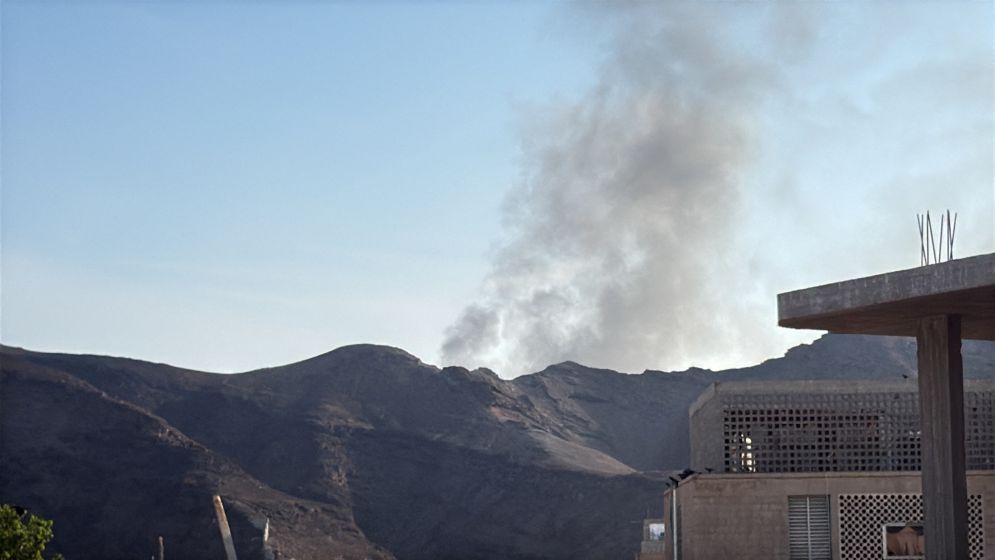
Smoke rises from the site of a ballistic missile strike attributed to the Houthis on the outskirts of the southern port city of Aden, Yemen, 13 November 2026. Photo: Reuters
Yemeni forces fighting for the internationally recognised
Saudi-backed government said on Sunday that they were withdrawing from an area
overlooking the strategic Bab el-Mandeb Strait, leaving the Iran-aligned
Houthis in control.
The government's retreat from the Bab el-Mandeb area hands
the Houthis greater leverage over the maritime chokepoint, creating a potent
pressure point on global shipping while Iran continues to disrupt traffic
through the Strait of Hormuz on the other side of the Arabian Peninsula.
This dual squeeze would further isolate Gulf oil producers
from their main shipping routes.
The Bab el-Mandeb Strait is one of the world's most important and busiest routes for global seaborne commodity and goods shipments, particularly from Asia to Europe via Egypt's Suez Canal.
The southern Yemeni forces said they were redeploying toward
Aden, where the government is based, as the Houthis — who control much of the
north, including the capital Sanaa and Yemen's most populous areas — increase
pressure on the southern areas still under government control.
"The Southern Armed Forces announce the implementation
of a redeployment operation for its forces from Dhubab Airport and the Bab
el-Mandeb area, west of Taiz Governorate," the southern forces said in a
statement.
"This step is taken based on the priority of securing
the capital, Aden, and the neighbouring governorates, as well as strengthening
the front lines and addressing existing threats."
Government forces launched a military campaign in October to
recapture the strategic coastal areas from the powerful militia, which had
pushed south in September in an attempt to seize control of Yemen's entire Red
Sea coast. The lightning offensive brought the Houthis within reach of Bab el-Mandeb.
The escalation in fighting, which broke a 2022 UN-brokered
truce, became another volatile front in the wider US-Israeli war on Iran, as
the Houthis continue to launch attacks on Saudi Arabia, a key US ally and the
world's biggest crude exporter.
Houthi attacks on the kingdom, which had enjoyed relative
calm during the early months of the nine-month-old Iran war, have disrupted
flights and oil supplies as the Houthis struck Saudi ports, airports and
facilities of state oil company Saudi Aramco — including the kingdom's Red Sea
oil export hub of Yanbu.
In response, Saudi Arabia struck Houthi targets in Yemen, a
country mired in civil war since 2014, when the Houthis pushed the government
south. Impoverished Yemen has been grappling with one of the world's worst
humanitarian crises.
Fighting is intensifying around the western region of Taiz, with humanitarian conditions worsening. The city, which hosts about half of the 300,000 people displaced across Yemen by the latest fighting, remains besieged. Aid supplies are unable to enter, and civilians are unable to leave.