


 For all latest news, follow the Daily Sun's Google News channel.


US launches new barrage of strikes on Iran around Strait of Hormuz
Iran's state broadcaster said there had been reports of explosions on Iran's Qeshm Island
Reuters, Washington
Published: 02 Sep 2026, 01:37 AM
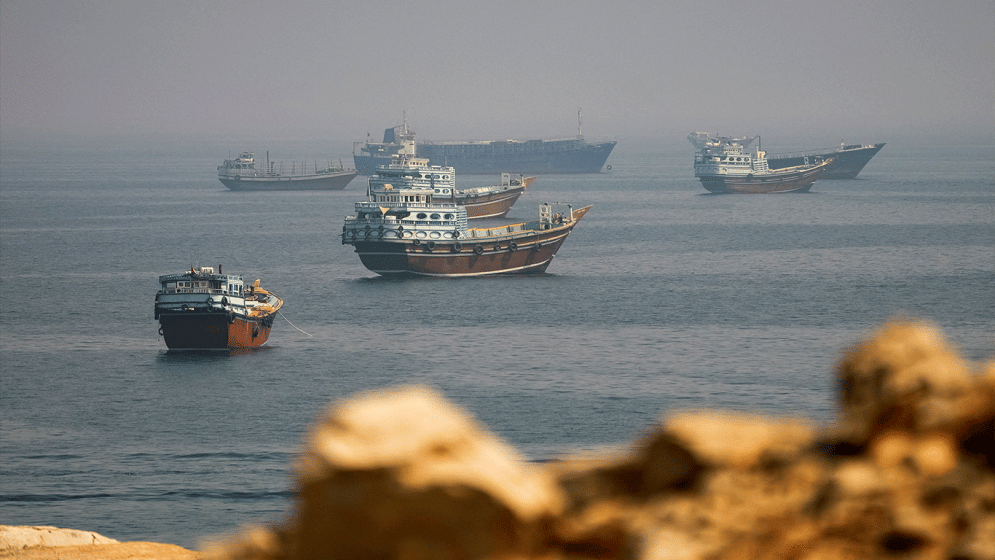
Photo: Reuters
The US launched new air strikes on Iranian targets on Tuesday, quashing hopes that an exchange of fire last weekend might not lead to a wider renewal of hostilities.
Oil prices had already risen after that first
exchange of direct attacks since July and after reports of two tankers being
hit on Monday leaving the Strait, the global oil supply waterway that Iran has
effectively closed to shipping. Brent crude futures already up 2% on the day,
jumped almost 2% more on the reports.
Tehran remained defiant, warning that it would
prevent oil being exported from the Gulf, despite a threat by US President
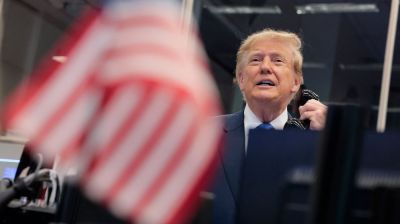
Donald Trump to hit Iran "hard" in response to the renewed Iranian
strikes, and a warning from US Treasury Secretary Scott Bessent that Washington
was about to impose new sanctions.
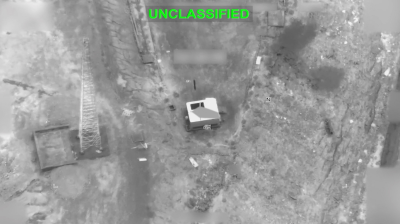
"Today at 12pm ET (1600 GMT), US forces began
striking Islamic Revolutionary Guard Corps (IRGC) targets in Iran," US
Central Command posted on X. "The strikes follow recent attempted attacks
by the IRGC against commercial shipping in the Strait of Hormuz and against
American service members deployed to the region."
Iran's state broadcaster said there had been reports of explosions on Iran's Qeshm Island, on the northern side of the strait.
The state-linked news agency Nour News said there had been reports of explosions in the port city of Bandar Abbas and in Chabahar, a port on the southern coast. The state news agency IRNA also reported the sound of explosions in Jask and Sirik.
US President Donald Trump posted on his social media channel that if Iran retaliated for the attack, "they will be hit again at a much harder and higher level".
The Fars news agency cited an IRGC spokesperson as saying the US "will regret its new attacks".
Scale of resumption of Iran hostilities unclear
The US Embassy in Qatar urged Americans currently in the Middle East to exercise "heightened vigilance and be aware of potential flight cancellations, airspace closures, and travel disruptions".
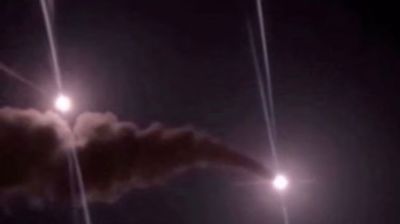
The six-month-old conflict had shifted into an economic standoff before the weekend strikes, in which U.S. forces attacked Iran's Larak Island on Sunday and Iran responded by launching missiles at two US air bases in Jordan.
Although he warned of a US response to the Iranian
strikes, Trump also told reporters on Monday that they did not signal a return
to full-scale war, and a senior Iranian source told Reuters they were a
"limited and contained confrontation".
But pledges by both sides to respond to further
attacks have highlighted how quickly a conflict that has increasingly been
fought through sanctions, blockades and economic pressure could spill back into
military action.
Iranian President Masoud Pezeshkian had said early
on Tuesday at a regional summit in Kyrgyzstan that Tehran would reciprocate
immediately if Washington honoured its commitments under a June Memorandum of
Understanding that was intended to halt the conflict.
The MOU declared an end to fighting that has now
killed thousands in Iran and Lebanon since US and Israeli strikes began on 28
February. But it also deferred many of the most difficult issues and paved the
way for a broader 60-day negotiation period — which passed without further
agreement.
Iranian officials have shown no public sign since
then of bowing to pressure.
"If the enemy wants us not to export oil from
the Persian Gulf, no one will be able to export oil," Iranian parliament
speaker Mohammad Baqer Qalibaf was quoted as saying by Iranian media.
Foreign Ministry spokesman Esmaeil Baghaei told a
press conference in Tehran that Washington was "addicted to making
excessive demands and has mistaken negotiations for dictating terms".
New US economic sanctions loom
"As long as they act in this manner, they will
certainly get no result other than what they have achieved so far," he
added, warning that Tehran would "use all our capabilities, whether on the
battlefield or through our diplomatic apparatus".
Before the latest attacks, Bessent had said
Washington was likely to announce bank sanctions against Iran this week and
next, stepping up an attempt to "economically asphyxiate" Iran's
leadership after six months of conflict.
At a G20 finance leaders' meeting in Asheville,
North Carolina, he said the US was also looking at targeting airline leasing
companies and other entities that did business with the IRGC.
"We have zero tolerance. We are going to
economically asphyxiate this regime," he said.
Iran's leaders have defied decades of US sanctions,
many of which have been aimed at curtailing Tehran's oil revenues and
acquisition of weapons components.
Bessent has also warned that countries doing business
with Iran could face US sanctions.
The heightened tensions have renewed fears of oil
supply disruptions from the world's key crude-producing region.
"The tit-for-tat missile exchanges between the
US and Iran bring validation to those who believe that even if not a “forever
war”, this conflict will run and run," said PVM analyst John Evans.
Highlighting such concerns, two supertankers
carrying Saudi oil were struck by unknown projectiles within minutes of each
other while transiting outbound through the Strait of Hormuz late on Monday,
according to data from shipping intelligence and tracking firms Marisks and
Kpler.