


 For all latest news, follow the Daily Sun's Google News channel.


Explainer
From sponsor to enemy: What's behind Pakistan's attack on Afghan Taliban?
Both sides reported heavy losses in the fighting
Reuters
Published: 27 Feb 2026, 05:47 PM
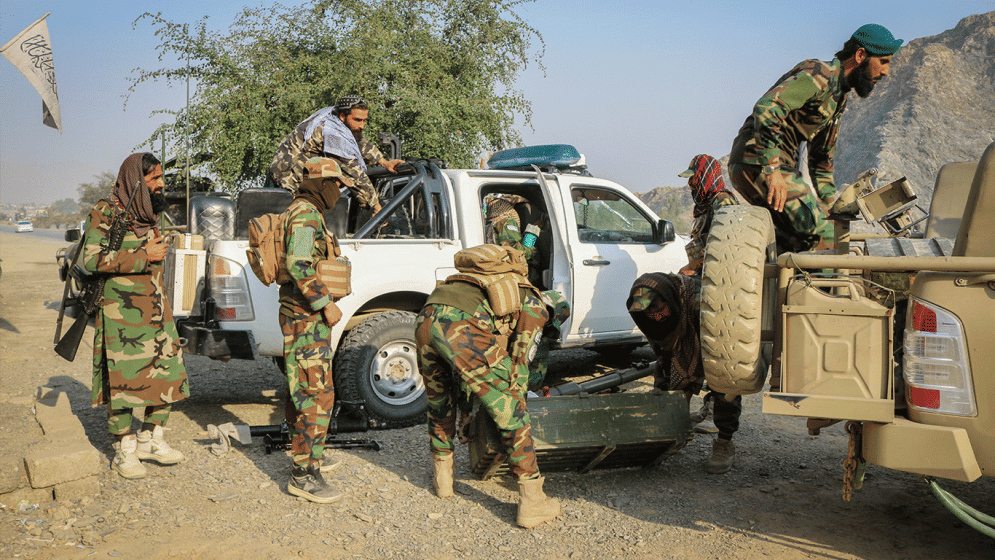
Photo: Reuters
Pakistan has been the Afghan Taliban’s closest friend for decades. It was Islamabad that helped give birth to the Taliban in the early 1990s – as a way to give Pakistan "strategic depth" in its rivalry with India. What’s gone wrong?
Pakistan carried out air strikes on Afghanistan's
major cities overnight, officials in Islamabad and Kabul said on Friday,
escalating months of border clashes between the Islamic neighbours.
The air and ground strikes, which hit Taliban
military posts, headquarters and ammunition depots in multiple sectors along
the border, came after Afghanistan launched an attack on Pakistani border
forces, the officials said.
Both sides reported heavy losses in the fighting,
which Pakistan's defence minister said amounted to an "open war".
Tensions have been heating up since Pakistan
launched air strikes on militant targets in Afghanistan last weekend.
Earlier, border clashes between the two countries
killed dozens of soldiers in October until negotiations facilitated by Turkey,
Qatar and Saudi Arabia ceased the hostilities and a fragile ceasefire was put
in place.
The escalating conflict is a long way from
Islamabad’s historic support for the Taliban. The key questions:
WHY ARE THE NEIGHBOURS NOW AT ODDS?
Pakistan welcomed the return to power of the Taliban
in 2021, with then-prime minister Imran Khan saying that Afghans had
"broken the shackles of slavery".
But Islamabad soon found that the Taliban were not
as cooperative as it had hoped.
Islamabad says that the leadership of militant group
Tehreek-e-Taliban Pakistan (TTP) and many of its fighters are based in
Afghanistan, and that armed insurgents seeking independence for the southwestern
Pakistani province of Balochistan also use Afghanistan as a safe haven.
Militancy has increased every year since 2022 with
attacks by the TTP and Baloch insurgents growing, according to Armed Conflict
Location & Event Data, a global monitoring organization.
Kabul for its part has repeatedly denied allowing
militants to use Afghan territory to launch attacks in Pakistan.
The Afghan Taliban say Pakistan harbours fighters
from its enemy, Islamic State, a charge Islamabad denies.
Islamabad says the ceasefire did not hold long due
to continued militant attacks in Pakistan from Afghanistan, and there have been
repeated clashes and border closures since then that have disrupted trade and
movement along the rugged frontier.
WHAT SPARKED THE LATEST CLASHES?
The day before last weekend's strikes, Pakistani
security sources said they had "irrefutable evidence" that militants
in Afghanistan were behind a recent wave of attacks and suicide bombings which
targeted Pakistani military and police.
The sources listed seven planned or successful
attacks by militants since late 2024 that they said were connected to
Afghanistan.
One attack last week that killed 11 security
personnel and two civilians in Bajaur district was undertaken by an Afghan
national, according to Pakistani security sources. This attack was claimed by
the TTP.
WHO ARE THE PAKISTANI TALIBAN?
The TTP was formed in 2007 by several militant
outfits active in northwest Pakistan. It is commonly known as the Pakistani
Taliban.
The TTP has attacked markets, mosques, airports,
military bases, police stations and also gained territory - mostly along the
border with Afghanistan, but also deep inside Pakistan, including the Swat
Valley. The group was behind the 2012 attack on then schoolgirl Malala
Yousafzai, who received the Nobel Peace Prize two years later.
The TTP also fought alongside the Afghan Taliban
against US-led forces in Afghanistan and hosted Afghan fighters in Pakistan.
Pakistan has launched military operations against the TTP on its own soil with
limited success, although an offensive that ended in 2016 drastically reduced
attacks till a few years ago.
WHAT MIGHT HAPPEN NEXT?
Pakistan is likely to intensify its military
campaign, analysts say, while Kabul's retaliation could come in the way of
raids on border posts and more cross-border guerrilla attacks to target
security forces.
On paper, there is a wide mismatch between the
military capabilities of two sides. At 172,000, the Taliban have less than a
third of Pakistan's personnel.
The Taliban do possess at least six aircraft and 23
helicopters but their condition is unknown and they have no fighter jets or
effective air force.
Pakistan's armed forces include more than 600,000
active personnel, have more than 6,000 armoured fighting vehicles and more than
400 combat aircraft, according to 2025 data from the International Institute
for Strategic Studies. The country is also nuclear armed.