


 For all latest news, follow the Daily Sun's Google News channel.


Iran war, tariffs turn allies against US at G20
Agencies, Washington
Published: 03 Sep 2026, 12:00 AM
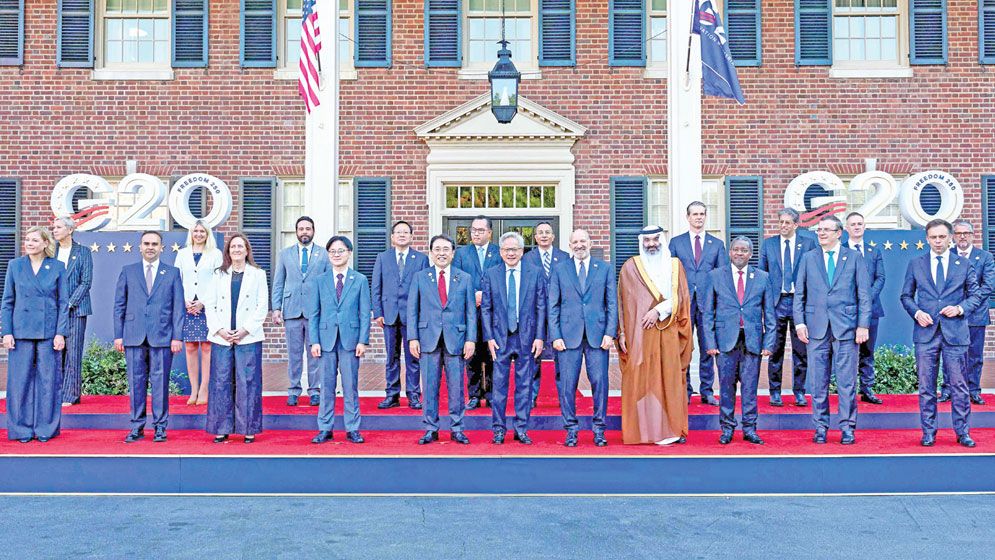
The Group of 20 (G20) meeting of finance ministers and central bankers has laid bare growing differences between the Washington and some of its closest allies over US President Donald Trump’s economic policies.
Nearly every session this week opened with US Treasury Secretary Scott Bessent highlighting the strength of the American economy under Trump and urging other countries to follow the US model. But representatives from Europe, Canada and other friendly nations were not always receptive. They criticised several administration policies that they said had hurt their economies.
Ukraine's European allies had expressed frustration after Russian Finance Minister Anton Siluanov was welcomed at the US-hosted meetings in Asheville, North Carolina.
The broiling Middle East war and President Donald Trump's tariffs also loomed over the gathering.
The allies raised concerns over the war with Iran, which has disrupted energy markets and shipping. They also questioned Bessent’s surprise decision last month to sell US holdings of euros in an effort to support Japan’s currency, the yen, said a New York Times report.
Trump’s escalating war of words and tariffs with Canada also became a major source of tension.
While the disagreements remained mostly polite, they reflected growing frustration in Europe and elsewhere over Trump’s stewardship of the global economy. Allies argued that some of his policies had hindered economic growth, even though Bessent has said the administration is “laser-focused" on that issue.
“Despite US strong-arm tactics, even traditional US allies among the G20 are clearly and publicly at odds with the Trump administration’s priorities," said Eswar Prasad, a Cornell University economist and former head of the China division at the International Monetary Fund, as quoted by the NYT report.
The divisions also stem from different approaches to economic policy.
Trump has removed regulatory barriers for businesses, including the booming artificial intelligence industry, and backed greater fossil fuel production. European leaders, meanwhile, have remained more cautious about AI and deregulation and more committed to shifting towards renewable energy sources such as wind and solar.
At the same time, European countries are trying to build their own technology ecosystem to compete with the US and China.
“There are clear differences, and we will handle it that way," German Vice Chancellor Lars Klingbeil told, as quoted by NYT. He pointed to America’s tariff conflicts, including its escalating standoff with Canada, saying they were eroding trust in global trade and would “ultimately harm everyone involved".