


 For all latest news, follow the Daily Sun's Google News channel.


Empty stands overshadow women's SAFF showpiece
Kamran Ahmed, Goa
Published: 04 Jun 2026, 03:23 AM
Daily Sun Photo
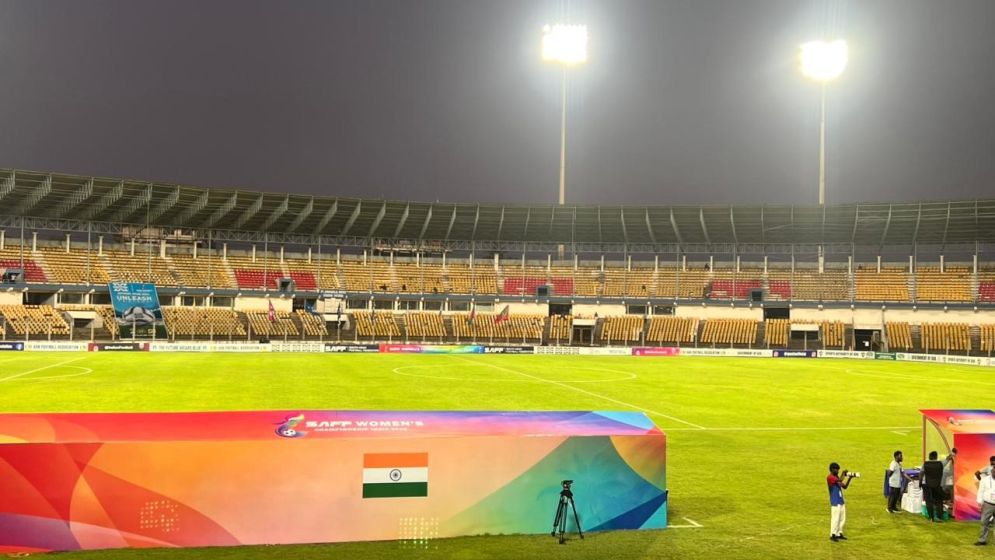
A stark lack of home support at the SAFF Women’s Championship in Goa has cast a shadow over the tournament, with organisers defending their venue selection despite the host nation playing to virtually empty stadiums.
The glaring paradox of Goan football was laid bare during Wednesday's semi-finals at the Pandit Jawaharlal Nehru Stadium.
The day's opening knockout fixture between Bangladesh and Nepal featured a vibrant atmosphere, generated entirely by a vocal Nepalese expat community from North Goa who turned out in force to back their team.
However, when host nation India took to the pitch against Bhutan in the second semi-final, the arena reverted to a haunting silence.
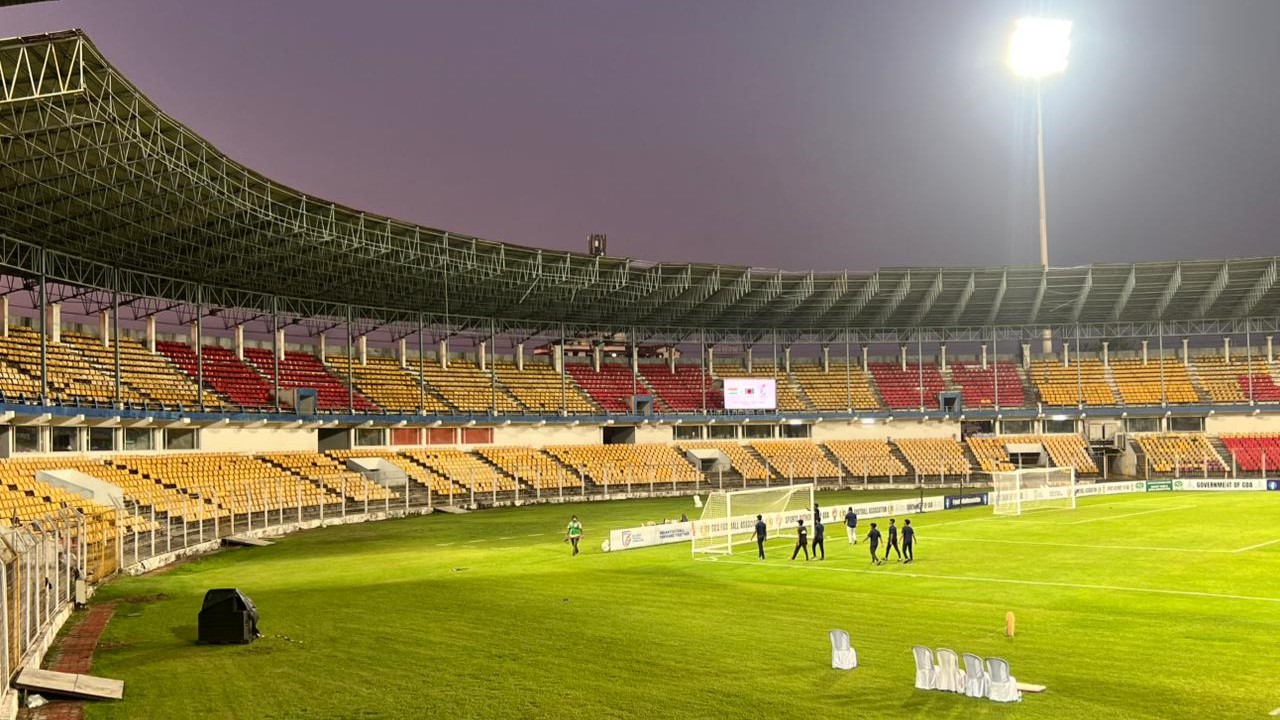
Despite the home team’s involvement in a major continental tie, the 16,200-capacity stadium saw a meagre attendance of barely 200 to 300 people, primarily comprising backroom staff, substitutes, and federation officials scattered across the main stand.
This ghostly environment has been a recurring theme throughout the competition.
Yet, an absolute absence of local marketing and street promotion meant the wider Goan public remained completely oblivious.
Just a stone’s throw from the stadium perimeter, locals at a bustling tea shop were unaware an international football match was even taking place next door.
Addressing the severe fan shortage ahead of the semi-finals, South Asian Football Federation (SAFF) General Secretary Purushottam Kattel downplayed the significance of crowd sizes, insisting the governing body's primary objective remains regional development rather than chasing large attendances.
"That is how it is post-Covid; a lot of stadiums and competitions are facing the same issues," Kattel said. "Maybe the youngsters in Goa prefer to stay at home and watch the matches, or maybe it is too hot. There could be several reasons. But we need to bring this competition all over South Asia, not only to one place. If you do it in Dhaka or Kathmandu, there could be many crowds, but we must explore the whole region."
Kattel acknowledged that hosting the tournament in established women's football hotbeds would guarantee a fervent atmosphere, but stressed the necessity of geographical rotation across all member associations.
"We do not organise tournaments to get profit," he explained. "Otherwise, I could have brought this competition somewhere else, like Nepal or Bangladesh, where there is huge interest for the women's game. Our target is capacity building for the players by organising competitions, and for officials through courses and seminars. We cannot organise at one place only because it is profitable; we have obligations as a regional association to distribute the competition equally."
When pressed on the lack of grassroots engagement and the inspirational value a packed stadium provides for young, aspiring footballers—Kattel maintained that the ultimate responsibility for venue selection lies with the host nation's football federation.
"We cannot help on those things because when we go for a competition, we need to speak with the member association," Kattel added. "The member association will think this is the best place for their football to grow, or that they can do it over there properly. That is why they decide it. All of us want to earn money and have a lot of spectators, but there are so many things in life we want that are beyond our hands."
While India’s athletes have continued to deliver clinical, high-octane performances on the pitch, the hollow environment off it serves as a damning indictment of the tournament's promotional efforts.
As the competition reaches its climax, it leaves Goa having missed a golden opportunity to showcase the soaring growth of the women's game to a state that would ordinarily worship the sport.