


 For all latest news, follow the Daily Sun's Google News channel.


Ghughudanga Zamindar Bari left to decay
Md Abdul Azim, Dinajpur
Published: 13 Sep 2025, 12:11 AM
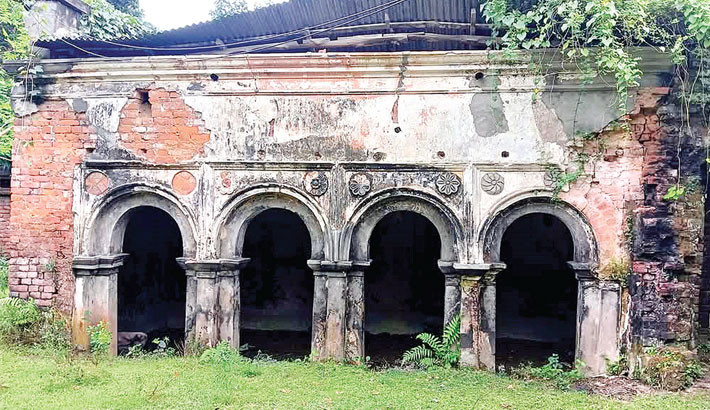
The over century-old Ghughudanga Zamindar Bari in Dinajpur, once a stronghold of heritage and a witness to the Liberation War, now stands in ruins due to decades of neglect and lack of preservation efforts.
Located on the banks of the River Purnabhaba, about eight kilometres south of Dinajpur town, the historic estate was devastated by Pakistani forces in 1971 for sheltering freedom fighters. Since then, no effective measures have been taken to restore or conserve the site, and even the heirs of the zamindar family have shown little interest in reclaiming or maintaining it.
During a recent visit, the Daily Sun correspondent found the once-majestic estate in a dilapidated condition. The grand entrance, adorned with terracotta artwork, is now covered by weeds and vines. Inside, the two-storey palace and adjoining structures lie in ruins, with no buildings in usable condition. A few local families have built makeshift homes in the courtyard, while the original heritage structures continue to deteriorate.
Though the exact origins of the Ghughudanga Zamindari remain uncertain, historical sources suggest it was established between 1771 and 1789 during British rule.
According to current members of the zamindar family and historical sources, the ancestor of the Ghughudanga zamindar clan is Nabi Muhammad. He came to Ghughudanga on a river trade trip from Jalpaiguri of India. He built a house there, installed 500 rice threshing firms, and started a rice and paddy business with Chitpur of Kolkata, along the river route. Later, his son Phul Mohammad Chowdhury bought many zamindaris (properties) and built the palace of Ghughudanga.
At its peak time, the zamindari family controlled 11 thanas, including Dinajpur, Thakurgaon, Raiganj, Pirganj, Malda, and Kushumundi, paying the British administration the highest revenue of one lakh taka annually. The zamindari was managed through 18 kanchari offices and 41 tehsils until the abolition of the zamindari system in 1950.
The estate housed numerous rare items, including a gold chair (now preserved at the National Museum), a gold koi fish weighing 101 bhari, silver-handled umbrellas and fans, and copper artifacts. Many of these treasures were looted by Pakistani forces during the Liberation War.
According to freedom fighter Md Sajir Uddin Ahmed, the zamindar’s house served as a shelter and camp for freedom fighters in 1971. Once the Pakistani army learned of this, they attacked and destroyed the palace, forcing the landlord’s heirs to flee to India. After the war, the family never returned to live in the estate, shifting instead to Dinajpur city.
Local residents and historians argued that Ghughudanga Zamindar Bari could become a major tourist attraction if restored. “If the traditional establishments in Dinajpur are renovated, tourists from home and abroad will come,” said Nafis Hasnain, owner of Dinajpur’s Gulshan Market.
Despite repeated calls from locals, no initiative has yet been taken by the Department of Archaeology or other authorities to preserve this historic site. Dinajpur residents have urged the government to take immediate steps to protect Ghughudanga Zamindar Bari, a monument bearing both cultural significance and the memories of the Liberation War.