





 For all latest news, follow the Daily Sun's Google News channel.


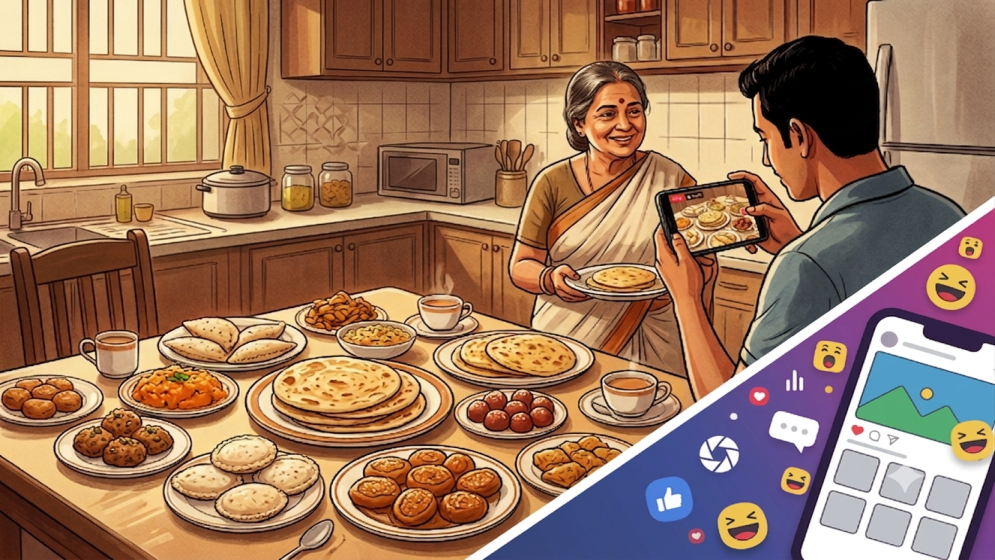
Balancing the warmth of our private lives with the digital demands of the view business. Representational Image
There was nothing unusual about a mother-in-law preparing breakfast for her son-in-law, a familiar scene in Our Private Lives across Bangladesh where family hospitality is deeply valued. But one ordinary morning in Bancharampur, Brahmanbaria, turned into a national talking point after a video of an elaborate breakfast spread went viral on social media, drawing wide public attention and View Business discussions online.
Within hours, millions had watched, shared and commented. Memes flooded Facebook. Some admired the mother’s generosity. Others joked that the breakfast resembled a wedding banquet. Many wondered whether the family’s own sons received the same royal treatment. But perhaps we were laughing at the wrong thing.
The viral breakfast is less a story about food than about how social media has transformed private family moments into public shows. Increasingly, our daily lives are no longer simply lived; they are documented, uploaded and measured by views, likes and shares. A family gathering, a birthday celebration, a wedding, a funeral, or even breakfast can become content competing for attention in the endless scroll of social media.
This is the defining feature of today's digital culture: the view business. In this case, attention has become a valuable commodity. The more emotional, unusual or extravagant the content, the more likely it is to attract viewers. Social media platforms reward visibility, and visibility often encourages exaggeration. People begin recording moments not because they are meaningful, but because they are potentially viral.
The consequences extend far beyond entertainment.
When every family event becomes an opportunity for content, authenticity begins to fade. Instead of asking whether a moment is worth cherishing, people increasingly ask whether it is worth posting. The audience becomes as important as the family itself.

Bangladesh, like many societies, has always valued hospitality. Welcoming guests with the best food available is a tradition rooted in generosity and respect. The relationship between a son-in-law and his in-laws occupies a special place in that tradition. Yet customs that once reflected affection are increasingly shaped by the invisible pressure of online audiences.
A lavish breakfast that might once have remained a treasured family memory now becomes a public benchmark. Other families inevitably compare themselves. Some feel inspired; others feel inadequate. Social media rarely shows the financial realities behind such displays. It celebrates abundance while concealing sacrifice.
This is not unique to Bancharampur. Across the country, birthdays have become grander, weddings more extravagant, Eid celebrations more elaborate and family vacations more carefully curated—not always because families desire these things, but because digital platforms reward spectacle over simplicity.
The pressure is subtle but powerful. Once people see extraordinary displays receiving millions of views, ordinary acts of kindness may seem insufficient. Hospitality becomes performance. Celebration becomes competition.
The irony is that the most valuable parts of family life cannot be captured by a camera. A mother's affection is not measured by the number of dishes she prepares. A son-in-law's respect is not determined by the richness of the meal. Family relationships thrive through care, trust and shared experiences—qualities that no viral video can fully convey.
Another concern is the gradual erosion of privacy. Families increasingly expose intimate moments to strangers without considering the long-term consequences. Children, elderly parents and relatives often appear in videos that remain online indefinitely, sometimes becoming subjects of ridicule or unwanted public attention. What feels amusing today may become uncomfortable tomorrow.
The Bancharampur breakfast reminds us that the internet never consumes content in the way its creators intend. A video uploaded to celebrate affection may become a meme. A private joke may become a national headline. Once released into cyberspace, personal moments no longer belong entirely to those who created them.
None of this means families should stop celebrating or sharing joyful occasions. Social media has connected people, preserved memories and allowed communities to celebrate together in remarkable ways. The problem begins when validation from strangers becomes more important than genuine interaction with loved ones.
____________________________________
The writer is a Senior Sub-Editor Md Shahadat Hossain at Daily Sun. He can be reached at [email protected]
Recommended Stories