



 For all latest news, follow the Daily Sun's Google News channel.


KAMRUL ISLAM RATAN
As temperatures soar and the monsoon clouds begin to gather, Bangladesh’s summer landscape has transformed into a vibrant showcase of colours, flavours and aromas.
From bustling city markets to village orchards, the season has filled every nook and cranny, bringing an abundance of fruits that are deeply woven into the country’s culture, economy and culinary traditions.
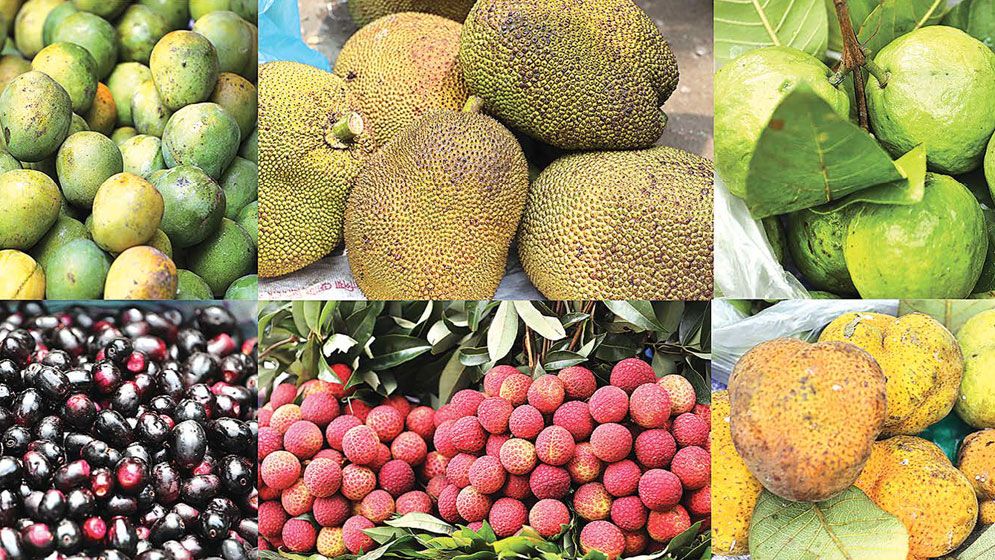
Markets are overflowing with mangoes, jackfruits, litchis, watermelons, pineapples, blackberries, jamrul, and other seasonal delicacies. People are cherishing the period that has been evoking memories of family gatherings, childhood adventures and rural life.
Among all summer fruits, the mango reigns supreme. Often called the “king of fruits", Bangladeshi mangoes are renowned for their sweetness, aroma and diversity.
Districts such as Chapainawabganj, Rajshahi, Naogaon, Satkhira and Rangpur produce some of the country’s most sought-after varieties, including Himsagar, Langra, Gopalbhog, Mohonbhog, Amrapali, Fazli and Haribhanga. Every year, mango cultivation contributes significantly to rural incomes and supports thousands of farmers, traders and transport workers.
Visiting the capital's mango shops, this correspondent has found that Rajshahi’s Himsagar is ruling people’s choice as the season for Gopalbhog has come to an end.
Nuruzzaman, a mango trader in Karwan Bazar, said that, “Himsagar is in high demand though the time for this variety of mango is about to finish. I can bring Fazli now. But I am waiting for the best variety.”
Litchi, with its bright red shell and juicy flesh, signals the peak of early summer. Northern districts such as Dinajpur, Pabna and Rangpur are particularly famous for producing high-quality litchis. During the harvest season, roadsides and local markets become crowded with vendors selling bunches of the popular fruit.
The jackfruit, Bangladesh’s national fruit, is another summer favourite. Its large size and distinctive flavour make it a unique addition to the seasonal fruit basket. Rich in vitamins, minerals and dietary fiber, jackfruit is consumed both ripe and unripe. While the sweet bulbs are enjoyed fresh, the young fruit is often cooked as a vegetable in traditional dishes.
While purchasing a jackfruit, Joyeeta Biswas, a housewife in Joarsahara Bazaar, said that, “Price is reasonable. I am taking this for my children. Today’s kids don’t find it interesting to eat jackfruit, as it seems a bit complex for them due to natural latex sap, which makes it notoriously sticky to handle. But I think they need to taste such a wonderful fruit.”
Beyond their taste, summer fruits play an important role in nutrition. Health experts recommend consuming seasonal fruits as they provide essential vitamins, antioxidants and hydration during the hot months.
“Summer fruits are blessings for the people of our country. They contain natural vitamins and minerals for us. For instance, watermelons help replenish fluids, while mangoes and pineapples are rich sources of vitamins A and C. Blackberries contain antioxidants that contribute to overall well-being. Consuming jackfruit supports heart health, aids weight management, and regulates blood sugar,” Prof Abu Torab Md Abdur Rahim of the food and nutrition department at Dhaka University said.
He also reminded that the season offers affordable fruits for all sections of fruit lovers, while imported fruits are going beyond ordinary people’s reach gradually.
The fruit sector generates employment across cultivation, harvesting, packaging, transportation and retail trade. In recent years, improvements in preservation, logistics and online marketing have enabled farmers to reach consumers more efficiently, reducing post-harvest losses and increasing profits.
However, climate change, irregular rainfall, extreme heat and pest infestations continue to affect fruit production, which, according to fruit lovers should be addressed with climate-resilient farming practices.