


 For all latest news, follow the Daily Sun's Google News channel.


Commentary
Will the elderly continue to suffer and die in neglect?
Special Correspondent
Published: 07 Jun 2026, 12:00 AM
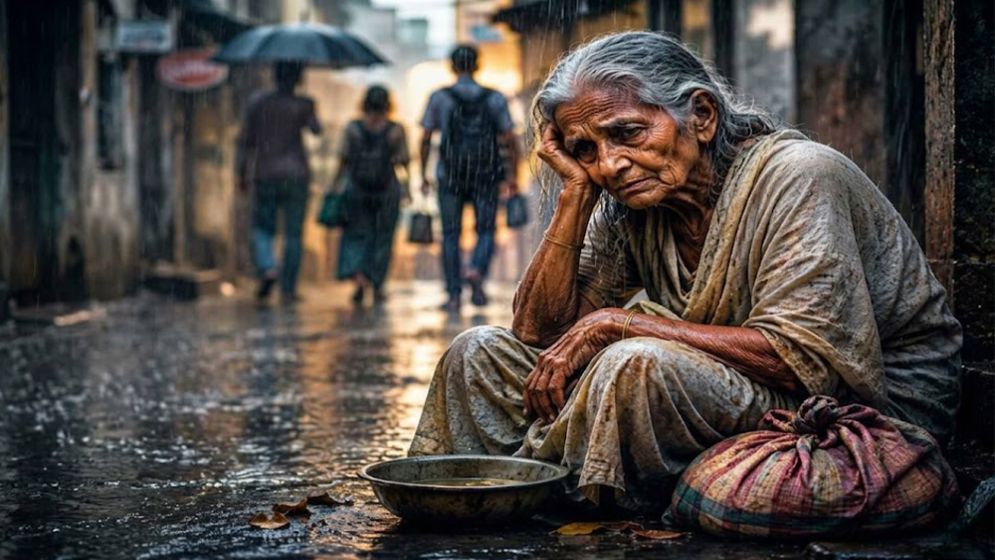
AI-generated photo
The police recently recovered the body of 75-year-old Nur Jahan Begum from Mirpur. Video footage from the apartment where she had lived with her daughter has circulated widely on social media. It showed that the entire flat, including her room, was in an extremely dirty and unhygienic condition. The footage of the body revealed a horrifying scene, with a white fungus-like substance covering her right eye. Officials from Pallabi police station stated that insects were found on the body when it was recovered.
One of Nur Jahan Begum’s sons is a joint secretary, who has since been made an officer on special duty (OSD) following the incident. Another son is a teacher at the Bangladesh University of Engineering and Technology (BUET), while her daughter teaches at a local school.
The incident is deeply distressing. As a mother, she must have raised her children with immense care and sacrifice. Those children are highly educated and well established. Yet it is painful that they did not appear to feel any responsibility towards their mother. The case once again highlights how self-centred people can become, to the extent of losing touch even with their own parents.
Before the shock of this tragedy had faded, another lonely death came to light. Police recovered the decomposed body of a woman named Selina Afroz from her residence in Pallabi, Dhaka. It is believed that she had died several days earlier. Her husband and two children live in Canada. Follow-ing family disputes, Selina Afroz had returned to Bangladesh 12 years ago and had been living alone in a flat on her father’s ancestral property ever since.
These two incidents starkly reveal the vulnerability of elderly people in our society. Because they occurred in Dhaka, they received public attention and generated widespread sorrow. Similar incidents, however, occur across the country with alarming regularity.
Around four years ago, an elderly woman was found abandoned in a graveyard in Madaripur after being left there by her children. In Narayanganj, an elderly and ill mother was dumped on the street by her children. Similar cases have been reported in Chapainawabganj and Sirajganj, where sick elderly mothers were abandoned by their sons. Amid the constant flow of daily news, such stories have become disturbingly commonplace.
An ageing population, little support
According to the latest Population and Housing Census, there are 15,326,719 people aged 60 and above in the country, representing 9.28% of the total population. In the 2011 census, the figure was 7.47%. As life expectancy rises, the elderly population continues to grow and is now estimated to exceed 20 million.
What are the state and society doing for these citizens? In practice, very little. Apart from a modest allowance available to only a limited number of people, elderly citizens receive almost no meaning-ful support. There are no dedicated seats for them on public transport, no specialised healthcare system in public hospitals, few recreational opportunities, and almost no elderly-friendly public spaces. What many encounter instead is neglect, indifference, and pity.
Yet these are people who spent their lives contributing to the nation in various capacities. In return, they seek dignity, respect, and recognition. Ensuring a comfortable and peaceful life for older citi-zens is not merely an act of charity; it is a responsibility of a civilised society.
Practical steps that could be taken
The most pressing issue facing elderly people is health. With age, the body’s systems gradually weaken. The kidneys, lungs, liver, and heart become less efficient, while vision, hearing, and den-tal health often deteriorate. As a result, conditions such as hypertension, diabetes, heart disease, and respiratory problems become increasingly common.
Without major additional expenditure, the government could introduce dedicated services for elder-ly patients in public hospitals. An elderly-friendly policy could also be developed and implemented gradually. Priority service desks could be established in hospitals, public transport systems, pass-port offices, immigration facilities, tax offices, and utility service centres. Senior citizens could re-ceive preferential access to services, hospital beds, train tickets, and other essential facilities without having to endure long queues.
Many of these measures could be introduced through administrative orders and gazette notifica-tions rather than large new spending programmes. Financial incentives or discounts for elderly citizens could be considered later as resources permit.
Learning from other countries
Many countries have adopted comprehensive policies to support older citizens. Switzerland is often regarded as one of the world’s most elderly-friendly countries, offering extensive healthcare, social support, and civic protections. Norway provides high-quality residential care and modern facilities for seniors. Germany offers free healthcare for elderly citizens alongside pension support and ac-cess to well-equipped care homes. Canada combines financial assistance with specialised healthcare services and community centres designed to reduce loneliness among older people.
Bangladesh cannot replicate all of these programmes immediately, nor is that necessarily expected. However, the examples demonstrate that thoughtful policy and sustained commitment can signifi-cantly improve the quality of life for older citizens.
A society’s measure
Family bonds in Bangladesh remain stronger than in many developed countries, but those bonds are gradually weakening as joint families give way to smaller nuclear households. Consequently, many elderly people face increasing loneliness and neglect.
Given the country’s limited healthcare infrastructure and social security provisions, older citizens often endure economic hardship, inadequate medical care, social isolation, and a loss of dignity. Many struggle even to meet basic needs.
Within existing financial constraints, the government can still take meaningful steps towards building a more elderly-friendly society. What is required above all is political will and social commit-ment. Dedicated hospital counters, priority services in banks and government offices, reserved seats on public transport, and accessible recreational spaces could all be implemented relatively quickly.
Such measures would send a clear message that the state values its elderly citizens. When society honours older people, families are more likely to do the same. The treatment of the elderly is ultimately a measure of a nation’s humanity, and Bangladesh must decide whether it is prepared to meet that test.
Read More