


 For all latest news, follow the Daily Sun's Google News channel.


Commentary
Public demand: Independent commission must be formed to probe 18 months of corruption in Yunus government
The corruption life cycle of Asif Nazrul
Special Correspondent
Published: 01 May 2026, 12:00 AM
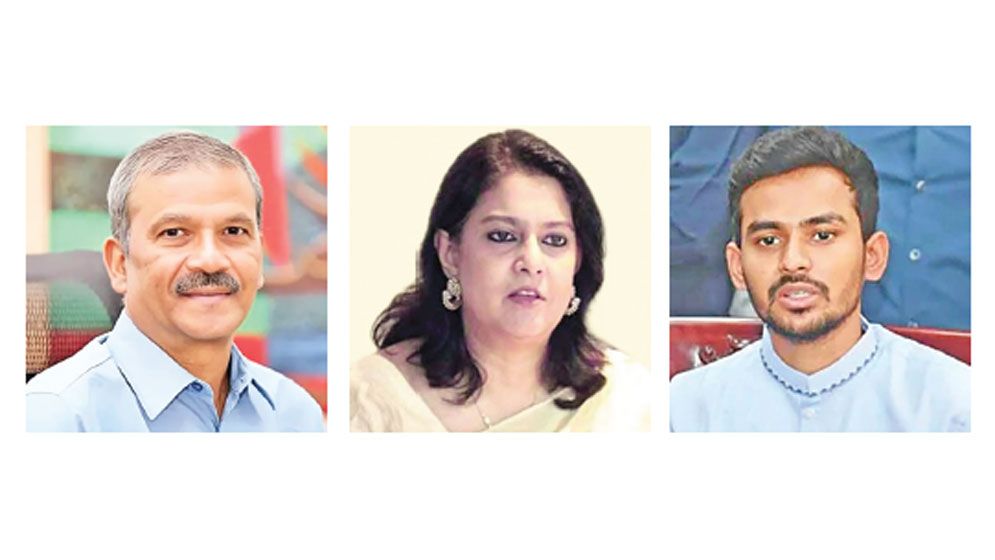
Asif Nazrul served as an adviser to the interim government led by Prof Muhammad Yunus. During the tenure, extensive allegations of corruption, nepotism, and incompetence were levelled against him. However, an examination of Asif Nazrul’s life trajectory suggests that each stage of his career has been marked by deception, forgery, and corruption. Throughout his life, he has repeatedly “changed colours” and engaged in questionable activities. His inclination towards deception is such that he has even changed his own name.
Asif Nazrul’s original name is Nazrul Islam. He was admitted to the Law Department of Dhaka University under this name. He was a mediocre student, while the most outstanding student in his cohort was Shamsuddin Ahmed, who secured first place in his Honours degree. Nevertheless, Shamsuddin did not go on to become a university teacher. The late Ershadul Bari joined the Dhaka University Law Department from Rajshahi University, and, in a remarkable turn of events, Asif Nazrul became close to him. Their connection was ideological. During the LL.M. programme, Ershadul Bari effectively ensured that Asif Nazrul received a first-class degree. Bypassing several more deserving candidates, he facilitated Asif Nazrul’s appointment as a university teacher. Through the manoeuvres of academic politics, Bari succeeded in appointing Nazrul instead of Shamsuddin. However, after becoming a teacher, Asif Nazrul turned against Ershadul Bari. During the movement led by Jahanara Imam calling for the trial of the 1971 war criminals, Nazrul took a position contrary to Bari. This episode reflects a recurring pattern in his conduct.
Asif Nazrul began his career in journalism during his university years, writing for Minar Mahmood’s Bichinta magazine. He later fell out with Mahmood. Subsequently, he joined a weekly magazine called Lorai, owned by then-Jasad leader (later BNP leader) Shajahan Siraj. He was forced to leave this position following a scandal involving a woman. He then joined the weekly Bichitra.
In journalism, his principal mentor was Shahriar Kabir, who played a key role in securing him a position at Bichitra. Yet, Asif Nazrul later distanced himself from Kabir as well. Currently, Shahriar Kabir is imprisoned as a “prisoner of conscience” and is reportedly in poor health. Despite facilitating bail for various individuals after becoming an adviser, Asif Nazrul made no effort on behalf of his former mentor and now behaves as though he does not know him.
Asif Nazrul was also associated with Jahanara Imam’s “Ekattorer Ghatak Dalal Nirmul Committee”. At the time, he was an active member and among the first to call for a ban on Jamaat-e-Islami as a party linked to war crimes. However, his stance appears to have shifted over time. His principles seem to change according to circumstance, aligning with whichever position proves advantageous. This has led to a pattern in which he adopts differing public positions depending on the political climate. Critics argue that this reflects opportunism rather than consistency.
His personal life has also been the subject of controversy. He first married while pursuing his PhD abroad, reportedly for practical reasons related to his career. After returning to Bangladesh, he divorced his first wife. He later married Rokeya Prachy, a prominent figure at the time, particularly noted for her role in Matir Moyna. During this period, the Awami League was in power, and the marriage was perceived by some as politically advantageous. Following a change in political circumstances, the marriage ended. The couple had a daughter together. Subsequently, he became involved in a relationship with Shila Ahmed, daughter of Humayun Ahmed, which led to further personal controversy and eventual divorce from Prachy.
Corruption during his tenure as adviser
Turning to his tenure as an adviser, Asif Nazrul claimed in a Facebook post on 29 April that he had not engaged in corruption and that all actions were carried out in accordance with the rules. However, critics argue that the evidence suggests otherwise.
During his tenure, established policies regarding the transfer of sub-registrars were reportedly not followed. There are allegations that transfer orders were delayed or altered due to unpaid bribes. In some cases, individuals were transferred multiple times within a short period. Of the 403 sub-registrars in the Registration Department, at least 282 were transferred within 18 months. This raises questions about whether proper procedures were followed.
For instance, Sub-Registrar Manisha Roy was transferred multiple times within a short span, including three transfers within a matter of months, with one occurring just days before she was due to assume a new post. Similar patterns have been reported in other cases, including those of Rehana Parvin, Sanjoy Kumar Acharya, and Shah Abdul Arif. These frequent and abrupt transfers have led to concerns about administrative irregularities.
Further allegations concern the appointment of lower court judges and government lawyers. During his tenure, an unusually large number of legal officers were appointed. There are currently 103 Deputy Attorneys General and 230 Assistant Attorneys General, reportedly the highest numbers in Bangladesh’s history. Legal experts have questioned the necessity and rationale behind such appointments.
In two Dhaka courts, the number of appointed legal officers increased dramatically – from 4 to 84 in one court and from 9 to 61 in another. In total, 659 legal officers were appointed to handle state cases in Dhaka courts during this period. Critics argue that this expansion placed a significant financial burden on the state.
There are also allegations regarding irregularities in the appointment of lower court judges, with some lawyers claiming that these appointments were influenced by political considerations.
Additionally, questions have been raised about property ownership and financial disclosures, particularly concerning a property in Eskaton and statements made in income tax documents by Rokeya Prachy. These matters remain disputed. Asif Nazrul has previously been criticised for disseminating inaccurate information, including claims about the number of foreign workers in Bangladesh. Given the breadth of allegations, many believe that an independent investigation is necessary.
Efforts were made to obtain Asif Nazrul’s response to these allegations. He was contacted by mobile phone on 30 April but did not answer. A follow-up message was sent via WhatsApp; however, no response was received.
In light of these concerns, there is growing public demand for the formation of an independent commission to investigate the activities of the Yunus government during this 18-month period, including those of Asif Nazrul, Syeda Rizwana Hasan, and Asif Mahmud Shojib Bhuyain. Only through such an inquiry can the truth be established.