


 For all latest news, follow the Daily Sun's Google News channel.


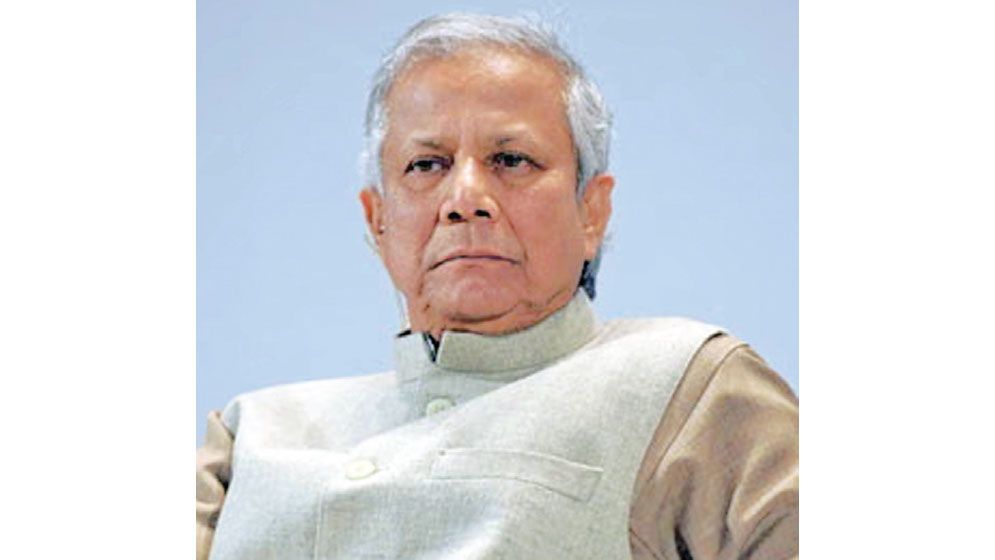
The ruling BNP has termed the "July National Charter (Implementation of Constitutional Reform) Order, 2025" and the "Referendum Ordinance, 2025," issued during the tenure of the Muhammad Yunus-led interim government, as "completely illegal and void." Member of the Party’s Standing Committee and Home Minister Salahuddin Ahmed stated, "The July Charter Implementation Order is a document of endless deception and a national fraud by the interim government. This order has no legal validity and has been void from its inception." These remarks from the home minister paint a picture of the destruction of politics during the 18-month rule of the Yunus administration. The deception practised by the Yunus government in the name of political reform is now being exposed in the National Parliament. Prof Yunus made desperate attempts to create disunity and division among political parties.
The interim government’s economic deception has now been revealed to the nation. In the name of financial sector reform, he essentially destroyed the country's economy. The private sector is the main driving force of Bangladesh's economy, yet during the Yunus regime, a horrific wave of destruction was unleashed upon it. Thousands of factories closed down, and millions of workers became unemployed. Hundreds of factories were torched by "mob violence." The interim government took no initiative to stop these mobs; instead, it encouraged mob terrorism. Private sector entrepreneurs were harassed with fabricated and baseless cases. Under Yunus's protection, extortion created a reign of terror in the private sector. Many businessmen shut down their operations out of fear of mob violence and extortion. Under the leadership of Ahsan Mansoor, a close associate of Yunus, the banking sector became averse to investment. Due to contractionary monetary policy, high interest rates, political uncertainty, and the deterioration of law and order, domestic and foreign investment remained stagnant for a year and a half. As investment did not increase, no new employment was created. According to economists, this was the interim government's greatest deception. The decision to dissolve the boards of controversial banks, the supposed initiatives to stop loan irregularities, and the merger of five weak Islamic banks to form the "Combined Islamic Bank" caused more harm than good to the economy. Depositors of the merged banks are now on the streets protesting for their money. When Yunus took power, the amount of defaulted loans was high, but by the time he left, that figure had significantly increased.
Another deception by Yunus was the alleged investigation into corruption and money laundering against the private sector. There was no explanation for the basis on which money laundering allegations were brought against 11 individuals and institutions. Through "media trials," the Yunus government attempted to tarnish the image of the private sector in the name of investigation. This, too, was a fraud against the nation.
Until now, we had heard of the Yunus government's political and economic deceptions. But now, the picture of his deception in all sectors is becoming clear. Since the BNP government took charge, wherever problems and chaos arise, the fingerprints of Yunus’s deception are visible.
A severe health crisis involving measles is currently sweeping the country. Measles vaccinations were stopped during the Yunus administration. According to the government's Expanded Programme on Immunisation (EPI), the vaccination rate for 12-month-old children was between 89% and 103% from 2017 to 2023. However, in 2024, the rate dropped to 86.6%, and last year, in 2025, it plummeted to 59.6%. Regular immunisation programmes were functional until 2023, but after Nurjahan Begum, a close associate of Yunus, became the health adviser, the health sector fell victim to a series of blunders.
Although the interim government organised an investment summit in Dhaka to attract capital, practically no investment arrived despite several promises. Instead, the focus was entirely on handing over domestic assets to foreigners. Ignoring public opinion, the interim government decided to sign a deal with the UAE's DP World to operate the New Mooring Container Terminal (NCT) at Chattogram Port. Although DP World backed out at the last minute, workers were forced to strike in protest, and the government took punitive measures against the protesters. On November 17, the government signed an agreement with the Danish company APM Terminals to build a container terminal at Laldia Char, and on the same day, a deal was signed with the Swiss company Mediterranean Shipping Company (MSC) for the Pangaon naval terminal. The Yunus government engaged in lies and deception regarding these deals.
In its final days, the interim government deceived the nation with several international agreements. Trade agreements with the United States and defence deals with China were signed while keeping the entire nation in the dark. There is widespread criticism regarding the G2G deal with China for a drone factory; the purchase of JF-17 Thunder aircraft from Pakistan and J-10CE fighters from China; the acquisition of Eurofighter Typhoons from a European consortium, submarines from South Korea, T-129 attack helicopters from Turkey, Black Hawk helicopters from the US, and a defence pact with Japan. Additionally, the decision to purchase Boeing aircraft from the US was taken during this regime.
The rushed approval of various projects before exiting was another deception. Between January 1 and January 25, 64 projects worth Tk106,993 crore were hurriedly approved. Among these, 40 projects worth Tk79,356 crore were entirely new. During its 18-month tenure, this government initiated a total of 135 new projects with a total cost of Tk203,000 crore. Remarkably, 38% of these projects were allocated to Yunus's home district, Chattogram, while 21 districts received no development projects at all. Bias was also shown in allocating funds to the home districts of other advisers, especially the student advisers.
Until the very end, there was no improvement in law and order; rather, it deteriorated daily. In the 18 months of the Yunus government, thousands of mob incidents occurred. According to the Law and Arbitration Center (ASK), at least 300 people died due to mob violence alone. The number of deaths in 2025 was higher than in 2024. In 2025 alone, 643 unidentified bodies were recovered in Dhaka city. Rivers became "dumping stations" for criminals; in 2025, an average of 43 bodies were recovered from rivers every day. Robbery, theft, and assault became daily occurrences. Yet, upon taking power, Prof Yunus promised a rapid improvement in law and order. This was another limitless deception.
At the start, Muhammad Yunus was introduced as an "international player", but in reality, we saw no "goals" celebrated. Aside from Pakistan, there was no significant diplomatic success with any other country. He claimed that Rohingyas would celebrate Eid-ul-Fitr in Myanmar this year; clearly, that did not happen. Instead, at least 200,000 more Rohingyas have entered Bangladesh. Around 70,000 Saudi-resident Rohingyas are receiving Bangladeshi passports. A Bangladeshi girl even lost her life to gunfire from the Arakan Army.
While relations with India hit rock bottom, he could not reduce import dependency; rather, he poisoned the relationship with his rhetoric. In 18 months, he could not move a single country's visa centre from Delhi back to Dhaka, increasing the suffering of students wishing to study abroad. Most countries that previously allowed visa-free entry for Bangladeshis have now banned it or reduced visa issuance rates. The US even imposed visa restrictions. The value of the Bangladeshi passport has dropped to the levels of Yemen, Afghanistan, or Palestine. Despite travelling abroad 14 times in 18 months (11 times in the first year), "Yunus Magic" practically failed. This was a fraud against the nation in the name of diplomacy.
While the success of Grameen Bank and his Nobel Prize were built on the backs of women, women were the most vulnerable during his rule. Dangers to women in public spaces increased, and extremist groups—who saw a massive rise during this time—created a climate of fear regarding women's clothing. The government took no effective action against them.
Yunus had a golden opportunity to become a national hero by uniting a divided country. Instead, he split the country into three parts. Under "Operation Devil Hunt," at least 500,000 grassroots people were jailed in two phases and deprived of bail. The UN described these actions as crimes against humanity.
In July, the people wanted politics-free campuses. But in 18 months, not a single neutral VC was appointed to any university. There was no momentum in education. Students could not be brought back to classrooms. Across the country, teachers were harassed by students. Even halfway through the year, students did not receive new books—not to mention the corruption regarding the quality of books and paper.
While it was claimed that the media enjoyed freedom, the data says otherwise. People of their choice were placed in almost every media outlet. Thirty journalists are still in jail. The government installed preferred individuals in 52 media organisations. Attacks were carried out to take over media outlets. The responsibility for the burning of Bangladesh Pratidin, Kaler Kantho, Daily Sun, The Daily Star, and Prothom Alo, and the government's inaction at the time, will haunt Muhammad Yunus forever.
In the last 18 months, freedom fighters were insulted, forced to wear garlands of shoes, and beaten. The residence at Dhanmondi 32 was demolished repeatedly, and Bangabandhu was humiliated in ways unseen in the last 54 years.
The Yunus government even deceived the nation regarding sports. The decision for Bangladesh not to participate in the Cricket World Cup was another chapter in the endless deception of the interim government.
For the past 18 months, the people of Bangladesh have only been deceived. I thank the home minister for presenting the facts of this deception in the National Parliament.
___________________________
Audite Karim is a writer and playwright.
Email: [email protected]