


 For all latest news, follow the Daily Sun's Google News channel.


HAZARD LOOMS LARGE IN RURAL AREAS – PART I
Environmental sanitation effort falters as 4 in 5 municipalities left without IWTPs

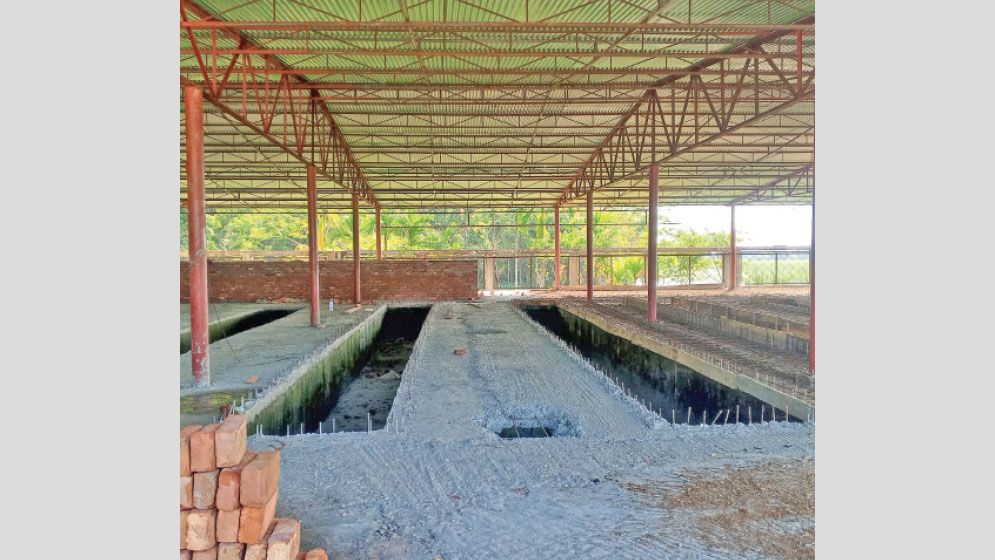
The construction work of IWTP at Betagi Municipality remains at the midway for years.Photo credit:-Rashidul Hasan
The government pledged to ensure environmental sanitation in 85 municipalities by building Integrated Waste Management Plants (IWTPs), as part of its commitment to Sustainable Development Goal 6.2 on clean water and sanitation and the National Action Plan for Faecal Sludge Management (FSM) 2021-30, which ultimately targets 185 municipalities. To achieve this, several large projects were undertaken by the Department of Public Health Engineering. Years on, however, many facilities remain unfinished, idle or unusable. The Daily Sun has investigated three such projects. Today, we publish the first part of this two-part investigative series.
Government efforts to introduce environmentally sound waste management in 85 municipalities have largely collapsed, leaving most towns to continue dumping solid and human waste into rivers, canals and open spaces, amid mounting environmental and public health risks.
Despite spending more than Tk3,370 crore (water supply and sanitation) over the past seven to eight years on three major projects to establish Integrated Waste Treatment Plants (IWTPs), the government has failed to make the system functional in most areas.
Nearly four out of every five municipalities covered by the schemes either never received a plant, failed to complete construction, or are unable to operate completed facilities due to shortages of land, equipment, skilled staff and funds.
Official data show that IWTPs could not be built at all in 45 municipalities because land was never secured. In another 21 municipalities, construction remains incomplete, with officials privately conceding that many of these projects may never be finished due to legal disputes, contractor withdrawals and unresolved land ownership claims.
As of this December, construction was completed in only 16 IWTPs and three faecal sludge treatment plants (FSTPs).
Even among these, several remain idle because municipalities lack waste collection vehicles, trained operators or the financial capacity to run the plants.The overall failure has left most municipalities continuing long-standing practices of indiscriminate dumping, with visible consequences for water quality, soil health and air pollution.
Experts warn that the setbacks seriously threaten Bangladesh’s ability to meet Sustainable Development Goal (SDG) 6.2 on sanitation by 2030, as well as its own National Action Plan to ensure environmentally sound human waste management in 185 municipalities.
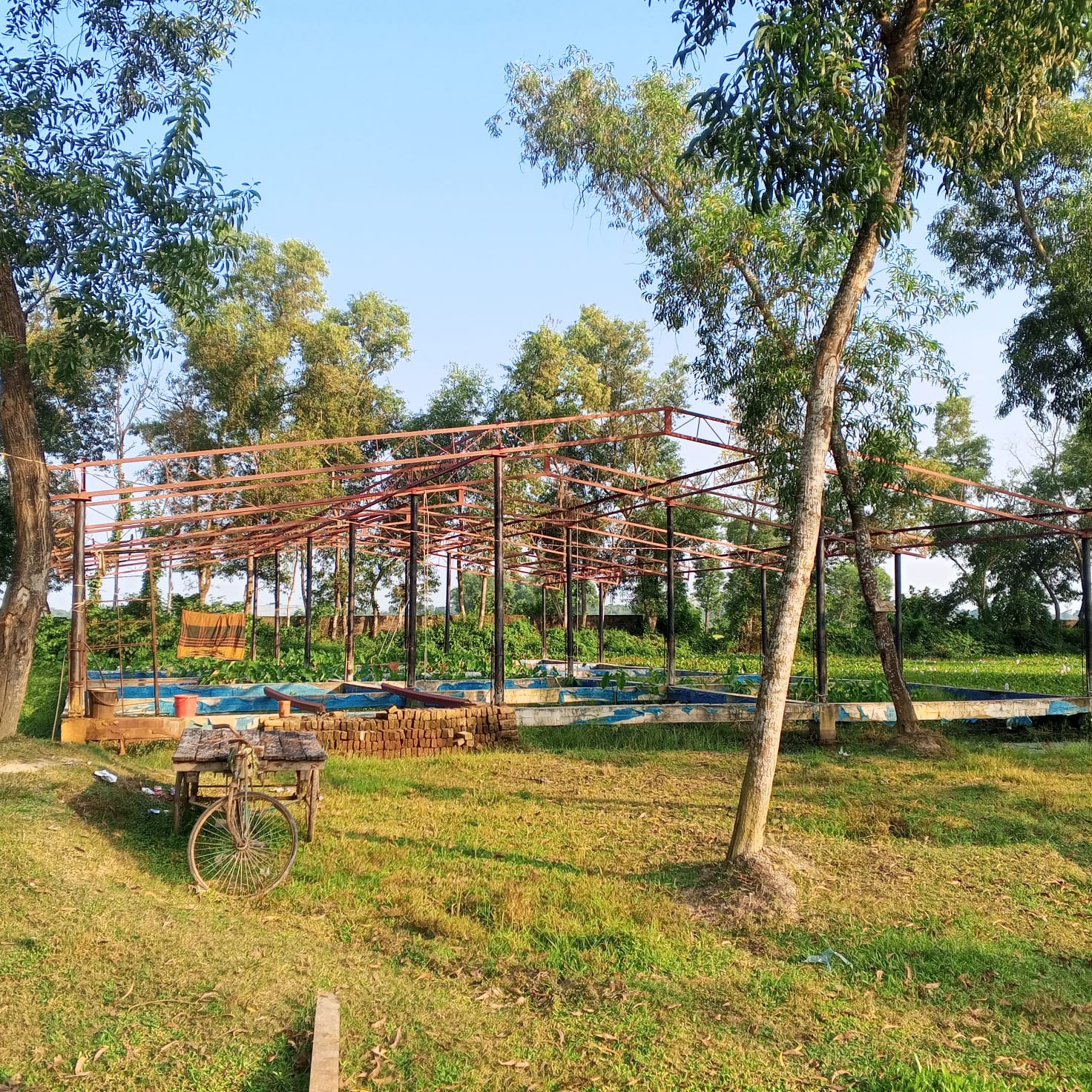
Three projects, little progress
According to Development Project Proposals (DPPs) prepared by the Department of Public Health Engineering (DPHE), the government launched three large-scale initiatives between 2017 and 2019 to improve municipal sanitation.
The first, “Urban Water Supply and Sanitation in 23 Pourashavas”, was approved in July 2017 with a budget of Tk991 crore. This was followed by the “Water Supply and Environmental Sanitation including Faecal Sludge Management Project” for 32 municipalities in January 2018, with an allocation of Tk632.80 crore. The third, “Bangladesh Municipal Water Supply and Sanitation Project” for 30 municipalities, began in July 2019 with a budget of Tk1,750 crore.
Collectively, the projects aimed to introduce integrated systems to collect, treat and recycle solid waste and faecal sludge, reduce open dumping, and produce compost through environmentally safe processes.
However, progress reports paint what DPHE officials themselves describe as a “dismal picture”.
Across all three projects, construction was completed in just 16 IWTPs and three FSTPs by December, the final deadline for most components. In 21 municipalities, works remain unfinished, largely due to land-related disputes. In 45 municipalities, projects never moved beyond the planning stage because land was not handed over at all.
A senior project official admitted that the situation is unlikely to improve.
“There is a reality that the under-construction IWTPs could not be completed due to numerous factors,” he said, adding, “The project ended in October, and the government is not extending the time or revising costs. Despite our huge efforts, we could not complete the work in eight years.”
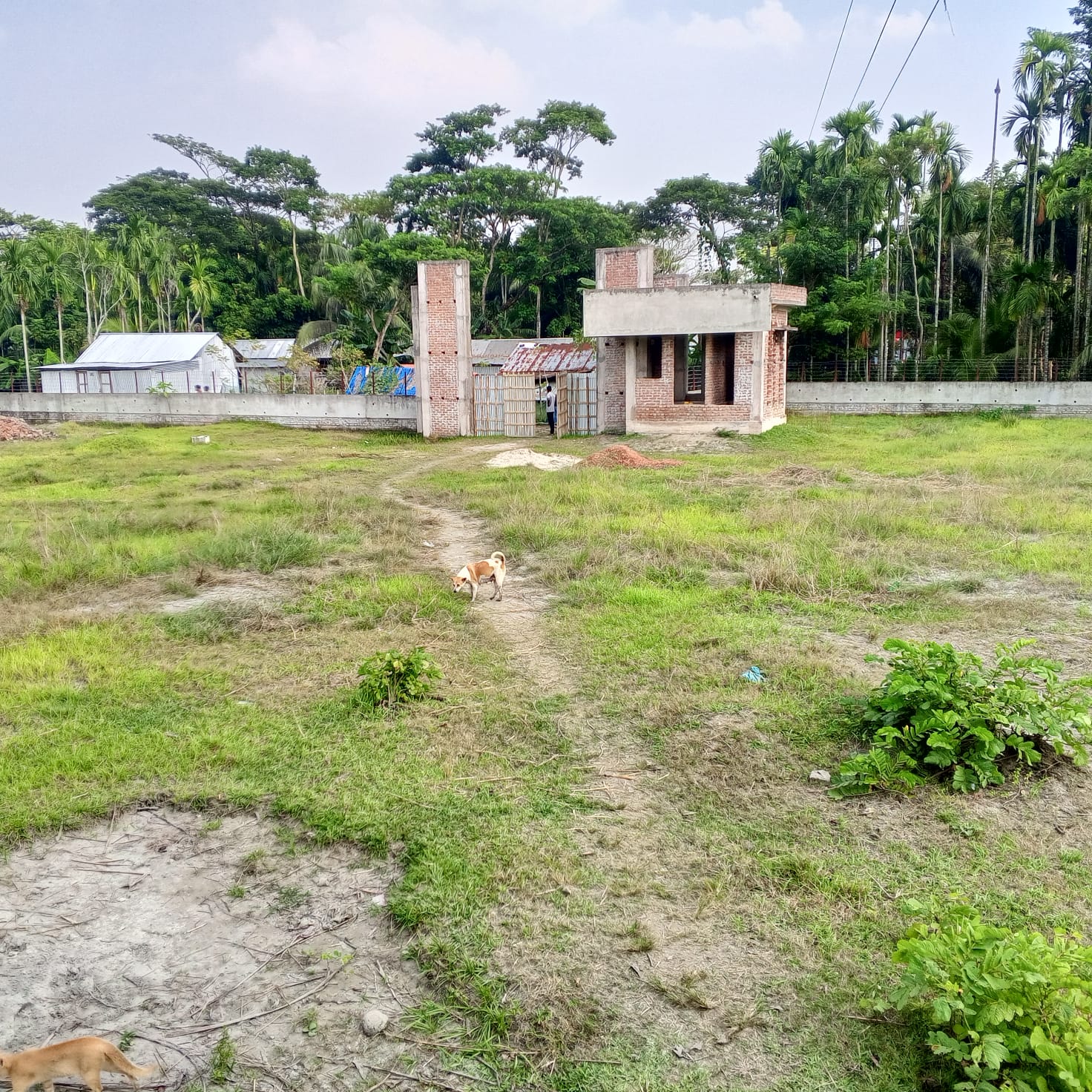 The construction work of IWTP at Muladi Municipality is yet to be started and land development work remains at the initial stage for years. Photo credit:-Rashidul Hasan
Land disputes bring projects to a standstill
The failure to secure undisputed land has emerged as the single biggest obstacle across all three projects.In Muladi municipality, construction under the 23-pourashava project stalled at a very early stage and has remained suspended since 5 August 2024.
A visit to the site near Bulu Bridge on 24 October showed only a boundary wall and entrance gate around roughly 1.5 acres of land.Local residents said work stopped last year due to a dispute over ownership.
Shah Alam Boyati, one of at least 10 claimants, told the Daily Sun that they had filed a court case asserting that the land had been illegally seized by former mayor and Awami League leader Md Shafiquzzaman Rubel.
Similar problems are evident elsewhere. In Shaistaganj municipality, construction of an IWTP has remained at the basement level after the contractor allegedly abandoned the site without explanation. In many other municipalities, work is frozen at different stages for similar reasons.
Under the Bangladesh Municipal Water Supply and Sanitation Project for 30 municipalities, only seven of 17 planned waste management facilities have been completed so far. Of these, four are IWTPs and three are FSTPs.
Meanwhile, under the 23-pourashava project, six IWTPs have been completed and another six remain under construction.The 32-municipality project has fared only marginally better. Facilities have been completed in just six municipalities – Hakimpur, Nageshwari, Sundarganj, Kalihati, Nakla and Sreepur – out of the original 32.
Wasted investment!
Even where facilities have been built, many remain unused.
Under the 32-municipality project, Tk25.33 crore was spent on 13 desludging trucks and 32 garbage trucks, and Tk15 lakh on 160 hand trolleys. A further Tk54.15 crore went on land development, including boundary walls and approach roads, while Tk10.42 crore was spent on FSTPs and sorting sheds.
In the 30-municipality project, expenditure up to June 2025 included Tk39.44 crore for 30 vacuum tankers, Tk11.91 crore for 29 garbage trucks, and Tk40 crore for constructing 17 waste treatment plants. However, officials could not account for land development costs for several facilities.
Project officials said that around Tk100 crore was spent on constructing IWTPs in 12 municipalities, but several of those plants cannot operate due to missing infrastructure or manpower.
In Sreepur, Gazipur, for instance, an IWTP stands idle because there is no approach road. “We even purchased a gasifier for burning non-organic waste,” said Md Nazrul Islam, director of the 32-municipality project. “But I had to transfer it to Kurigram because we could not operate the plant.”He added that while there was no objection from the Forest Department during construction, officials later blocked road widening inside forest land, which was essential to access the facility.
Vehicles never arrived
The situation was further aggravated by the failure to procure waste collection vehicles under the 23-pourashava project, rendering six newly built IWTPs unusable.The DPP allocated more than Tk35 crore to purchase 45 desludging trucks and 46 garbage trucks. In February 2022, project authorities floated a tender to supply dump trucks, desludging trucks, garbage collectors and sludge collectors. The tender, however, was stalled after a group of bidders lodged allegations of corruption and collusion with the Islamic Development Bank (IsDB), the project’s lender.
Project Director Md Wazed Ali said repeated letters to IsDB since 2022 have gone unanswered.
An alternative proposal to procure vehicles using government funds saved from other components – worth nearly Tk41 crore – has also failed to receive approval.As a result, at least six completed IWTPs remain idle solely because waste cannot be transported to them.
Environmental and health risks mounting
Experts warn that the continued dumping of waste poses serious environmental and health risks.
Md Zahid Hossain, a management specialist with more than two decades of experience working with municipalities and city corporations, said prolonged dumping generates methane, a potent greenhouse gas.
“When waste is dumped for a long time, it generates methane, which also creates ozone, damages crops and degrades air quality,” he said.
He added that during the monsoon, leachate from waste seeps into nearby water bodies and groundwater, contaminating both surface and underground sources.“It is not just an environmental issue,” said Prof Mujibur Rahman, former head of the Civil Engineering Department at BUET. “It is affecting public health, productivity and the economy.”
Officials blame planning and capacity gaps
Project directors and senior officials largely agree that the absence of land acquisition funds was a fatal flaw.“The lender did not allow land acquisition costs, and we relied on promises from mayors who said they would provide land,” said Wazed Ali. “But when construction began, we faced protests and human chains by landowners.”
Nazrul Islam was even more blunt. “I will not take any future project without land acquisition funds,” he said “In 21 municipalities, our project failed mainly because of land crises.”
He also pointed to municipalities’ weak financial capacity. “Many cannot even pay electricity bills for running the IWTPs,” he said.
Local Government Division Secretary Md Rezaul Maksud Jahedi blamed poor planning and inappropriate selection of municipalities.
“Large infrastructure was built for municipalities that simply do not have the capacity to operate them,” he said. “Why were these projects taken there in the first place? This is the result of ill planning.”
He added that the government has recently decided to revise municipal organograms to include technical posts needed to run waste management facilities.
Experts point to systemic failure
Independent experts argue that the problems go far deeper than land disputes.
Dr Tanvir Ahmed, director of the ITN-BUET Centre for Water Supply and Waste Management, blamed weak project design by DPHE, lack of municipal ownership and poor oversight by the Local Government Engineering Department.
“Municipalities are not taking ownership of the IWTPs,” he said. “DPHE handed over the structures, but the municipalities claim they do not work. If you don’t like a tool, you will always say it doesn’t work.”
He noted that in municipalities where mayors took personal responsibility, IWTPs were functioning properly.
“The difference is leadership,” he said, adding, “Not all mayors or administrators show the same commitment.”
Prof Mujibur Rahman stressed that municipalities lack the institutional capacity to manage such facilities.
“There is a whole chain – from waste collection to composting,” he said. “If there are no vacuum tankers, the entire system collapses.”Unless that capacity is built, he warned, the country will continue to fall short of its sanitation and environmental goals.
(The report was prepared as part of the Transparency International Bangladesh Investigative Journalism Fellowship Programme.)